
On the 40 th anniversary of James McGill Buchanan’s Nobel Prize in Economics
“Politicians or bureaucrats are no different from the rest of us. They will maximize their incentives just like everybody else.”
James M. Buchanan
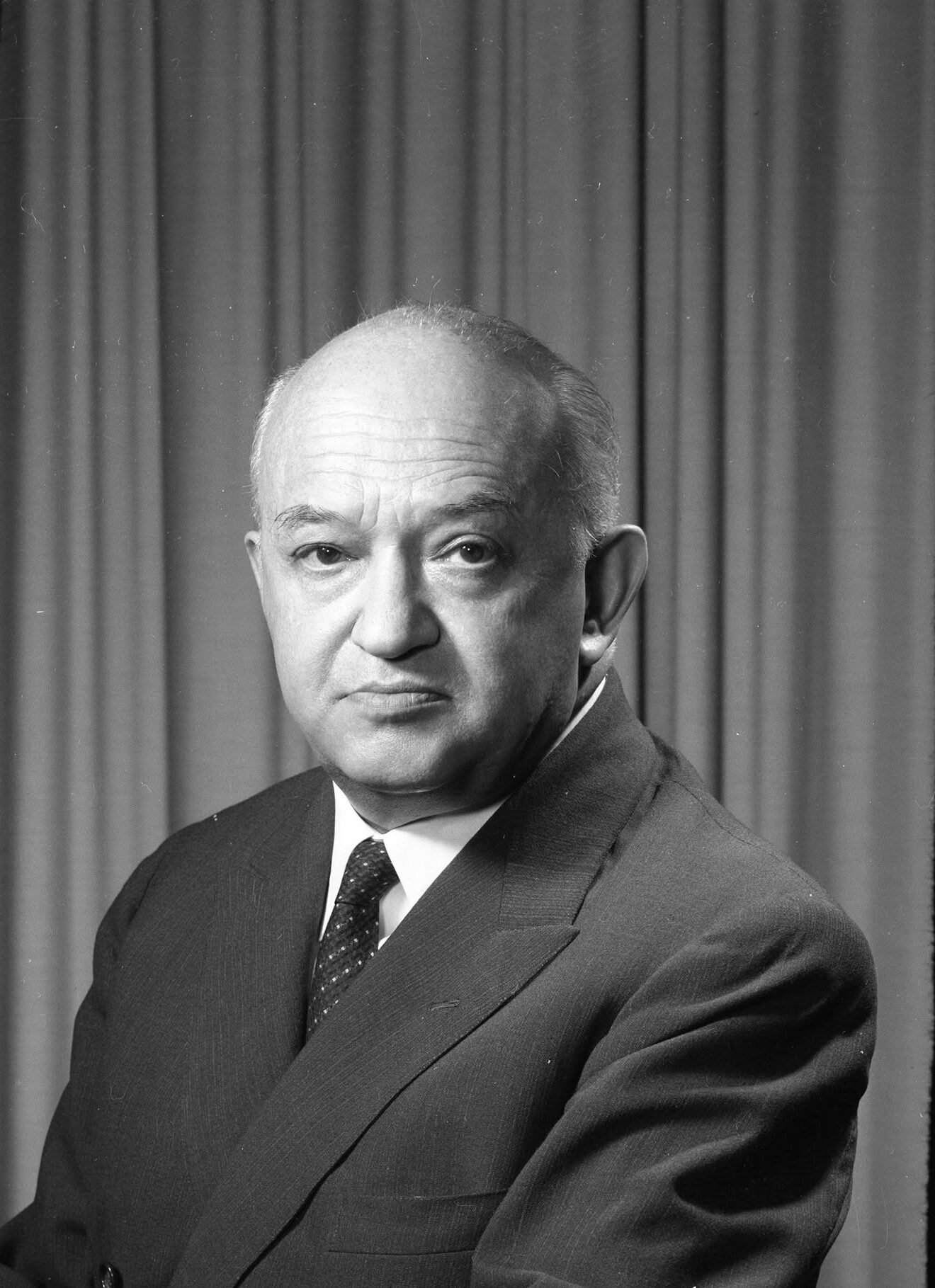
It is 2026, and let us not forget one of the most seminal minds of our times, we should briefly recall the groundbreaking works of James M. Buchanan (1919-2013) who was awarded the Nobel Prize in Economics 40 years ago, on October 10, 1986. Far from being a narrow specialist, Buchanan belonged to that unique generation of American economists whose oeuvre arose from the comprehensive view of interdependent social science disciplines.
I. From Southern roots to the foundations of public choice
Born into a family of genteel poverty in rural Murfreesboro, some 35 miles southeast of Nashville (TN), Buchanan grew up on the modest ranch that had been in his family for 5 generations. From the charming melody and the timbre of his language, it was quite easy to identify him as a “Southerner”. His grandfather John P. Buchanan, served as Governor of Tennessee during the late 1890s. In his wonderful autobiography “Better than Plowing and Other Personal Essays” (1992), Buchanan offers not only a revealing glimpse into his rustic upbringing and the life in the south of the US during the Great Depression of the 1920s and 1930s. It also vividly reflects his engaging personality, his dry humor and the development of his original ideas. During WWII, he served as an officer in the U.S. Navy under Admiral Nimitz in the Pacific War. He was discharged with honors at the end of 1945.
Buchanan studied economics and wrote his master’s thesis at the University of Tennessee, but completed his formal education at the University of Chicago in 1948. Like Milton Friedman or George Stigler before him, he had Frank H. Knight (1885-1972) as his most influential teacher. According to Buchanan it took Knight just about six weeks of teaching to cure him of his youthful and naïve socialist ideas. Knight became famous with his seminal book on “Risk, Uncertainty and Profit” (1921) where he established the foundational distinction between measurable risk (where probabilities can be calculated) and unmeasurable uncertainty (where they cannot). Together with F.A. von Hayek, L. von Mises, Maurice Allais, G. von Haberler, Jacques Rueff, Fritz Machlup or Karl R. Popper and some 20 other scholars, Knight was also among the co-founders of the Mont Pelerin Society (MPS) in April 1947. However, it wasn’t only the direct influence of Knight that made Buchanan one of the most important scholars of our time. Fluent in Italian he also studied the books by G. F. Lottini (1512–1572), B. Davanzatti (1529-1606) or F. Galiani (1728-1787), the early Italian forerunners of Monetary Theory and the Theory of Subjective Value. And yet, it was Knut Wicksell (1851-1926) and his pioneering book on “Value, Capital and Rent”(1893) with which he succeeded in establishing the marginal productivity theory of distribution. In other words, he showed how each factor of production earns an income equal to its marginal contribution and also famously distinguished the natural rate of interest from the money rate (Wicksellian Differential). In his ”Studies in the Theory of Public Finance” (1896), Wicksell applied marginal cost-benefit analysis to government taxation, public goods, and progressive taxation, and thus prepared the groundwork for the Public Choice Theory.
II. Why politicians are no different from the rest of us
Buchanan adopted Wicksell’s doctrine early on that only unanimously decided taxes and government spending are justifiable. In contrast to today’s welfare state, in which taxes are seen almost exclusively as an instrument of redistribution and as a public service, Buchanan viewed taxes solely as prices for the provision of public goods, because there need not be any correlation between an individual’s tax liability and the individual’s government service received. These contributions must be made by the individual citizen to finance those services that the state then provides to everyone in the supposed interest of a rarely defined common good. Buchanan successfully expanded upon Wicksell’s theory and increasingly focused on a previously largely neglected area of economics, developing the new subfield of Constitutional Economics. Buchanan essentially distinguishes between two crucial democratic levels. While the first level involves discussing, negotiating, and adopting the rules of a constitution, the second concerns the preservation of individual liberty through adherence to and enforcement of these rules.
Together with Gordon Tullock (1922-2014), Buchanan published “The Calculus of Consent: The Logical Foundation of Constitutional Democracy” in 1962. With this classic work of political economy, they established the Public Choice Theory. Here, they not only succeeded for the first time in explaining the failure of the democratic welfare state through an economic analysis of democracy. They also demonstrate that the self-interest of politicians leads to detrimental effects on public life. Ultimately, politicians want to be re-elected and thus at the expense of the general public try to gain popularity by promising tax breaks or other benefits to specific voter groups. Due to this “tyranny of the status quo” (Milton Friedman) they reject simple and transparent tax systems (the Flat Tax) that apply equally to everyone. Even though this insight can already be found in Machiavelli’;s “The Prince”, in B. Mandeville’s “Fable of the Bees”, and of course in Adam Smith’s “The Wealth of Nations” among others, Buchanan succeeded in demonstrating that this political self-interest in representative democracies usually leads to serious problems in state and society. In his hugely influential book “The Limits of Liberty: Between Anarchy and Leviathan” (1975), he showed how these political processes undermine the democratic understanding and increasingly degenerate contemporary welfare states into a “Schacherdemokratie” (F.A. von Hayek). Buchanan typically answered the question of a brief description of public choice with the well-known analogy of the fox, who shouldn’t be left to guard the henhouse.
Buchanan also contributed several important books and essays to the ongoing debate on the methodology of economics. In his “What Should Economists Do?” (1979) or in his much-neglected book “Cost and Choice” (1999), he criticized the widespread approach that categorizes economics as a science of choice or the allocation of scarce resources. Firmly grounded on the foundations of Austrian Economics, he convincingly argued that economics is a theory for achieving objectives, not for choosing the right goals. Individual aims and values thus are always subjective and lie beyond the realm of scientific inquiry. In the 1990s, Buchanan successfully introduced the concept of generalized increasing returns into the free trade debate. For Buchanan, increasing international interconnectedness leads to ever greater division of labor and thus to ever greater productivity with higher growth. This insight not only influenced the globalization debate but also profoundly impacted discussions on work ethic and legal restrictions on working hours.
Long overdue James M. Buchanan was finally awarded the Nobel Prize in Economics in 1986 for developing the contract-theoretical and constitutional foundations of economic and political decision-making. During his long career he has taught at the universities of Tennessee, of Florida State, of Virginia, the University of California at Los Angeles (USLA), at Virginia Polytechnic Institute (VPI), and until his retirement at George Mason University. The collected edition of his works, commendably published by Liberty Fund (Indianapolis), includes not only his 30 books but also some 300 articles and other works on economic and social theory. Buchanan’s enormous body of work developed from a profound and comprehensive humanistic education, an endangered species especially among today’s economists. The internal coherence and systematic development of his oeuvre, his honest scientific rigor, and his significant academic influence, not to mention his southern dry humor and his kind, reassuring and forthcoming manners are legion. He died on January 9, 2013 in Blacksburg (VA).

Our Partners