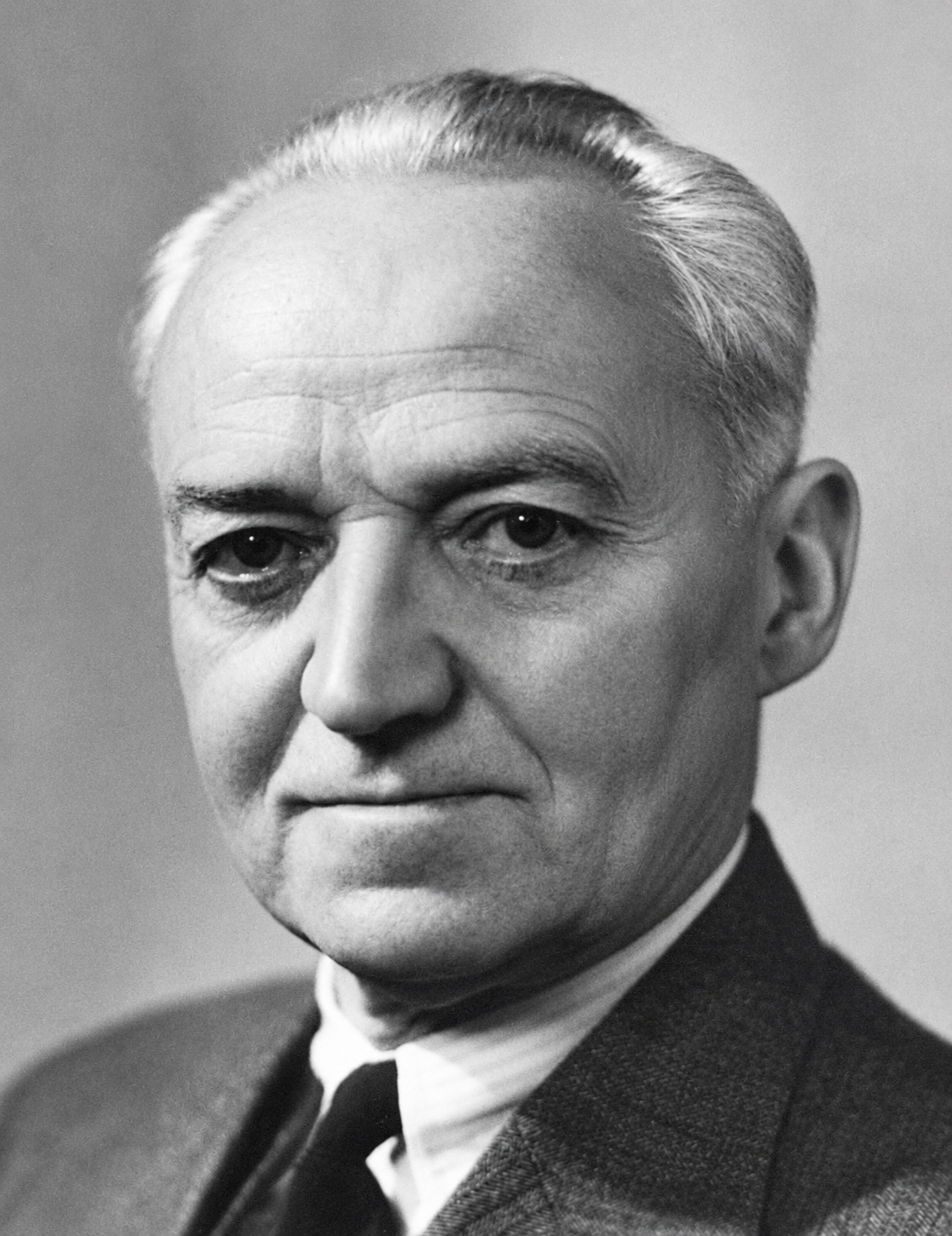
Franz Xaver Weiss (1885-1956)


“Der Zustand des Wettbewerbes ist dadurch gekennzeichnet, dass der einzelneKäufer oder Verkäufer den Marktpreis nicht merklich beeinflussen kann, sondernmitdem PreisalsmiteinergegebenenGrösserechnen muss. Wolltesich der einzelneVerkaufswerbervomMarktefernhalten, um einePreissteigerungherbeizuführen, so würde er sich hierdurch vom Tausch ausschliessen.”

Franz Xaver Weiss


Franz Xaver Weiss’ list of publications is distinctly shorter and his international repute much less when compared with scholars like Ludwig von Mises, J.A. Schumpeter or Richard von Strigl. And yet he was an important and esteemed member of the 3rd generation of the Austrian School of Economics.

I

Franz Xaver Weiss was born on April 18, 1885 as the only child of a Hungarian merchant family in Vienna. He attended elementary school there, grew up in fin-de-siècle Vienna and graduated from high school in the spring of 1903. Effectively supported by his parents and likely also driven by his expectation of attaining a respected career in the grand Habsburg Empire, in the fall of 1903 he enrolled in the eminent Faculty of Law and Political Science at University of Vienna. After Carl Menger‘s official retirement, the leading scholars there, besides Eugen von Boehm-Bawerk (1851-1914) and his brother-in-law Friedrich von Wieser (1851-1926), were also Eugen von Philippovich (1858-1917) or the lecturer Richard Schueller (1870-1972). After barely two years of intense studying and mostly due to his talent, acquired knowledge and enthusiasm, Weiss was personally invited to join Boehm-Bawerk’s famous seminar. Introduced by his mentor, Weiss met among others, his contemporaries Ludwig von Mises (1881–1973), J.A. Schumpeter (1883–1950), Richard von Strigl (1891–1942), and Alfred Amonn (1883–1962). He also befriended figures such as Otto Bauer (1881–1938, who later became the leading Austro-Marxist), Felix Somary (1881–1956, an economist and successful banker who later became an influential political advisor), or Nikolai Bukharin (1888–1938, who became the foremost theorist of the Bolsheviks and Stalin’s tragic opponent). During his studies, Weiss developed a deep reverence for Böhm-Bawerk’s work and heavily immersed himself in his mentor’s seminal Theory of Interest and Theory of Capital. Böhm-Bawerk exerted a formative influence not only on Weiss’ way of economic thinking, but also on his teaching style and manners. In 1909, Boehm-Bawerk awarded his student his doctorate with distinction for his dissertation on ‘The Modern Tendency in the Theory of Monetary Value’, which was published in 1910. Following his graduation and doctorate, Weiss completed the then-customary legal traineeship at one of Vienna’s Regional Legal Courts, while simultaneously working at Boehm-Bawerk’s chair at the University of Vienna. In 1913, he joined the Vienna Chamber of Commerce where he briefly held the position of a secretary. Like many thousands of his generation, Weiss also volunteered for the Austro-Hungarian Army in August 1914 and served on various hard contested war zones. At the end of WWI he served in northern Italy until the armistice was signed on November 3, 1918. Although G. von Haberler (1900-1995) conversationally described him once as a sort of straightforward figure, that was somewhat reminiscent of an officer, nothing is known about him having attained any higher military honors.

II

During the chaotic and in many places violent repercussions of WWI, after some 5 million dead and wounded, the catastrophic collapse of the mighty Austro-Hungarian Monarchy and reduced to an insignificant landlocked country, the once familiar social institutions of the Habsburg Empire began to crumble before the very eyes of the retreating and disheartened soldiers. The emerging new German-Austrian Republic could not offer the kind of opportunities to which Weiss and his contemporaries were accustomed. The disarray following the breakdown of the administrative institutions dramatically accelerated the decline of the Austrian Crown through the stock market crash and drove the persistent and crushing national debt. And when, from 1921 onward, the inflation spiraled completely out of control (partly due to the financing of food imports and government spending) and reached hyperinflation in 1922, paying jobs were scarce in starving Vienna. Only after a long search did Weiss manage to obtain the position of editor of the Journal for Economics and Social Policy between 1921 and 1925. This scholarly journal succeeded the Zeitschrift für Volkswirtschaft, Sozialpolitik und Verwaltung (Journal for Economics, Social Policy, and Administration, 1892–1918), that was jointly edited by Boehm-Bawerk, Wieser, Philippovich, and Inama-Sternegg. Between 1924 and 1925, with the support of various sponsors and colleagues, Weiss published the important and decisive two volumes of ‘Gesammelte Schriften von Eugen von Boehm-Bawerk’ ‘(Collected Writings of Eugen von Boehm-Bawerk) in Vienna. The first volume is introduced with a comprehensive and to date most accurate biographical appreciation of his mentor. While it contains Boehm-Bawerk’s groundbreaking, theoretical and economic-historical academic essays, volume II is primarily devoted to his numerous shorter, more factual works that were intended for a general readership.

Following some academic preliminary work by Friedrich von Wieser, Weiss delivered his most interesting habilitation thesis on Indirect Production Processes and Interest on Capital in 1926, that earned him his the venia legendi (authorization to teach) at the University of Vienna. In this work he renewed and expanded on Böhm-Bawerk’s critique of David Ricardo (1772-1823). While Boehm-Bawerk mounted an exhaustive critique of Ricardo’s popularized classical premise that the exchangeable value of a good is determined by the quantity of labor required to produce it, Weiss focused on the two foundational flaws in Ricardo’s theory. Weiss showed that the Labor Theory of Value can neither hold any test nor can this assumption explain the Residual Theory of Interest and Profit. In the same year, Weiss accepted the prestigious call to assume the chair of the department of economics at the German Technical University in Prague, succeeding the Austrian Hans Mayer (1879-1955).

III

In the political turmoil of the interwar period, Weiss lost his Austrian citizenship and had to apply for Czechoslovakian residency in order to assume the chair of Political Economy and Finance at the German University in Prague in 1930. This renowned institution had evolved from venerable Charles University, founded by King Charles IV, and was divided into a German and a Czech university towards the end of the 19th century due to erupting national conflicts between the German speaking population and the Czechs. Despite the resistance from German nationalist students, Weiss was elected Dean of the Faculty of Law and Political Science in 1933. During his tenure he promoted the appointment of Hans Kelsen (1881–1973, co-author of the 1929 Austrian Federal Constitution, author of the Reine Rechtslehre and proponent of legal positivism). Under pressure from the Nazi Party, forced by the Czechoslovakian authorities in the fall of 1938 Weiss was not only pressed to relinquish his teaching and examination activities. In February 1939, he was also forced to leave the country. Leaving behind much of his belongings, he left Prague for England and struggled to establish himself with his family in Orpington, a small residential area, south of the City of London (UK). Despite the help of friends, expats or former colleagues such as F.A. von Hayek, Paul Rosenstein-Rodan, or Ludwig Lachmann his repeated attempts to secure a paid teaching position in London or its surroundings were unfortunately of no avail. And his efforts to reclaim at least parts of his assets after WWII, which had been confiscated by the Nazis, were also repeatedly rejected by the Czechoslovak authorities due to the Beneš Decrees.

Among his approximately 30+ known scholarly articles, especially his authoritative and particularly important two-volume collection of Boehm-Bawerk’s works (1924/1925, reprinted in 1968), his comprehensive review of the 2nd edition of Carl Menger’s Principles of Economics (1923, edited by his son Karl Menger), his influential Recent Critique of Ridardo (1927) and his contribution to Ground Rent in Utility Theory (1928) must be accentuated. His several still-valid encyclopedic articles, such as ‘Monopoly’ in the 3rd edition of the Handwörterbuch der Staatswissenschaften (1923–1929), are fine cut literary jewels and deserve to be studied again.

Largely forgotten, depressed and after a long illness, Franz Xaver Weiss died on March 19, 1956 in Orpington, UK.

Our Partners

Altas Network | economic research foundation (USA)
Austrian Economics Center | Promoting a free, responsible and prosperous society (Austria)
Cato Institute | policy research foundation (USA)
Forum Ordnungspolitik
Friedrich Naumann Stiftung
George Mason University
Heartland Institute
Hayek Institut
Hoover Institution
Istituto Bruno Leoni
IEA
Institut Václava Klause
Instytut Misesa
IREF | Institute of Economical and Fiscal Research
Johns Hopkins Institute for Applied Economics, Global Health, and the Study of Business Enterprise | an interdivisional Institute between the Krieger School of Arts and Sciences, and the Whiting School of Engineering
Liberales Institut
Liberty Fund
Ludwig von Mises Institute
LUISS
New York University | Dept. of Economics (USA)
Stockholm Network
Students for Liberty
Universidad Francisco Marroquin
Walter-Eucken-Institut