
Gertrude von Lovasy (1900 -1974)
“She is a very competent theoretical economist and also very good in applied economics. She was working at the Austrian Institute for Trade Cycle Research under Dr. Morgenstern, and I know that he was very pleased with her work and would be willing to give her good recommendations”.
Gerhard Tintner (1907-1983)
Although relatively little is known about Gertrude von Lovasy, and though her publication list is comparatively small, she must be considered an important figure of the fourth generation of the Austrian School of Economics. According to Oskar Morgenstern (1902-1977), to Fritz Machlup (1902–1983), and Gottfried von Haberler (1900–1995), Lovasy was a very active and highly respected participant in the Mises Private Seminar in Vienna, where she stood out for her many clear and critical observations. Friedrich A. von Hayek (1899–1992) once described her oral comments and contributions in the Seminar as fine cut jewels. Thus, Lovasy belonged to that small circle of young female scholars who dared not only to challenge Ludwig von Mises (1881-1973). Lovasy, Martha Steffy Browne (1898-1990), Helene Lieser (1898-1962), or Ilse Schüller-Mintz (1904-1978) among others, also contributed to the popularity of the Mises Seminar from the late 1920s until 1934. However, Lovasy did not participate in the informal dinners and lively discussions after the Seminar at the Ancora Verde restaurant in downtown Vienna. She was a sort of maverick among the Seminar participants and had only very few friends, among them her Viennese colleagues, the legal philosopher Felix Kaufmann (1895-1949), the economists Gottfried von Haberler or Gerhard Tintner and remained unmarried.
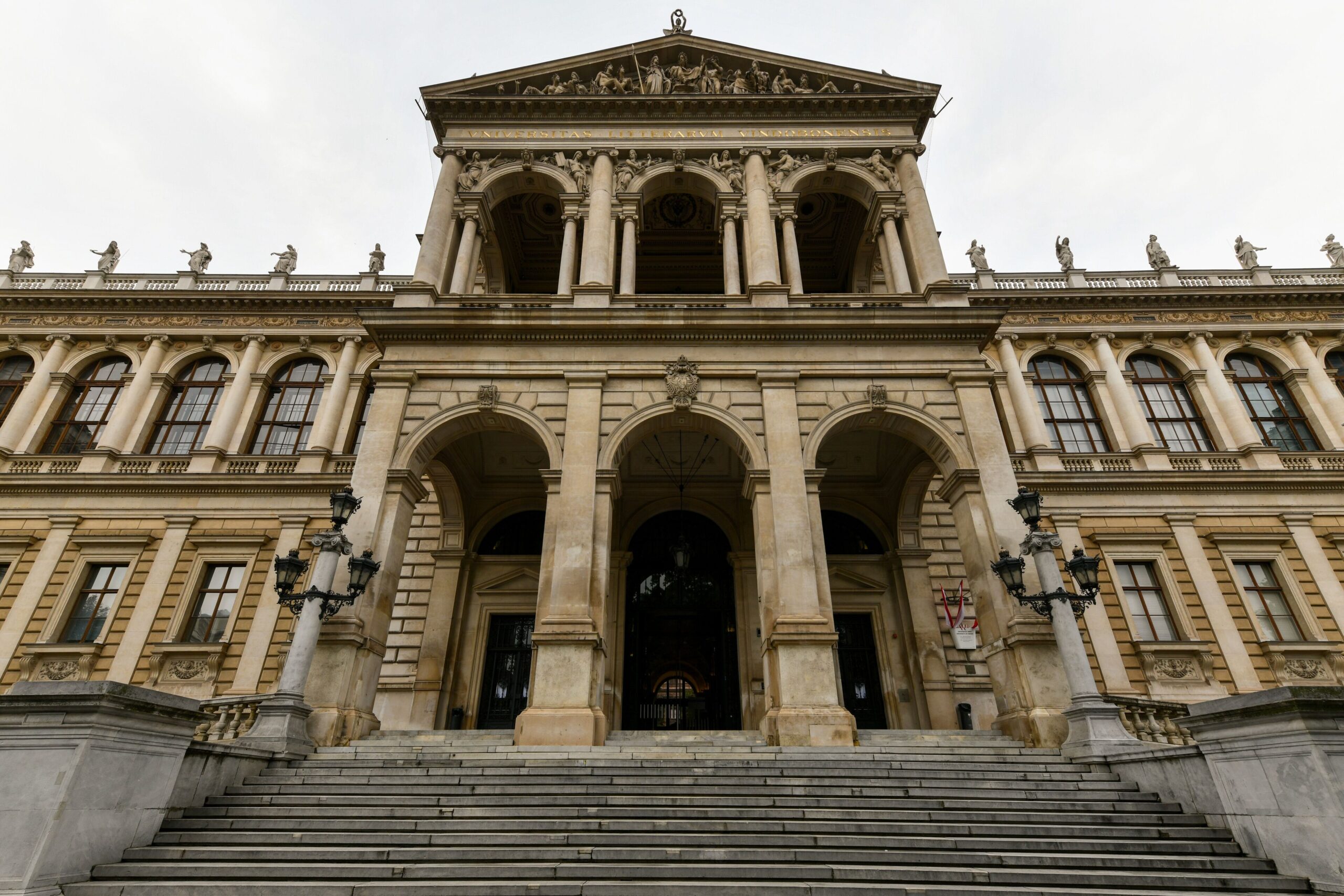
Gertrude von Lovasy was born on December 17, 1900, in Vienna into a family of purveyors to the Imperial and Royal Court and grew up in Baden, a spa town south of Vienna. After graduating from the local secondary school, she began studying law and political science at the University of Vienna in 1924. Barely four years later, she defended her dissertation written under the supervision of Hans Mayer (1879–1955), one of the most dominant, yet politically enigmatic and ever-adaptable figures of the Austrian School. Mayer’s intra-institutional academic feuds with Ludwig von Mises and Othmar Spann are legion and led not only to destructive conflicts within the university. The animosity among professors also destroyed the social and political foundations of the Austrian School in Vienna. Against her mentor’s wishes, Lovasy regularly attended
Ludwig von Mises’s private seminar in Vienna and thus was ostracized by Mayer and his followers. After receiving her doctorate, Lovasy was initially employed in the office of the Austrian steel cartel. Two years after Ludwig von Mises and F. A. von Hayek successfully founded the Austrian Institute for Business Cycle Research in Vienna in 1927, she worked there under the leadership of Oskar Morgenstern. During this time, she published two articles in the “Zeitschrift für Nationalökonomie” founded by Hans Mayer, which dealt with an early application of Gottfried von Haberler’s theory of imperfect competition in foreign trade policy.
Shortly after Austrian Chancellor Kurt von Schuschnigg was forced by Hitler’s pressure to resign on March 11, 1938, and the first German troops marched into Austria on the next day, followed by the legal proclamation of the “Anschluss” on March 13, she lost her position. Without much deliberation, she and her mother decided to emigrate to England. Her colleague at the Austrian Institute for Economic Research, Gerhard Tintner, arranged contact with Jakob Marschak (1898-1977) in the US, and Gottfried von Haberler (1900-1955) issued a sworn statement for the necessary US visa. After a perilous escape via Switzerland and France to Great Britain, she reached the United States in the fall of 1939. Following the usual formalities and with Morgenstern’s help, she found a position at Princeton University and worked with her former director again until the end of 1942. Based on Morgenstern’s groundbreaking 1934 essay on ‘The Limits of Economic Policy,’ they collaborated on an economic history of Austria of the interwar period. However, Morgenstern increasingly focused on the role of game theory in economic and social policy. While at Princeton, she published an essay on the effects of ‘protective tariffs under imperfect competition’ and engaged closely and sympathetically with Gottfried von Haberler’s work on international trade theory.
While in Princeton, Lovasy came across the newly published treatise Civitas Humana (1944) by Wilhelm Röpke (1899-1966) and wrote a critical and somewhat startling review. Probably under the influence of Helen Baker (1900-1955, the first female associate professor), there is a sudden light shift in her intellectual position as she not only unjustly and unsubstantiated attacked Röpke for his ‘extreme views on collectivism’. She also incorrectly accused Röpke’s social framework of lacking any ‘economic humanism’ and any social mechanisms that can lead to a redistribution of income. Her review was published in the American Economic Review 34, no. 4 (1944) and initiated several rebuttals.
Due to the fact that Princeton University was the base for the League of Nations’ economic and financial staff during the war, Lovasy began working for the League’s Economic and Financial Department in 1945, after a short job as an analyst at the U.S. State Department in Washington, D.C.. At the League she specialized in the economic effects of cartels and completed her important report on cartels 1945. Her testimony on ‘International Cartels’ was only published after the League was dissolved in 1947 and the United Nations Organization was founded. In the same year, Lovasy left the League and accepted a position at the newly established International Monetary Fund (IMF). There, she soon headed the Special Studies Department and eventually became an advisor in the IMF’s Research and Statistics Department. As with Morgenstern at the Vienna Institute for Business Cycle Research, her areas of expertise were foreign trade, commodity markets, and price stabilization. In her position as advisor at IMF, Lovasy argued that the US represented a less fair, aggressive and effective version of the international trade policy agreements. According to her research, as with tin during the Korean War, the US was able to set the international price for a number of primary commodities, but not always to the advantage of other countries. Similarly, in the 1950s the US more or less set the international price for cotton when U. S. support operations had become the main factor in determining cotton prices on world markets.
In 1963, Lovasy played a leading role in the creation of the Commodity Financing Facility (CFF), an IMF instrument to cushion commodity price shocks for developing countries. Her publication ‘Commodity Stabilization Agreements: A Note’ (1953) became influential and remains highly relevant today. After her retirement in 1965, she briefly advised the Organization of American States (OAS) for a time. According to Gottfried von Haberler, Gertrude von Lovasy died relatively alone on January 9, 1974, and was buried in Washington National Cemetery. Her notes and her “small but highly specialized library” (v. Haberler) are unfortunately considered lost.

Our Partners