
On the Declaration of Independence
and its surroundings
“In some things, we Americans leave to other countries the carrying out of the principle that stands at the head of our Declaration of Independence”.
Herman Melville (1819-1891)
Stretched along the Atlantic coast, from New Hampshire in the north to Georgia some 1,000 miles to the south, the 13 British colonies in North America covered an area of about 430,000 square miles. By 1760 approximately 1.6 million people lived there. Less than 20 years later, when the Declaration of Independence was signed in 1776, the population has swelled to over 2.2 millions, including 500,000 slaves from Africa. Detested and relentlessly hunted, the once proud Indian nations living within this area were largely excluded from official tallies. However, weakened by European diseases and constant conflicts with the ever-expanding settlers, their number was estimated at 30,000 to 55,000 survivors – a small fraction of its pre-colonization levels.
I
Given that most colonists originated predominantly from Great Britain, the Netherlands, from France or Germany, they assumed and exclusively kept the right to vote within their coalitions and viewed their assemblies as counterweights to the British colonial government. The ideas of the Enlightenment, which profoundly swept Europe also impacted the American colonies. The localized adaptation of the broader European Age of Reason not only eased the shedding of certain traditions and old ways of thinking, it also fostered a new socio-political culture with a distinct sense of defiant spirit. With time the colonists began to loosen their family ties and set themselves apart from their European ancestors by no longer defining their identity according to class, education or background criteria. Rather they drew a clear distinction to other ethnicities in their surroundings. By enduring in the vast and often testing environment, the settlers adopted many new words from French, Dutch, German or several indigenous languages that eventually entered their shared tongue. As a reaction to the secularization in the territories, the so-called Great Awakening that swept the territories during the 1730s and 1750s covered urban and rural areas alike and revitalized a strong religious fervor that today is still a characteristic element of the American ‘nation’. Not only the encouragement to choose their own churches, also the settlers’ questioning the British rule eventually paved the way for the American Revolution. Slowly they began to acquire a common American identity broadly depicted by optimism about progress, a lasting religious zeal, imagination and a pragmatic business acumen blended with an ample portion of self-confidence. These qualities strongly supported the colonists’ independence movement and over time came to be perceived as naturally American. Before long Benjamin Franklin (1706-1790) was considered the archetypical American.
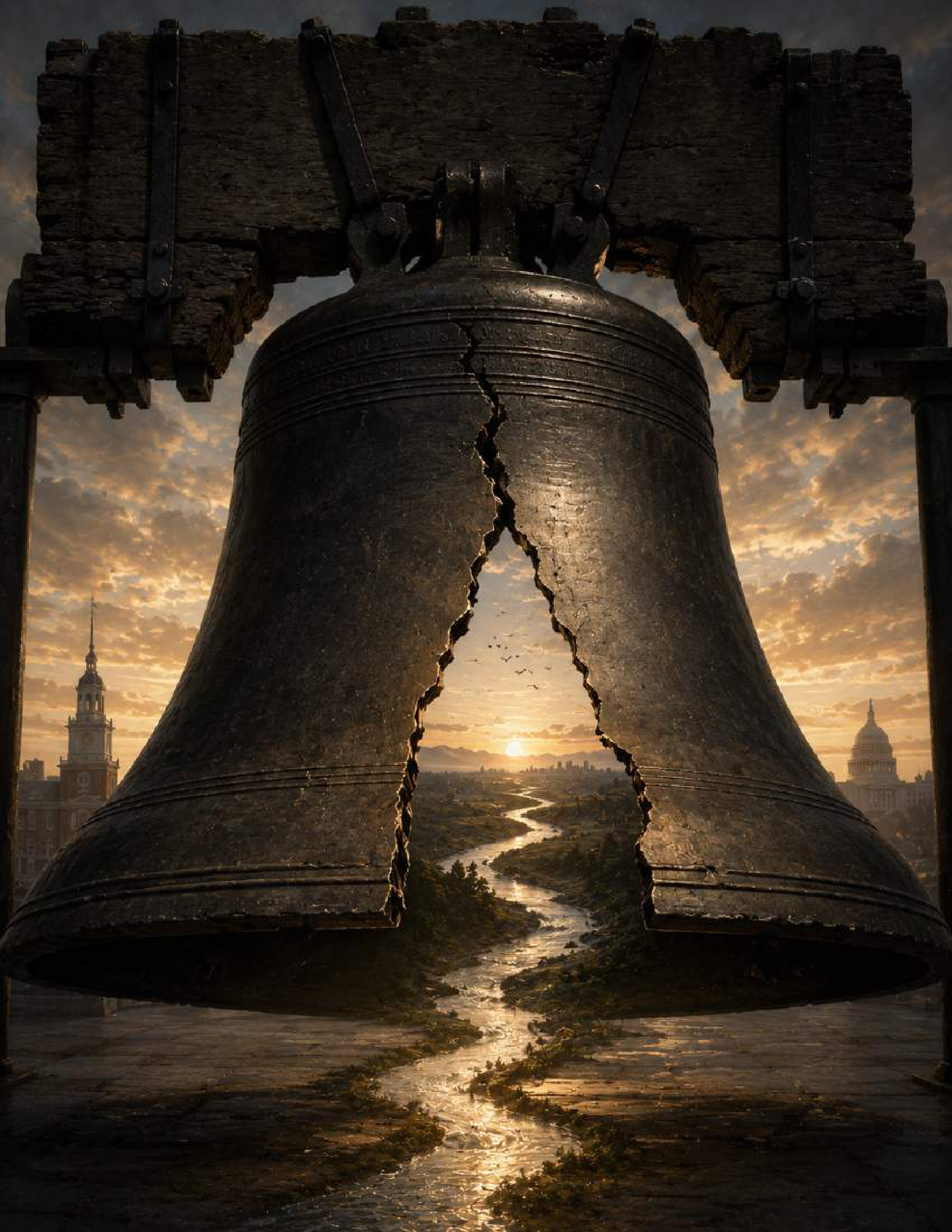
The 50 years between Queen Anne’s War (1702-1713) and the end of the Seven Years’ War (1756-1763) tied down King George III’s (1738-1820) mighty forces and thus presented the 13 British colonies with half a century of relative neglect and freedom from his repressive rule. Both wars dealt the British major victories and compelled France to abandon its Canadian territories including all claims east of the Mississippi River. These massive land gains, the arrogant display of force by King George III paired with his politically heavy-handed reorganization of the territories created an angry and tense socio-economic setting within the colonies. The inhumane conditions of the slaves and persisting clashes mostly with the Mohawks, Massachusetts or Iroquois in the north and the Cherokee, Delaware or Seminole in the southern regions went hand in hand.
II
Strengthened by its far-reaching expansions in North America, in 1763 the British colonial government banned all further settlements west of the Appalachian Mountains by Royal Proclamation to prevent costly wars with Native Americans, stabilize the lucrative fur trade and sustain imperial control over its colonies. This new ruling enraged farmers, ranchers and land speculators alike and King George III’s attempt to force the colonies to repay the British war debts through high taxes imposed on them, prompted violent demonstrations. With the rallying cry “no taxation without representation” the settlers refused to pay taxes levied by the British Parliament, as they had no elected representatives. Their angry protest escalated in Boston (MA) when British soldiers fired into angry groups and killed five civilians on March 5, 1770. The colonists’ ire intensified and small bands of armed men covertly began to form. About 3 years later on December 16, 1773 the outraged Sons of Liberty, an underground, die-hard group of settlers boarded British ships and dumped some 340 boxes of valuable tea into the harbor of Boston to prevent the import taxes. The British government considered this Tea Party protest an act of high treason and retaliated with severe punitive measures. As a result, in April 1775 the first bloody clashes between British ‘Redcoats’ and some ragtag militias were fought at Lexington and Concord, some 25 miles northwest of Boston and triggered a rapid succession of pivotal incidents.
Just about one month later, on May 15, 1775 the 2nd Continental Congress declared a State of Defense and urged the delegates to endorse the formation of a Continental Army on June 15. Although by most accounts a mediocre battlefield general, they appointed George Washington (1732-1799) as Commander-in-Chief of an outgunned, ill-equipped and outnumbered defense force. In January 1776 Thomas Paine (1737-1809), a newly arrived English liberal journalist published his pamphlet Common Sense and at once broke the taboo by openly calling to action and for independence. Within a few months his radical and powerful text became a bestseller in the colonies and profoundly changed the common temper.
On June 11, 1776 the 2nd Continental Congress charged John Adams (1735-1826) of Massachusetts, Benjamin Franklin (s.a.) of Pennsylvania, Robert Livingston (1746-1813) of New York, Roger Sherman (1726-1793) of Connecticut and Thomas Jefferson (1743-1826) of Virginia with drafting a formal statement justifying the utter break with Great Britain.
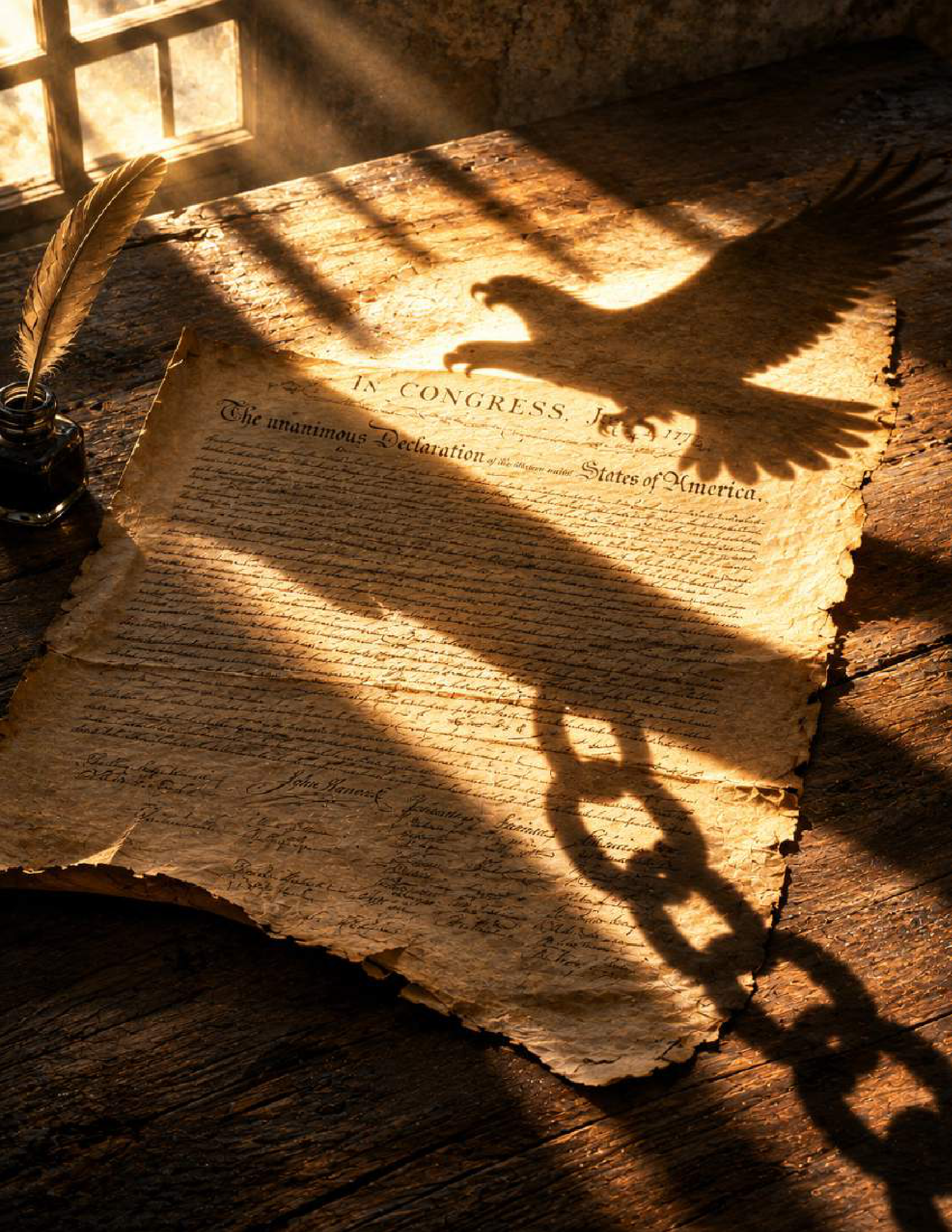
Although the quiet and untested Jefferson was not an obvious choice for this task, this Committee of Five entrusted him with penning the document. Profoundly influenced foremost by Virginia’s bold Declaration of Rights particularly regarding the inherent rights of men, but also by Thomas Paine’s powerful booklet Common Sense (1776), Jefferson finished his first rough draft in little more than two weeks. After some 85 serious revisions to Jefferson’s phrasing, the 2nd Continental Congress passed the Declaration of Independence on July 4, 1776, announced the full separation of 13 North American colonies from Great Britain and thus founded the United States of America, a phrase presumably coined by Thomas Paine.
At the same time the colonial territory of Virginia declared itself free from British rule and adopted its bold and daring Declaration of Rights on June 12, 1776. Motivated and guided by the English legal and cultural traditions, especially by the Magna Carta of 1215, the English Petition of Rights of 1628 and England’s Bill of Rights of 1689, Virginia’s Declaration of Rights provided the philosophical framework for natural rights and popular sovereignty.
III
Among the most compelling distinctions between the US Declaration of Independence and other autonomy movements during the past 250 years or so, arguably is the fact that the document was neither grounded in ethnicities nor in nationalities. Thus the reference that “it becomes necessary for one people to dissolve” in the opening paragraph of the Declaration simply applies to the rebellious settlers who were determined to get rid of British rule and to establish a new and independent nation.
“We hold these truths to be self-evident, that all men are created equal, that they are endowed by their Creator with certain unalienable Rights, that among these are Life, Liberty and the pursuit of Happiness; that to secure these rights, governments are instituted among men, deriving their just powers from the consent of the governed”. The signatories thus were mindful not only by setting forth universal truths for all people and appealed to reason, not to faith or mere will. They also set forth the moral order first, followed by the political and legal order it entails. In other words the phrasing of the Declaration is applicable to all people, without regard to their devotions, ancestry or creed, but to pure reason only. Beginning with the simple premise that all human beings are created equal, the text relates this equality to the indisputable rights to life, liberty, and the pursuit of happiness. However, this implies that all people are equal only insofar as they possess equal unalienable natural rights, and that no person holds rights superior to those of others. More importantly it also allows for inequality that predictably arises when people exercise their rights to life, liberty, and the pursuit of happiness as they see fit. By basing their vision on rights rather than on values, virtues or other moral concepts, the signatories paved the way for the proper understanding of the Rule of Law. It was well understood that any effective defense of individual freedom must be soundly put under the law, without concessions to considerations of expediency. Rights reflect actions that are permitted, prohibited or required, regardless of whether those actions are valuable or virtuous. Thus moral requirements are viewed as external rational principles that are discoverable by reason and people are free to pursue their happiness as long as they renounce to restrict the equal rights of others. The pivotal, celebrated and often quoted passages following the justification of the colonists’ efforts, were grounded in the Enlightenment and inspired by John Locke’s (1632-1704) social contract theory.
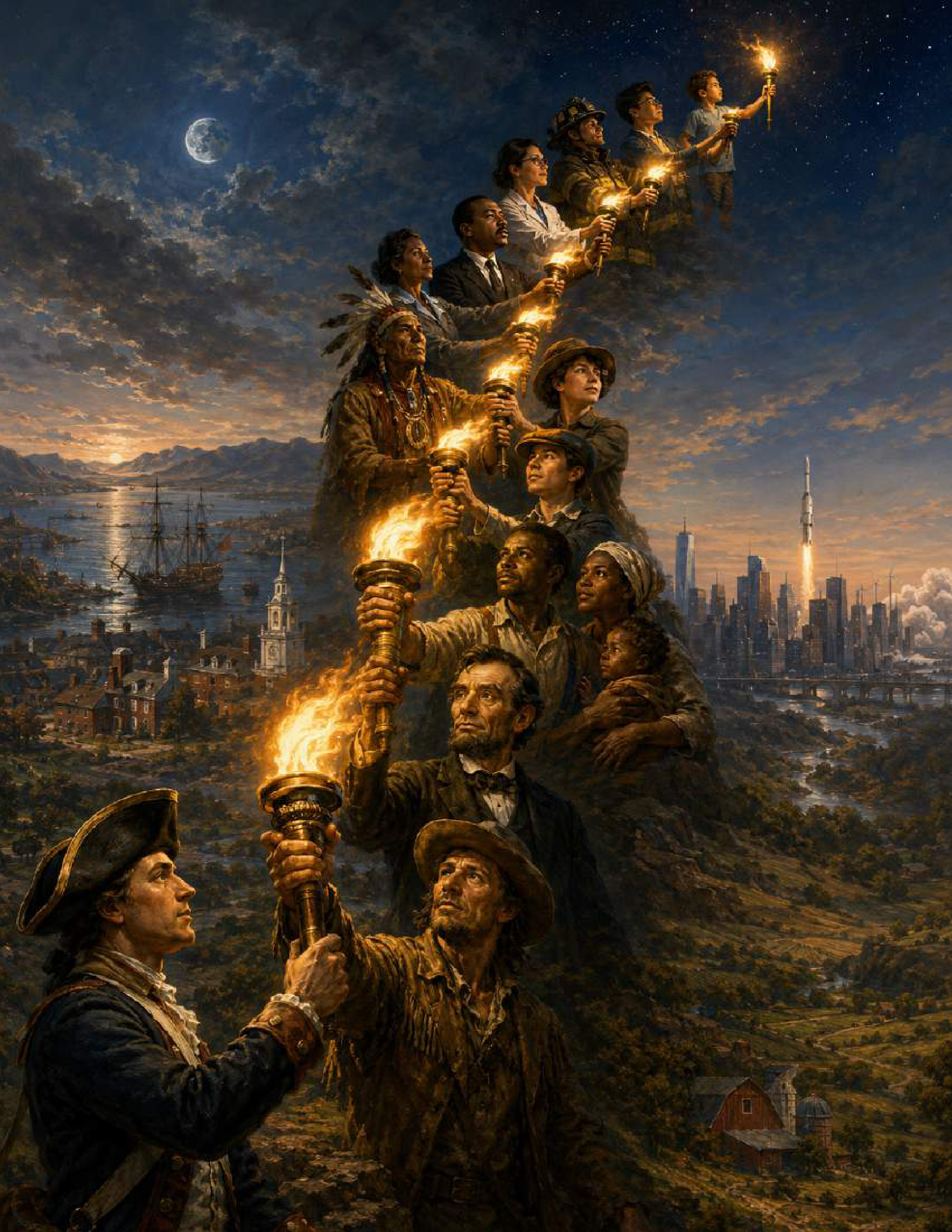
In general terms adhering to Locke’s Second Treatise of Government (1689), the 56 cosigners of the Declaration proposed a government as the natural instrument, and thus suggested an authority that not only derives its power from the consent of the governed. The governing assembly is also charged with the protection of the people’s natural rights to “life, liberty, and the pursuit of happiness” and those rights, men create as they live their lives. In order to promote a civilized society that is based on natural rights and mutually consented and enforceable contracts, a government needs to be limited in two crucial ways: First by its intentions, i.e. the securing and protecting of individual freedom and rights and secondly, by its means to act justly by consenting to its powers. Accordingly the Declaration affirms that a secession or a revolution is justified “whenever any form of government oppresses or opposes these aims”. In other words, the colonists wanted to establish in principle a free society that every participant would have the capacity to discuss, debate, and deliberate with others in an atmosphere of respect, thoughtful consideration of differing opinions and a shared desire to solve problems. Locke’s thoughts are among the foundational texts of classic Liberalism.
IV
The Declaration also holds a list of 27 very specific grievances against the rule of King George III and concludes with the formal Declaration of Independence. Referring to the King in a scorning “He”, some of these itemized complaints, in general terms also describe the action of various US administrations during the past 250 years. However they are largely pertinent also to the current US government. A few examples should suffice:
*”He has endeavored to prevent the population of these states; for that purpose obstructing the laws for naturalization of foreigners; … laws and refusing to pass other legislation that would encourage immigration”:
Currently President Trump is waging a massive and often brutal deportation campaign against illegal immigrants and also attempts to revoke the status of numerous naturalized citizens without granting them even the bare minimum of due process. *”For cutting off our trade with all parts of the world”:
Although not the first, the Trump government is presently engaged in several selfdestructive trade wars against various nations worldwide, including even the closest allies. These illiberal policies destabilize and tramples the venerable liberal ideal of free trade.
*”He has erected a multitude of new offices and sent hither swarms of officers to harass our people”:
Despite the establishment of a Department of Government Efficiency (DoGE), the US regulatory and law enforcement apparatus is vast, comprising over 18,000 agencies, 1.2 million local/state personnel, and over 136,000 federal officers. It governs nearly every aspect of life and the full tax code, including regulations, case law, and IRS guidance, spans over 70,000 pages. ICE (Immigration and Customs Enforcement) officers swarm cities and harass innocent bystanders or demonstrating people without due process.
*”He has excited domestic insurrection amongst us, …”:

Sadly on January 6, 2021, a mob of Trump supporters stormed the U.S. Capitol, aiming to prevent the certification of the 2020 presidential election. A bipartisan House Select Committee investigated the incident, concluding it was an attempt to overturn the election results. However, in January 2025 President Trump granted blanket clemency for almost 1,600 individuals convicted of or awaiting trial and sentencing for offenses related to the January 6, 2021 Capitol riot.
*”He has obstructed the Administration of Justice, by refusing his Assent to Laws for establishing Judiciary Powers”:
Ever since the current administration assumed office, several political and legal cases are pending on its alleged obstruction of justice, including the politically explosive Epstein files.
V
While the commendable, courageous and inspiring content of this foundational document deserves the highest respect, the blatant hypocrisy of the signatories should neither go unmentioned, nor should it be considered long gone. While Jefferson drafted his stagey pledge that all persons are endowed “with certain unalienable rights, that among these are life, liberty and the pursuit of happiness”, he owned well over 600 slaves at his vast plantations in Monticello (VA). Never tired of denouncing slavery as a “hideous evil” and a moral travesty, however Jefferson by no means was alone. After all, 41 out of the Declaration’s 56 signatories were slaveholders prior as well as after July 4, 1776. This arrogant double standard prompted the British playwright Samuel Johnson (1709-1784) publicly asking the American colonists how they would justify the fact “that we hear the loudest yelps for liberty among the drivers of negroes?”. Sadly this hypocritical stance prevailed well into the 1960s and locally well beyond.
In other words, the American push for independence was for the most part led by people who more often than not solemnly proclaimed individual liberty for all while earning their livelihood by owning slaves and keeping them frequently in chains. Moreover, the Declaration’s famous promise of Life, Liberty and the Pursuit of Happiness did neither apply to the masses of enslaved Africans nor to the surviving Native Americans who lived within the limits of the 13 colonies. Indians were neither free citizens of the emerging United States, nor did they enjoy security or freedom under British rule. Instead, they were referred to and treated as foreign enemies or every so often condescendingly called conquered people. While white colonists were fighting for independence, most Indian tribes were battling to defend their remaining ancestral homelands from colonial expansion.
It took almost 100 years and the vicious Civil War (1861-1865) until slavery was formally abolished and the 14th Amendment of the US Constitution at long last granted African Americans the US citizenship in 1868. Ostracized, dramatically diminished by genocidal wars and European diseases, most of the 570+ Indian tribal Nations were forced into barren and remote reservations. They were granted citizenship only in 1924, when US President Calvin Coolidge (1872-1933) signed the Indian Citizenship Act.
However it should also be mentioned here, that the Birthright Citizenship dogma was unknown to the British common law that governed the 13 colonies. Given that the prevailing legislation during the 1770s referred merely to Birthright Allegiance, in the view of the colonists this phrase implied a feudal relation between a Master and his/her Servant and thus did not apply to them. Consequently the signatories of the Declaration firmly rejected this concept. After all, their signatures on the document clearly stated that the united colonies are not only a “separate and equal” nation, they were also “absolved from all Allegiance to the British Crown and that all political Connection between them and the State of Great Britain, is and ought to be totally dissolved”.
Conclusion
The Declaration of Independence is a document created not around personalities or political passions, on the contrary it has been devised around the enduring liberal key principles: Limited Government, Distributed Power and the Institutions meant to preserve Liberty. It is an ideal that is continuously worth striving for and merits a tireless pursuit. Its words have inspired many different causes, from suffragists and civil rights leaders to unruly crowds trying to overturn the US government. From a constitutional perspective, the document was an innovation because for the first time ever, a government was established in a large territorial state without one formal leader. The fact that the constitutions of the 13 individual colonies invoked the principle of popular sovereignty was unique and influential, although the political systems in the colonies were by no means democratic in the modern sense.
Most likely no US government (or any other for that matter) has ever lived up to the Declaration’s universalist ideals. Racial and ethnic oppression of Blacks, Native Americans or colored people, xenophobic exclusion of and discrimination against immigrants and also naturalized citizens, bias against religions, countless breaches of governmental contracts, political corruption or ruthless abuses of power have been all too common in the course of the past 250 years. The Declaration’s noble claim that government should derive its powers from the consent of the governed was and is more often than not blatantly ignored. However and despite the many deviations from the principles of the Declaration of Independence, it would be a mistake to assume they prove ineffective. And yet, today it seems doubtful whether an eye-catching but vain celebration of this venerable declaration of ideals ever can bring such a fragmented and drifting nation together again.


Our Partners