
Alfred Amonn 1883-1962
“Das wissenschaftliche Denken ist in aller Regel dazu verleitet, die sprachüblichen Vorstellungen und Begriffe zu übernehmen und mit unbedeutenden Modifikationen als grundsätzlich gültig und brauchbar anzuerkennen, ohne zu beachten, dass damit die ganze Oberflächlichkeit, Vieldeutigkeit und Unbestimmtheit, die ihnen naturgemäss anhaftet, in die Wissenschaft mit einzieht und ihren sicheren, selbständigen und unbeirrten Fortgang hemmt.”
Alfred Amonn
(“Scientific thoughts are generally tempted to adopt common semantic ideas and concepts and, with insignificant modifications, to accept them as fundamentally valid and useful, without considering that this introduces all the superficiality, ambiguity, and indeterminacy that naturally stick to them into science and hinders its secure, independent and unwavering progress.”)
It is noteworthy that the year 1883 saw an astonishing number of great international figures in academia, the arts or literature. To mention but a few, almost at the same time as Alfred Amonn, the economists Joseph A. Schumpeter (-1950), William E. Rappard (-1958) and John Maynard Keynes (1883-1946), philosophers like Ortega y Gasset (1883-1955) and Karl Jaspers (-1969), the architect Walter Gropius (-1969), and the composer Anton von Webern (-1945) were born. However, there were also celebrated writers such as Franz Kafka (-1924) or Aleksei Tolstoi (-1945). And in 1883, Carl Menger’s second book, his Investigations into the Method of the Social Sciences and Political Economy in Particular was published and caused an academic firestorm that triggered the so-called Methodenstreit. This methodological dispute between the Austrian School of Economics and the younger German Historical School with Gustav von Schmoller as its undisputed leader solidified the Austrian’s approach of methodological individualism and methodological subjectivism. This slim book molded Amonn’s thinking.
Life and academic career
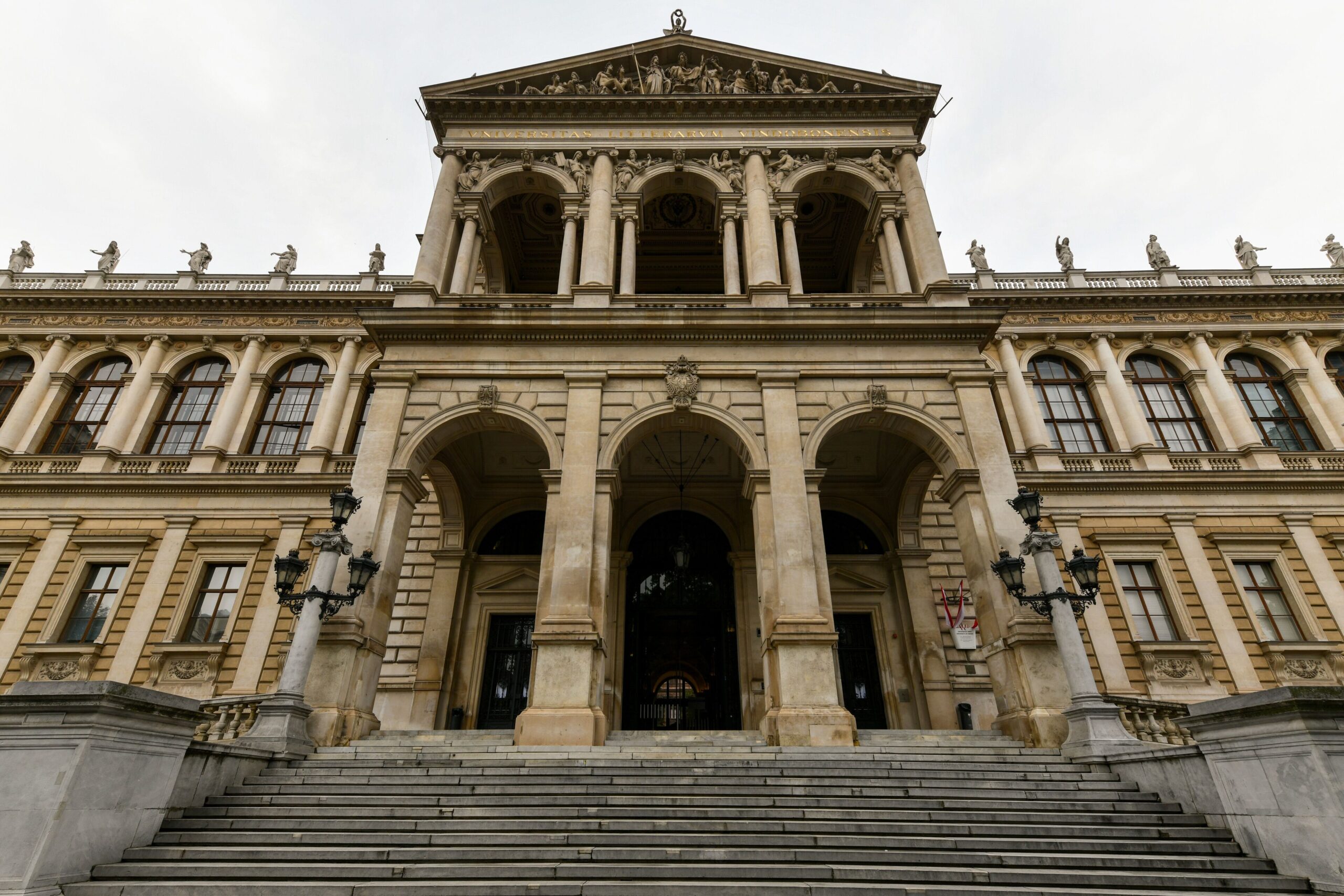
Alfred Amonn grew up in the German-speaking town of Bruneck in the south-Tyrolian Puster Valley (now Brunico, Val Pusteria, in Alto Adige, Italy), attended the highly respected Imperial and Royal Vinzentinum in Brixen (now Bressanone) and graduated there in 1902. The multicultural context of South Tyrol within the Austro-Hungarian Monarchy, characterized by German-speaking communities living harmoniously at the side of large Italian- and Ladinish speaking groups, exposed Amonn early on to diverse economic and socio-political conditions. According to his son Kurt Amonn (1917-2014), the vibrant environment has profoundly influenced his father’s growing interest in economic theory and national welfare. With a second scholarship Alfred Amonn managed to begin his studies of Law and Economics at the University of Innsbruck in 1904. His talents and great interest in his chosen subject led him to further studies at the universities of Munich, Halle, Leipzig, Oxford, and finally to the Europe’s then leading center of theoretical research – the University of Vienna. Although he missed Carl Menger’s spirited and famous lectures by just about one year, he still enjoyed the good fortune to have Eugen von Philippovich (1858-1917), Eugen von Böhm-Bawerk (1851-1914), Friedrich von Wieser (1852-1926) and also Karl Theodor von Inama-Sternegg (1843-1908) in statistics as his teachers and thus promoted his interest in Austrian economics. In Vienna, he met his fellow students and lifelong friends such as Josef A. Schumpeter, Ludwig von Mises ((1881-1973) and Mises’ friend, the jurist Hans Kelsen (1881-1973). In 1907, Amonn completed his studies under E.v. Philippovich and joined his mentor at the University of Vienna. E.v. Philippovich was the author of the most widely used textbook “Grundriss der politischen Ökonomie” originally published in 1893, with several new editions. More or less lovingly nicknamed ‘Grupoloek’ by Viennese students, this book successfully integrated the marginal-utility doctrine, and contributed significantly to the spread of Austrian ideas.
In the autumn of 1910, at the age of 28 he received his venia legendi at the University of Vienna and published his first book, Objekt und Grundbegriffe der theoretischen Nationalökonomie only one year later. This seminal work not only established Amonn’s reputation in German-speaking academic circles. This book also inspired subsequent debates on economic methodology and necessitated a second edition in 1927. It is a methodological clarification of what the actual object of theoretical economics is and how fundamental concepts (such as a good or a value) can be precisely defined.
This work marked the beginning of his productive academic career: From 1910 to 1912, Amonn was a lecturer in Freiburg (Switzerland) and in the fall of the same year he succeeded his friend J.A. Schumpeter as Professor of Political Economy at the University of Czernowitz (now Chernivtsi, Ukraine), then the easternmost German-speaking university of the Habsburg Monarchy. After only 5 years Amonn was promoted to full professor in 1917 and held the position until 1918, though his tenure was profoundly unsettled by WW I and the collapse of the vast empire. Military service interrupted his lecturing in early 1917 and in 1918, close to the end of WWI, Amonn was deployed to Bucharest and appointed to Oberleutnant-Auditor in the Austrian Ministry of War’s scientific corps. The end of the Austro-Hungarian Empire forced him to return into a starving and sharply divided Vienna where he witnessed the breakdown of the Empire’s age-old institutions and the vanishing of his social class. The vast Habsburg Monarchy was suddenly reduced to the size of a small, land-locked country of barely seven million.
In 1920, Amonn accepted a professorship at the German University in Prague, and joined there his Viennese colleague Franz X. Weiss (1885-1956), the editor of Böhm-Bawerk’s shorter works. From 1926 to 1929 Amonn held a successful visiting professorship at the Imperial University of Tokyo and lectured there predominately in German, which proved rather challenging for students as well as several translators. While in Japan Amonn lastingly left his mark on numerous Japanese economists among them Kōzō Takahashi (1902-1949) and Takuma Yasui (1907-1995) and encouraged a critical engagement with Marxism. Shortly after his return from Japan, Amonn was appointed as Professor of Theoretical Economics and Public Finance at the University of Bern (CH). He held this position until his retirement in 1953; and served twice as dean and was elected rector of the university for the important academic year 1949/1950.
In 1942, Amonn was awarded the Swiss citizenship and the privileges of a citizen of the city of Bern. The same year he was selected as a corresponding member of the Bavarian and Austrian Academies of Sciences. Although Amonn only rarely gave political advice, as an expert and member of economic policy commissions he exercised great influence on Swiss economic policy even well after his retirement. On his seventieth birthday in 1953, his faculty colleagues in Bern, including Professors Valentin F. Wagner and Fritz Marbach, dedicated an academic Festschrift to him and entitled Economic Theory and Economic Policy. He died on November 2, 1962, in Bern at the age of seventy-nine.
Economic thought and intellectual legacy
Among his 20 books, only a few can be mentioned here. Firmly rooted in Carl Menger’s thinking, Amonn valued conceptual clarity to avoid a conflation of theory, empiricism, and politics. He advocated “precise conceptual economics” and emphasized the necessity of exact definitions and delimitations in theoretical economics to distinguish it from historical or descriptive approaches. Thus he defined theoretical economics as a deductive science that focuses on the “scientific object” of price formation and income distribution within an “individualistic market economy”, which enabled the free disposal of goods, their transfer, and their measurement in objective units such as money. In other words, Amonn’s approach prioritized conceptual clarity to avoid mixing theory with empiricism or politics.
Methodologically Amonn pursued a program of logically grounded definition of the economic object, and to this end sharply distinguished between the empirical object of experience and the constructed object of knowledge. His attempted synthesis led to fierce reactions by some leading socialist scholars, among them Isaac Rubin (1886-1937) and Werner Sombart (1863-1941) or Franz Oppenheimer (1864–1943).
However, influenced by the general equilibrium theory of the Lausanne School, particularly represented by Léon Walras (1834-1910), Vilfredo Pareto (1848-1923) or Gustav Cassel (1866-1945), and most certainly also by his teacher and mentor Eugen von Philippovich, in his later work Amonn struggled to integrate mathematical and statistic tools for modeling the interdependence of prices and incomes and tried to combine them with the subjective approach of the Austrian School. In other words, Amonn tried to position himself as a bridge between Austrian apriorism and the strict inductivism of Gustav von Schmoller’s younger German historical school.
From the 1920s onward, Amonn began to focus on welfare economics, a subject made popular by A.C. Pigou and offered his own theory of social welfare as a conceptual framework for understanding societal well-being. According to Amonn, a realistic welfare analysis must take into account a certain “social conditionality”. With this approach, Amonn criticized earlier theories that neglected these collective dimensions and positioned societal welfare not as a static sum of personal satisfactions, but as a dynamic outcome of complex social and market interactions. In other words, Amonn described the economy as a cycle of exchange in which ongoing changes in resources, technology, and preferences drive evolution and thus constitute a continuous process of value creation.
In his “Principles of the Theory of National Welfare” (1926) he developed a process-oriented theory of national welfare and identified its roots in market exchange relationships rather than in isolated individual actions. Building on his earlier theories of value and distribution, Amonn outlined four prerequisites for theoretical welfare economics: individual control over goods, their free transferability, conditional personal freedom, and a social unit of measurement that he called social conditionality (a phrase that remains undefined). He emphasized that any welfare analysis must take these requisites into account to avoid subjectivist pitfalls or historical inductivism. Thus he placed collective economic processes over any isolated individual benefit and thus defined welfare as the overall result of the distribution of resources and income through exchange relationships within democratically organized institutional structures. In other words, for Amonn welfare is not a static outcome but as a dynamic process, thus an attempt to bridge the gap between classical and neoclassical traditions amidst the methodological debates of the interwar period. Amonn surprised many of his colleagues by advocating not only progressive taxation but also fiscal mechanisms and instruments in order to mitigate income inequality and to internalize social costs. For Amonn these mechanisms are extensions of the dynamic exchange process without impairing market efficiency. This approach led to several sharp debates among fellow Austrians.
His 1938 book, “Volkswirtschaftliche Grundbegriffe und Grundprobleme: Einführung in das volkswirtschaftlich Denken” was conceived as an introductory text explaining key economic concepts and challenges, particularly distribution and growth in market economies. Amonn used it to clarify fundamental problems such as income distribution and economic growth, examining them through a methodological lens that combined theoretical rigor with practical economic thinking. This successful work again emphasized the need to clearly define basic concepts when addressing persistent questions of welfare and production. And 10 years later he offered again a structured introduction to pure economic theory in his Grundzüge der theoretischen Nationalökonomie (1948). By using some graphical representations, Amonn summarized his methodological and systematic views on the subject, the methodological and logical prerequisites, and the basic concepts of economics.
Amonn published 20 books and some 60 lengthy essays in academic journals. Regretfully none of this work has been translated into English or French. His seminal books include Objekt und Grundbegriffe der theoretischen Nationalökonomie (1911); Die Hauptprobleme der Socialisierung (1920); Ricardo als Begründer der theoretischen Nationalökonomie (1924); Grundzüge der Volkswohlstandslehre (1926); Volkswirtschaftliche Grundbegriffe und Grundprobleme (1938); Wirtschaftspolitik auf Irrwegen (1958) or Nationalökonomie und Philosophie (1961) as his last book. Most of his publication are highly recommended for a careful reading or re-reading.
His extensive and unique collection of newspaper reports and clippings on the most important economic and socio-political events from 1919 to the early 1960s is currently being cataloged at and integrated into the library of Agenda Austria, Austria’s leading think tank.

Our Partners