
Canada, Ukraine and the case for a looser EU
European Commission President Ursula von der Leyen, speaking at the EU-Canada summit in Montreal in the presence of Prime Minister Mark Carney, proposed that Canada become an associate member of the European Union.
Enlargement has always been central to European integration. Its greatest success was admitting the Central European countries after they threw off Soviet domination. Other countries followed, mostly in Southeastern Europe. Only one member, the United Kingdom, has ever left. Brussels took considerable offense at London’s decision to leave, and negotiating subsequent bilateral agreements proved difficult.
Three members of the European Free Trade Association (EFTA) – Norway, Iceland and Liechtenstein – participate in the EU’s internal market through the European Economic Area (EEA) but remain outside the political union. The arrangement benefits both sides. A fourth EFTA member, Switzerland, chose bilateral agreements with the EU instead and is not a member of the internal market.
In 2013-2014, the EU proposed the Eastern Partnership to integrate Armenia, Azerbaijan, Belarus, Georgia, Moldova and Ukraine, an ambition that may have been illusory in the cases of Belarus and Azerbaijan. When the government in Kyiv refused to join this partnership, the 2014 Maidan protests erupted against pro-Russian President Viktor Yanukovych, ultimately leading to Russia’s annexation of Crimea and the war in Donbas.
Since then, the people of Ukraine, Moldova and Georgia in particular have aspired to association with the EU and, ideally, membership. When Western politicians backed the Maidan activists, hopes and expectations of swift accession rose. The war in Ukraine did not dampen those hopes. The expectation remains.
Excessive standards have already cost the EU one member and hampered healthy internal competition; applying them selectively would alienate others.
Prince Michael of Liechtenstein
Squeezed by Washington, Ottawa hedges
Canada’s traditionally excellent relations with the United States have deteriorated sharply, not least over U.S. tariffs. President Donald Trump has even advocated making Canada part of the U.S., an idea Canadians firmly reject. However, trade with the U.S. will remain central, and relations will improve in the interest of both sides.
Because of geography, the U.S. will remain Canada’s largest trading and security partner. However, Prime Minister Carney’s government wants to strengthen ties with other countries, with a particular focus on the EU. Ms. von der Leyen frequently puts forward ambitious proposals, most recently suggesting that Canada be granted associate status with the EU – a category that does not currently exist. Some European governments, notably Germany, France and Italy, expressed indignation at a proposal that had not been agreed upon internally. While Prime Minister Carney welcomed closer ties with the EU, he avoided the term “associate.”
Rethinking the European project
Whatever happens with Canada, enlargement remains on the agenda, with the Western Balkans on one side and Ukraine and Moldova on the other. Despite all the objections raised in the past, the EU will have no choice but to offer Ukraine fast-track access to its internal market once a ceasefire is reached and the war frozen. Because Ukraine will not be able to meet all the required standards in the short term, the EU will need to take a more pragmatic view of its own standards – a flexibility that may prove an advantage.
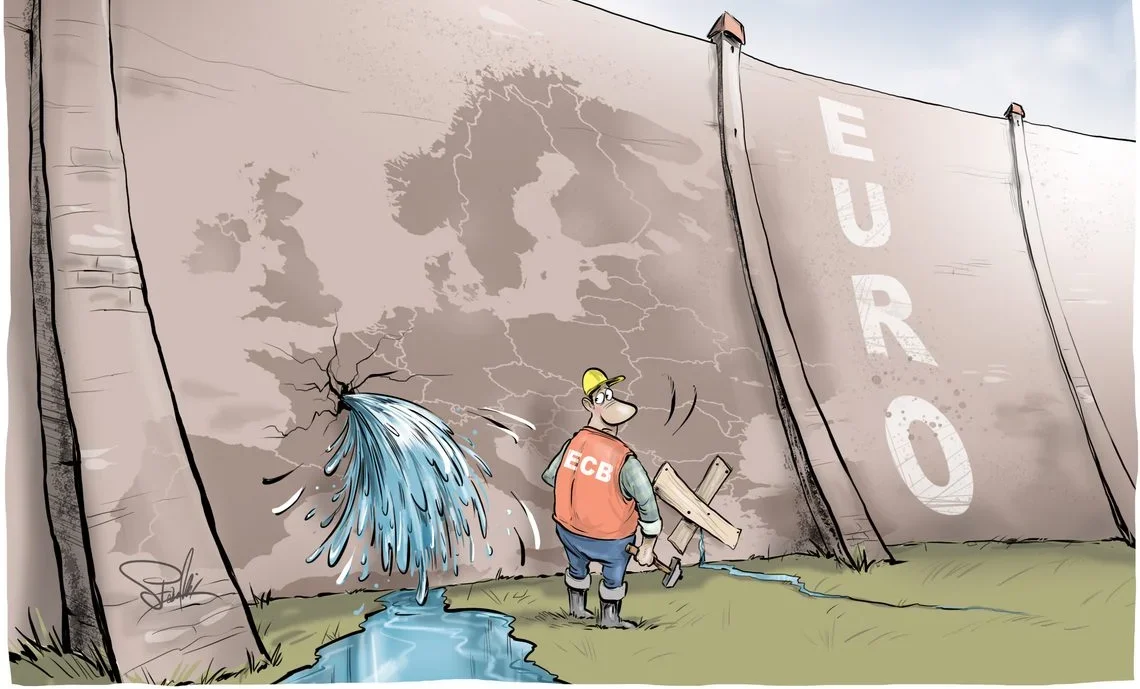
Brexit was driven largely by two factors: the EU’s petty insistence on unnecessary standards and a complete misjudgment by Prime Minister David Cameron’s government in London. Excessive standards have already cost the EU one member and have hampered healthy internal competition; applying them selectively would alienate others. Admitting Ukraine while passing over the Western Balkans would be a slap in the face to those countries. At that point, it would also be essential to admit Albania, Kosovo, Montenegro and North Macedonia.
The UK, too, may once again draw closer to the EU, in a form yet to be determined. Above all, the offer of associate membership to Canada shows that the EU needs to drastically rethink its old structure. Chief among the changes would be a truly free internal market, with sovereignty over most other matters returned to member states, which could pursue regional cooperation among themselves – in energy, for instance. Defense, likewise, should be handled by a separate association of willing countries, organized according to potential threats.

Our Partners