A firewall that backfires
The Alternative fur Deutschland (AfD) won some 44 percent of the vote in the election for the regional parliament of Saxony-Anhalt. The AfD is labeled “populist” and “right-wing” by most media and is marginalized by all other political parties in Germany. The German domestic intelligence service, which depends directly on the chancellor, has declared parts of the AfD a “confirmed right-wing extremist organization,” whatever that means. The Christian Democrats (CDU) fell from 38 percent to 17 percent, while other parties, including the Social Democrats (SPD), scored less than 10 percent.
The result, although expected, sent shockwaves through Berlin and Brussels, as well as European political institutions. All sorts of skeletons are being taken out of the closet, accompanied by warnings that democracy is in danger. Yet the situation should be viewed unemotionally and pragmatically. It is certainly not true that the 44 percent of voters who supported the AfD in Saxony-Anhalt are extremists.
Saxony-Anhalt is a small state with some 2.1 million inhabitants, out of Germany’s total population of around 84 million. It has traditionally been governed by the CDU, which has consistently held the largest share of the vote. It is one of Germany’s less affluent regions, with gross domestic product (GDP) per capita standing at roughly 70 percent of the national average.
Change will be possible only with sound, business-friendly and more conservative policies. As long as the CDU remains dependent on the Social Democrats, this will not happen.
The AfD was formed more than a decade ago as a predominantly economic party, criticizing mainly the weaknesses of the euro. The Merkel government immediately marginalized the party, attacked its founders and wrongly labeled it “anti-European” and “right-wing.” Eventually, the original founders were pushed out, and the party also took up the neglected issues of immigration and security. As these problems became increasingly pressing, the AfD expanded its focus on them. It also adopted other positions that include criticism of the European Union and opposition to support for Ukraine.
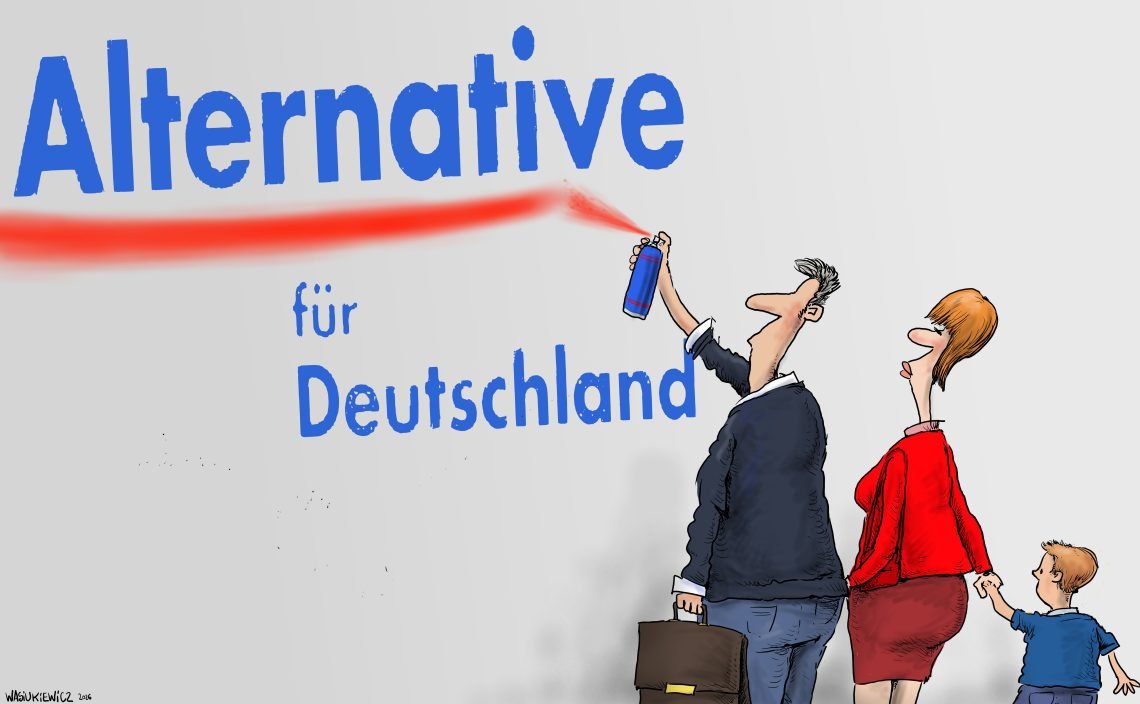
The established parties quickly marginalized the AfD and erected a “firewall” against any cooperation with it. That firewall, however, has backfired. It has provided the AfD with a protected space from which to oppose and criticize the political establishment.
Stagnation and disillusioned voters
Unfortunately, there is much to criticize. During the Merkel era and afterward, the Christian Democrats moved to the left and largely abandoned their Christian-conservative tradition. This left a vacuum on the conservative side of the political spectrum. Similarly, the Social Democrats lost their traditional working-class electorate and shifted toward a form of “woke” politics, creating the impression that the party had evolved from an organization representing workers into a platform for those who do not want to work. The AfD consequently became a home for frustrated sections of society.
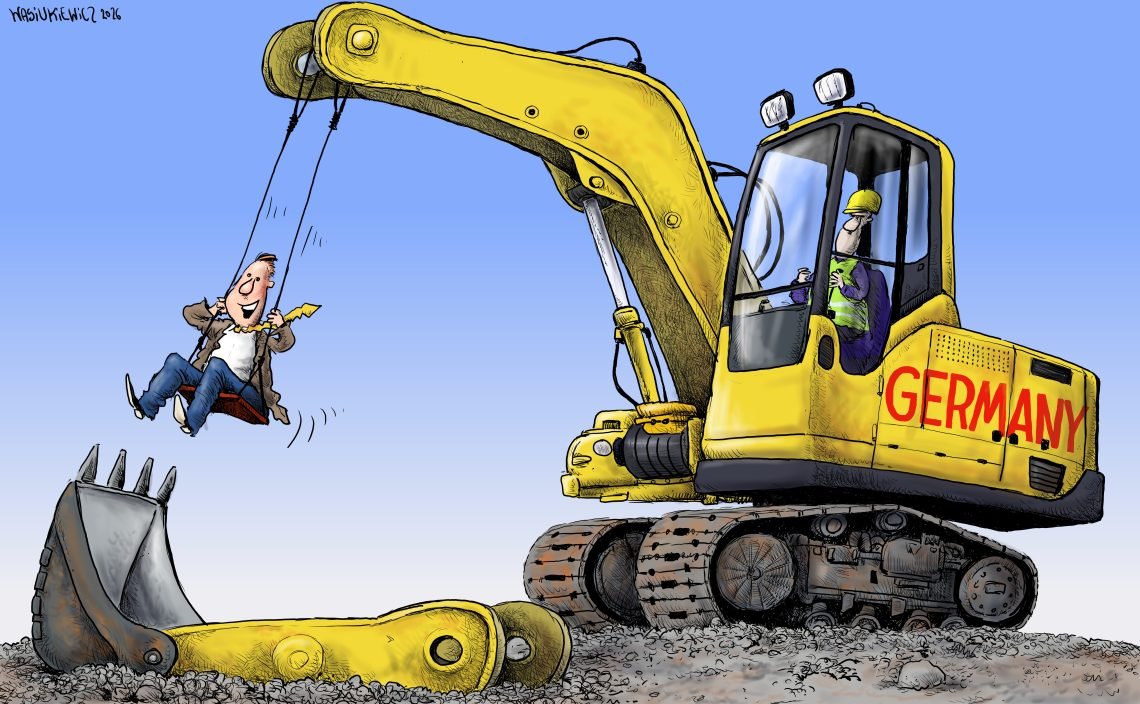
This trend was reinforced by the performance of successive governments. For 16 years under Angela Merkel’s CDU, followed by three years under the SPD, leaders accelerated economic and political decline while selling stagnation as stability.
Industrial jobs are being lost in large numbers because of Germany’s deindustrialization, which has been caused mainly by failed policies. Infrastructure is outdated and poorly maintained. Debt is rising and inflation is biting. Energy costs are at their highest because of misguided, populist and short-sighted politics. The security situation is precarious.
Friedrich Merz then assumed the leadership of the Christian Democrats, promising to maintain the debt brake and raising hopes that, after three years of a rather “woke” red-green coalition, Germany would pursue more conservative and rational policies. The CDU succeeded with this program in the federal election of February 2025.
However, because of the firewall against the AfD, Mr. Merz was dependent on the Social Democrats to form a government, even though they had suffered heavy losses and had been clearly rejected by voters. The Social Democrats dictated the terms, and voters now feel that the promises made to them have been betrayed. The resulting government has been unsuccessful, and federal borrowing will triple this year. The decline continues.
This is an ideal environment for the opposition. During election campaigns, the established parties focus mainly on attacking the AfD, which predictably produces the opposite of the intended effect.
German democracy is not in danger. Its institutions are strong enough. Across Germany, however, the AfD is already the strongest party in the polls, with around 28 percent support, while the CDU is in second place with some 22 percent.
This is almost the reverse of the result of the federal election in February 2025.
The reversal probably reflects several factors. Chancellor Merz abandoned the debt brake before the new parliament was constituted in early 2025, allowing him to use the outgoing parliament’s two-thirds majority to amend the constitutional borrowing rules. This shocked many voters.
Second, hopes for more realistic and conservative policies were destroyed because Mr. Merz had to give in to the demands of his coalition partner, the SPD, which received only 14 percent of the vote in the federal election. The government is widely regarded as dysfunctional.
Meanwhile, political campaigns are driven less by realistic policy than by the objective of keeping the AfD isolated. This has proven a total failure. The established parties warned, for example, that an AfD victory would harm the German economy by reducing foreign investment and putting jobs at risk.
This is an astonishing argument. The policies pursued over the past 20 years, for which the AfD was not responsible, are already causing massive job losses, weakening Germany’s global competitiveness and driving deindustrialization. These are among the principal reasons why voters want change.
Such change will be possible only with sound, business-friendly and more conservative policies. As long as the CDU remains dependent on the Social Democrats, this will not happen.
GIS expert Professor Andreas Rödder examined the situation and its possible future trajectories in a notable analysis published by GIS in August 2026. In his most likely scenario, Germany’s political establishment continues to exclude the “new right.” If the CDU does not move its policies in a more conservative direction, the party risks disintegrating.
This does not mean that the AfD will take control of the country. It does, however, mean that Germany’s government is likely to remain dysfunctional for the time being.
Our Partners