
Ukraine, what next?
Recently, rumors have circulated about a new wave of mobilization in Russia. The war between Ukraine and Russia is intensifying. Ukraine has successfully struck military targets and infrastructure deep inside Russian territory, causing significant damage. Meanwhile, the Kremlin is pressing harder on the front lines and appears prepared to accept heavy losses.
The war has now lasted more than four years. In hindsight, one major issue was that Western countries were initially so fearful of escalation that they did not allow Ukraine to use their weapons to target the Russian hinterland.
Western governments frequently overlooked a basic wartime principle: Everything possible must be done to secure success and establish credible deterrence.
The Kremlin was able to operate freely. It concentrated its efforts on the front lines while launching air and missile attacks across Ukraine. Supply lines remained open, production continued undisturbed and the conflict did not directly affect Russia. Western governments frequently overlooked a basic wartime principle: Everything possible must be done to secure success and establish credible deterrence. Without “power to hurt,” success is thwarted. It took almost three years for this lesson to sink in.
But what is the situation now?
The cost of hesitation
Ukrainian President Volodymyr Zelenskiy wants negotiations conducted in accordance with international law. International law, however, is designed to constrain the aggressor. The two sides disagree on who that aggressor is. Ukraine points to Russia’s invasion of its territory. Conversely, Russia views the situation more broadly, framing the narrative that Western and NATO activities threaten its security and self-determination, and that NATO’s eastward expansion itself constitutes aggression.
This disagreement makes negotiations difficult. Exhaustion may eventually help overcome the obstacles. Context is useful here. At the 2008 NATO summit in Bucharest, United States President George W. Bush advocated for Ukraine’s eventual membership at a time when Russia had not yet fully regained its strength.
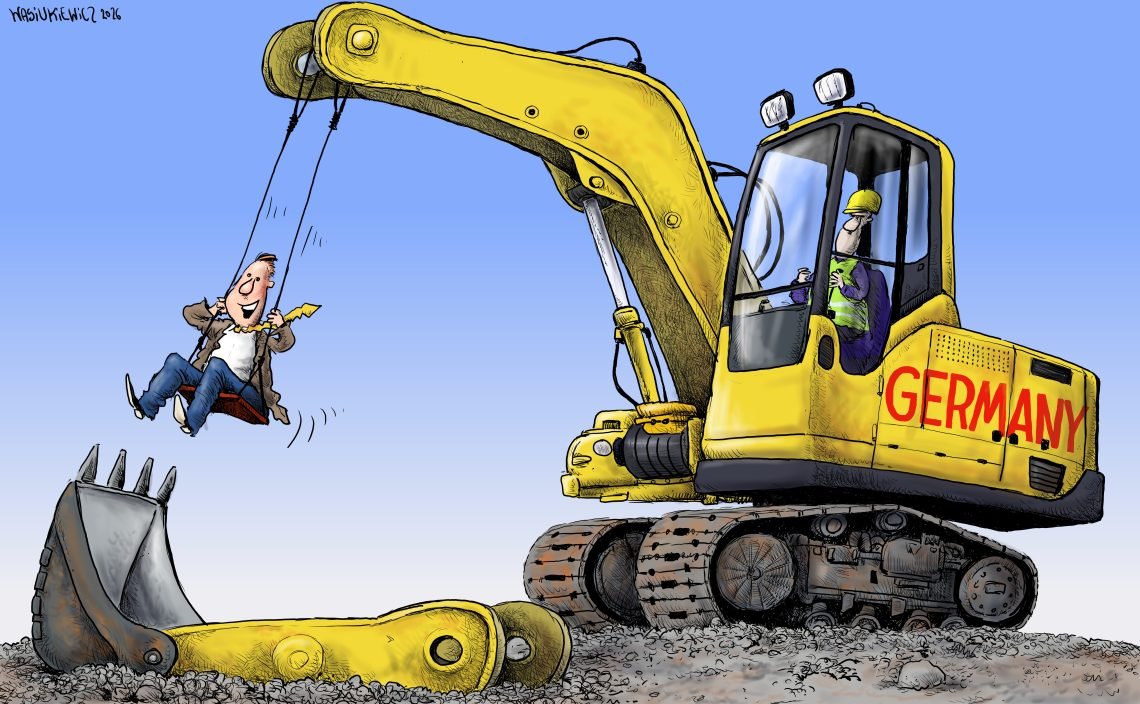
The opportunity was missed because of European resistance, led by German Chancellor Angela Merkel. Her priority was preserving a close relationship with Russia. The prevailing European strategy rested on securing cheap Russian gas, reliance on American defense guarantees and open markets with the rest of the world, particularly China.
In that framework, Ukraine’s closer integration with NATO or the European Union was seen as a disruptive factor. Ukraine therefore remained an entity caught between two blocs.
When Russia occupied Crimea and parts of the Donbas in 2014, the Western response was lukewarm. The Obama administration imposed sanctions but made clear that the U.S. would not intervene. Europe concentrated on partial sanctions but took no steps to strengthen its own defenses.
At the time, GIS already argued that the only effective deterrent would be a genuine enhancement of defense capabilities, because sanctions alone would not succeed. Unfortunately, this turned out to be true.
The war was ongoing in eastern Ukraine, yet Germany increased its dependence on Russian gas. The sanctions did not work at all.
Firmness over fear
Turning to the present, Russia faces significant challenges. European powers must position themselves clearly and continue supporting Ukraine. It is very likely that the Trump administration will maintain its backing for Ukraine, as President Donald Trump has been impressed by the country’s recent success.
What is required is a balanced approach that combines firmness with respect.
There is discussion in Moscow about the possible use of tactical nuclear weapons. The underlying reasoning is that Russia should demonstrate its willingness to use nuclear weapons, a step that has long been considered taboo. While this is a genuine concern, it should not become a reason for the West to appear weak. Showing weakness would only invite further aggression. A conciliatory posture toward Russia at this point would only prolong the war rather than remove the nuclear threat. What is required is a balanced approach that combines firmness with respect. On this basis, talks could start, opening the way to negotiations.
Strength and determination of the West and Ukraine – combined with respect – will bring Russia to the negotiating table.
Our Partners