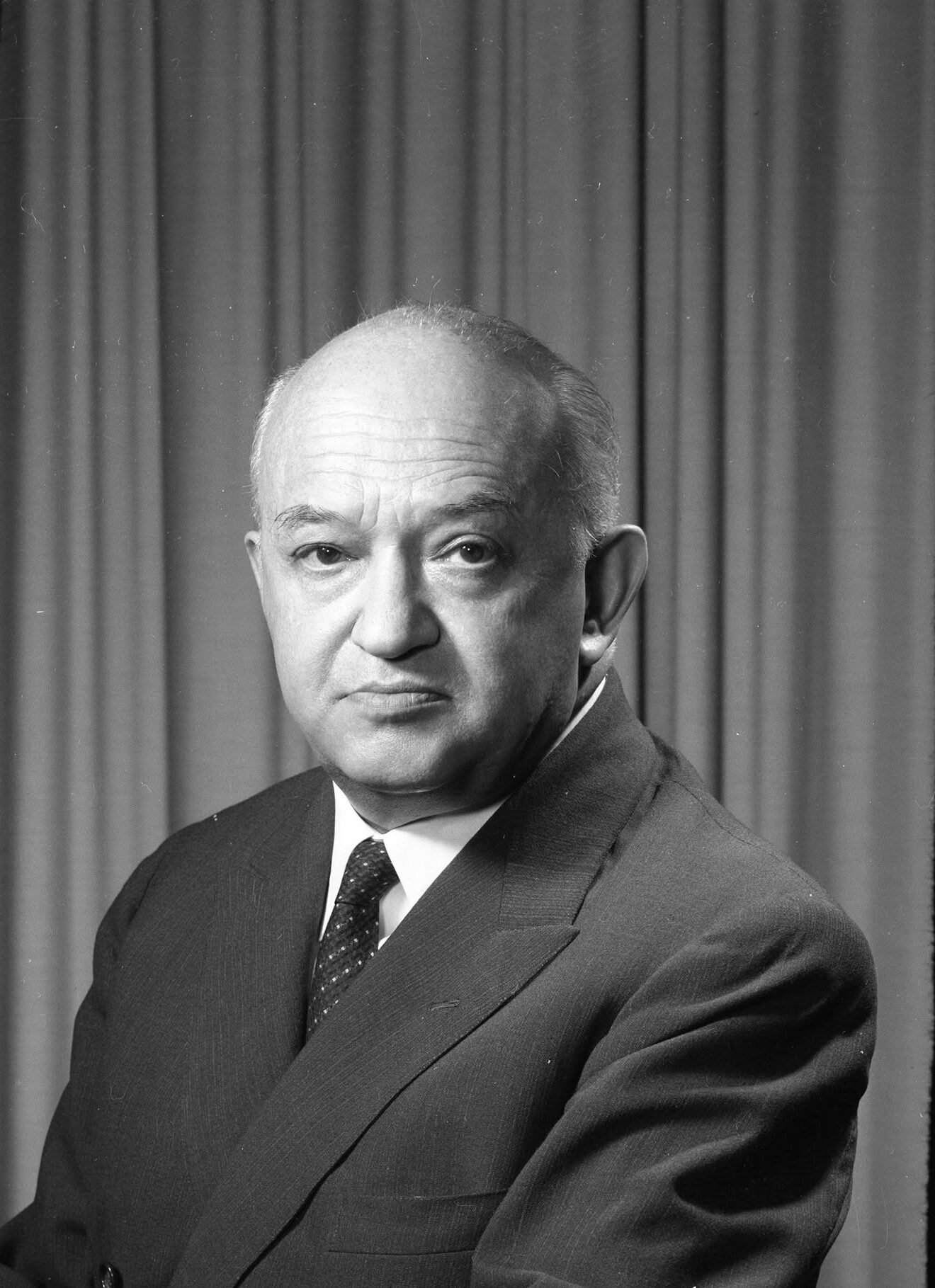
Sudha R. Shenoy (1943-2008)
“When Americans and other ‘liberals’ (statists) criticize something labelled ‘free enterprise’, they imagine they are criticizing the free market. But what these people consider to be the natural corollaries of the free market are not integral parts of it at all. They are distortions produced in its working by misguided interventionism – the attempts of the state to do the duty of other parts of society, while neglecting its own duties. This causes imbalances and distortions in the market, and these are usually taken by the statists to be its normal and essential features.”
Sudha R. Shenoy
I
With a slight twinkle in her eyes behind her thick glasses, Sudha would often casually reveal that she was born on April 6, 1943. Whatever the proper date may be, Sudha Raghunath Shenoy was born in 1943 in Ahmedabad, the most populous city of the eastern Indian state of Gujarat. She grew up there with her younger brother Subodh (a renowned physicist) in an intellectual yet traditional Indian family. As her father Bellikoth R. Shenoy (1905–1978) was India’s leading liberal (European sense) economist and the first ever Indian scholar to publish in a major academic journal, the names of Carl Menger, Ludwig von Mises, Friedrich A. von Hayek or Gottfried von Haberler were frequently heard in her childhood home. After all, B. R. Shenoy was among those students at the London School of Economics (LSE) who were totally captivated and staunchly inspired by F. A. von Hayek’s four lectures on Prices and Production, which he delivered between January 27-30, 1931. These theoretically brilliant and cogent lectures were published later that same year in English and German under the same title, launching Hayek’s razor-sharp yet always respectful academic rivalry with John Maynard Keynes (1883-1946).
Although the Shenoy family belonged to the well-known Hindu caste of Gaud Saraswat Brahmins (GSB), Sudha attended both, the Western- oriented Mount Carmel School and St. Xavier’s College in Ahmedabad, proudly baring her corresponding red Bindi on her forehead. After completing her bachelor’s degree, she moved to London for graduate studies, initially enrolling at the SOAS (School of Oriental and African Studies). In 1965, prior of deciding to follow in her father’s footsteps and study economics at the LSE, she spent some time at the University of Virginia in the USA, where she met, among others, James M. Buchanan (Nobel Prize 1986). Even before she earned her Ph.D. in Economics at the LSE in 1970, Schenoy gained her first academic recognition when her highly original work on “Pricing for Refuse Removal” won 3 rd prize in the IEA’s Evan Durbin Essay Competition in 1966. The ideas presented in her essay were well ahead of the ‘privatization debate’ of the 1970s. In 1970 she published her first book, “India: Progress or Poverty?” (1971). This research monograph is still considered one of the most important contributions to the literature on India’s post-independence economic development strategy. It was the first comprehensive Austrian treatment of development economics, with ideas carved out of the writings of Menger, Mises, and especially F.A. von Hayek. Shenoy criticized there not only the strong emphasis on state planning, the counter-productive import subsidies, and the all-encompassing state control of key economic sectors. According to her analysis, the Indian government’s attempts to redistribute wealth through social engineering have neither contributed to poverty reduction nor did they mitigate any of the widespread social inequalities. Rather, as an unintended consequence, all of these interventions led to the emergence of a class of “poverty professionals” (Shenoy), who profit from the programs as free riders. Her passionate appeal for market liberalization and sharply limited state interventions in India gained high acclaim in the 1970s.
II
Sudha initially began teaching in Great Britain at the Cranfield School of Management in Bedfordshire and during this time – unsurprisingly – worked primarily on the problems of developing economies. Among her numerous essays, only her “Underdevelopment and Economic Growth” (1970), her damning critique of “Central Planning in India: A critical review“ (1971) and, in particular, her 2 nd book “India: Progress or Poverty? A Review of the Results of Central Planning in India, 1951–1969&” (1971) may be mentioned here. These works are sharp critiques of development aid, given with good intentions to so-called Third World countries. She argued that any government intervention aimed at socio-economic inequality is either useless or dangerous and has only two essential, often interrelated, negative effects: first, it slows down or even halts economic progress, and second, it creates a fertile ground for any form of economic and social corruption. By her consistent calling for free market reforms in the countries of the so-called Third World, her detailed and devastating critique was about 20 years ahead of its time.
Sudha Shenoy achieved international success in 1972 with her book “A Tiger by the Tail: A 40 Years’ Running Commentary on Keynesianism”. This splendid compilation of the most important works that F.A. von Hayek published between 1932 and 1972 on J.M. Keynes’s theories and the economic and socio-political consequences of Keynesian policies, was a resounding success. Purposefully using the well-known metaphor in its title, Shenoy not only linked Hayek’s respective essays, comments and/or book chapters with explicatory annotations, but also skillfully showed how Hayek’s warnings were being borne out in the current economic and social policies of most Western democracies. This collection of Hayek’s critical work amounts to a thorough refutation of Keynesianism and its devastating effects on economic theory, on policy recommendations and the teaching of economics. In light of the current economic downturn and the irresponsible promotion of deficit spending and fiscal stimulus programs as legitimate policy measures, the ideas of the Austrian School represent a viable guideline for an economic recovery. The book has been reprinted several times in revised editions under the title “A Tiger by the Tail: The Keynesianism Legacy of Inflation”.
It is, in a way, quite remarkable that just two years after the book’s first publication, the Nobel Committee suddenly deemed F.A. von Hayek worthy of the 1974 Nobel Prize in Economics. As the Prize had been awarded exclusively to mainstream scholars since its founding in 1969, the Nobel Committee may finally have felt some tension, for Keynes’s theory and approach could neither explain nor fix the prevailing period of “Stagflation”1, and the successful revival of Austrian ideas was also hard to miss. However, it could also easily have been that the Committee’s members simply wanted to wait for Ludwig von Mises’s demise before awarding the long-overdue prize to a scholar so distinctly representing the Austrian School. In any case, presumably to maintain a certain political balance, F.A. von Hayek had to share the prize with Gunnar Myrdal (1898–1987), the “Father of the Swedish Welfare State”.
Sudha’s comprehensive introduction to the book on “The Economic & Social History of Continental Europe & Britain, c. 1000–1914” was published in 1974 and soon became a standard work for historians. In 1978 she edited “Wage-Price Control: Myth and Reality”, another collection of the most pertinent works on this ever hotly debated economic policy instrument. In her methodologically significant essay “The Austrian Capital Theory and the Underdeveloped Areas: An Overview” (1991), she emphasized that a country’s capital structure not only must be viewed as a social formation in different phases of development. This combination of fixed and circulating capital in every phase, came about also as a complex network that transcended political boundaries in the 19th century and formed a global economic order. In other words, the development of a capital structure evolves over centuries and is inextricably linked to the parallel transformation of the legal system from a status quo to an independent and instrumental economic law.
III
After a teaching career in Great Britain, Sudha moved to Australia in 1972. Initially she accepted an appointment at the University of Sydney, however she relocated to the University of Newcastle (NSW), some 100 miles north of Sidney in the summer of 1974. Her academic career also included visiting professorships at various US universities, including California State University (Hayward, CA), Ohio University (Athens, OH), George Mason University (Fairfax, VA), and the Mises Institute (Auburn, AL). In her later years, she focused on British economic history up to 1914, demonstrating the close interrelationship between common law, market order, and capital structure. Her countless seminar and discussion contributions, short commentaries, and academic engagement to this subject are extensive.
Always dressed in her traditional saree of dignified colors and design, she was a witty, intelligent, and in the best sense of the word, an ‘old school’ scholar. And unlike most of her fellow Indians, she also spoke a superb English with that charming, upper-class British accent. Her knowledge of history, particularly of European economic history and the history of economic thought, seemed inexhaustible and led to her being labelled a ‘walking encyclopedia’. Sudha’s profound understanding of the Austrian School and her grasp of the usefulness of Austrian capital theory in analyzing the factors that fostered rising living standards, enabled her to recognize aspects of this history that often eluded many of her US colleagues. Her aim was to show that the application of Austrian economics, based on the notions of capital structure and division of labor, embedded in a firm legal framework historically promoted development and growth and can promote development and growth in countries of the so-called 3 rd world.
Although her publication list is somewhat shorter compared to her prolific European and American contemporaries, she was one of the most formative scholars of the Austrian School’s 6 th generation. She played a decisive role among a handful of pioneers in the revival of the Austrian School in the USA. And by all means, she also was one of the most vocal proponents of classic liberalism and against American imperialism in recent years.
Among Sudha’s most remarkable qualities, however, was how she integrated the value of individual liberty and free markets into her own decidedly Hindu perspective. She saw no contradiction between the insights of the Austrian School and her own Hinduism. For her, the intellectual connection lay in Hayek’s perception of law. Accordingly, the emergence of law is interpreted as a spontaneous order, similar to the development of language. People act spontaneously to occurrences – not randomly, but always giving in to implicit and thus not necessarily perfectly known rules. Thus for Sudha the same applied to the legal/moral sphere.
Sudha R. Shenoy was married and spent the last three decades of her life in Newcastle where she taught until she became emerita in 2004. Her consistent emphasis on the crucial importance of a comprehensive understanding of economic history is legion among her students. She died on May 31, 2008, at the age of 65, after a courageous but ultimately hopeless battle with cancer.
1 The term ‘stagflation’ was invented by Iain Macleod (UK), G.v.Haberler however defined it as “the coexistence of significant inflation and substantial general unemployment and slack over a considerable period.”

Our Partners