
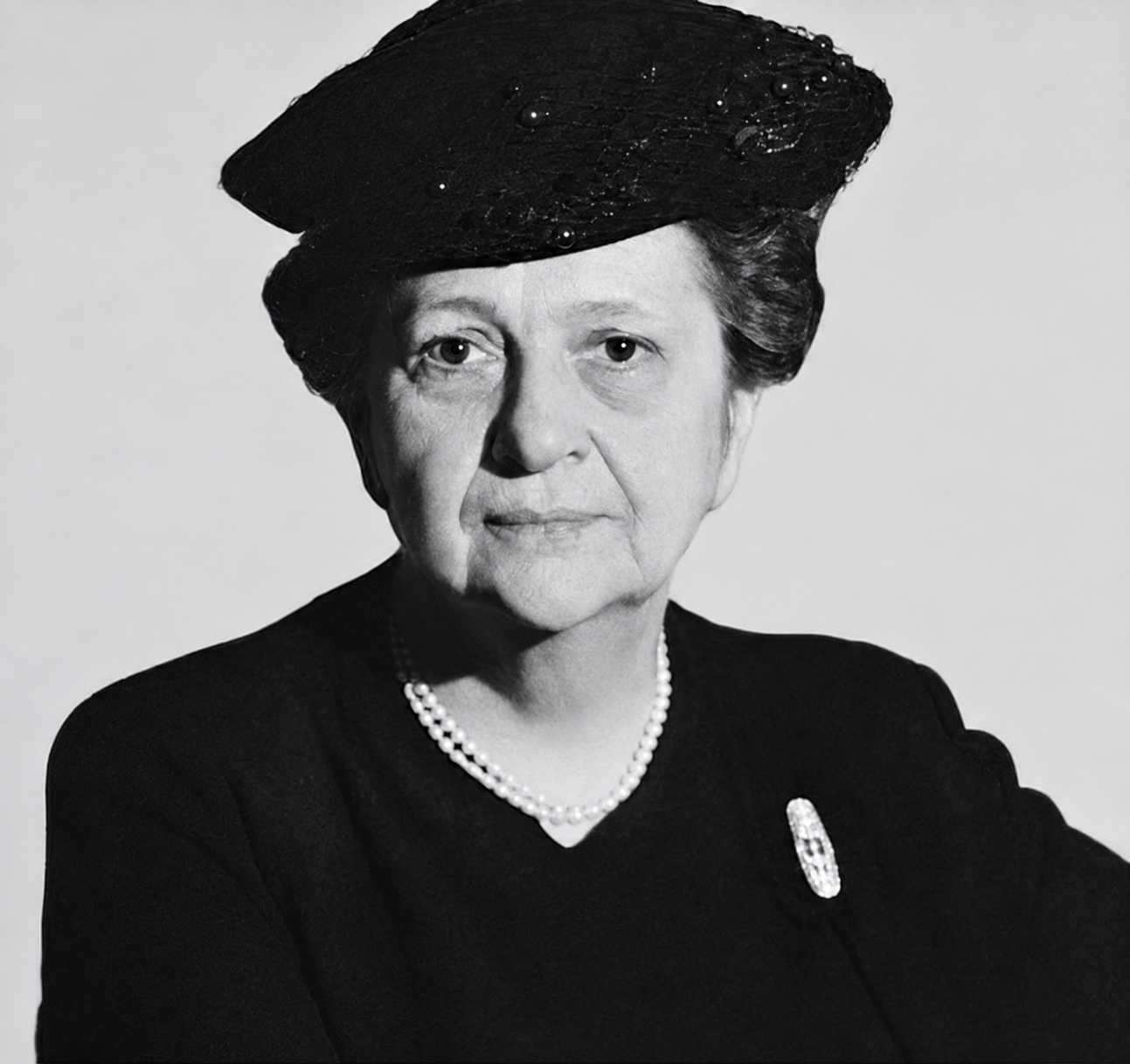
Friedrich Freiherr von Wieser (1851-1926)
Memorizing a great Austrian scholar after 100 years.
“The value of goods is derived from the value of wants.”
Friedrich von Wieser
TAKE AWAY
Friedrich von Wieser taught at the universities of Vienna and Prague and succeeded Carl Menger at the University of Vienna in 1903. Together with his brother-in-law Eugen v. Boehm-Bawerk, he shaped the 3 rd generation of Austrian economists including Ludwig von Mises, Joseph A. Schumpeter or Richard von Strigl. He was the last Minister of Commerce of the Habsburg Empire. Wieser’s two main contributions to economic science are the Theory of Imputation, which established that factor prices are determined by output prices and his Principle of Opportunity Cost, which is the foundation of the Theory of Subjective Value. His term Grenznutzen became a standard as the Principal of Marginal Utility, which considers value as a natural category that would belong to any society no matter what property institutions had been established.
The famous economic calculation debate of the 1930s (between the Austrians and Socialist academics) began with von Wieser’s notion of the paramount importance of accurate calculation for economic efficiency. His major works include such classics as Der natürliche Wert (1889), Social Economics (1914) or his last book Das Gesetz der Macht (1926).
Introduction
It is 2026 and lest we forget that Friedrich von Wieser, one of the most profound but at times somewhat underestimated scholars has died 100 years ago in his summer residence ‘Brunnwinkl’ in St. Gilgen some 15 miles east of Salzburg.
Friedrich von Wieser was born on July 10, 1851 into a notable family of Austrian government officials. His father, Leopold von Wieser was a member of the privy council in the KuK War Ministry in Vienna. Following family tradition, Friedrich received his secondary education at the elite Viennese Schottengymnasium and grew up in a family that has been portrayed as endowed with some artistic inclinations. After completing his education at the Schottengymnasium, he studied law at the University of Vienna and graduated there in 1872. He joined public service as a government employee the same year, and like his close friend and later brother-in-law Eugen von Boehm-Bawerk (1851-1914) was awarded a state scholarship to do more detailed economic research in 1875. Both scholars spent about two years at the universities of Heidelberg, Leipzig and Jena to study with profs. Karl Knies (1821-1898), Wilhelm Roscher (1817-1894) and Bruno Hildebrand (1812-1878) the leading members of the German Historical School. However, it was neither one of them who stimulated or even left any mark on Wieser’s or Boehm-Bawerk’s thinking. To the contrary, although both were never direct students of Carl Menger (1840-1921), his ground-breaking book ‘Principles of Economics’, once and for all inspired and influenced them.
In 1884, von Wieser published his first book, Über den Ursprung und die Hauptgesetze des Wirtschaftsschaftlichen Werthes. This work served as his postdoctoral habilitation and shifted his economic focus from the labor-time costs of production to the psychological valuation of users. Closely adhering to Menger’s pathbreaking insights, this book helped establishing the theory of subjective value. Wieser analyzed the emergence of value from individual utility and articulated laws for value exchange by arguing that the value of a good is based not on labor costs, but on its subjective usefulness and scarcity (marginal utility). Wieser has set the stage for modern microeconomics and laid the ground work for the so-called “imputation” theory as well as the “alternative cost” concepts that later defined the Austrian School’s approach to production. His basic concept of the imputation process, in contrast to classical economics, was subjective and focused on the marginal utility of resources, not on their physical costs or labor-based production costs. For Wieser production goods that offer future utility and possess value even as scarce commodities derive their value from their yield.
Academic career in Prague
In the fall of 1884, at the young age of 33, Friedrich von Wieser was appointed professor at the German speaking Charles University in Prague and joined Emil Sax (1845-1927) in the department of Law and Economics. Due to the simmering national conflict, the revered Charles University, which was founded in 1348 by King Charles IV, was divided in two fully independent institutions. From 1882 on there were the ‘German Karl-Ferdinand University’ and the ‘Czech University Karl-Ferdinand’ on the same site.
While teaching in Prague, Wieser devoted his research chiefly to problems of currency, taxation and matters of social and economic policy. However, he also worked on the political and cultural problems of Bohemia, particularly its German-speaking minority. In 1889 his important book Der natürliche Werth (Natural Value) appeared in Vienna and gained him almost immediate praise due to the further development of his imputation theory as well as his opportunity cost concept. As one of the first books by an ‘Austrian’ author, this classic was translated into English and was introduced by William Smart (1853-1915), the Scottish economist who was largely responsible for the dissemination of the Austrian School’s insights and theories in the English speaking world. When Wieser was elected rector in 1901, he delivered his first major step into sociology in an acclaimed address “Über die gesellschaftlichen Gewalten” (1901). In this essay he not only successfully merged his work on the value of money with his increasing focus on the political and sociological issues surrounding it. This work was also a supplemented the theory of urban rents.
Return to Vienna and major contributions
Only two years after he assumed the rectorship in Prague, Friedrich von Wieser accepted an appointment at, the University of Vienna. In 1903 he took over the prestigious professorial chair from Carl Menger, who had retired from active teaching to focus on his own research. After his friend and brother-in-law Eugen von Boehm-Bawerk resigned as kuk Minister of Finance in 1904, the two most prominent representatives of the Austrian School taught at the university of Vienna and molded the thinking of the prolific 3 rd generation of the Austrian School of Economics. However, at that time there were also other eminent scholars, among them Eugen von Philippovich (1858-1917) or Victor Matja (1857-1934). In 1914 Wieser published his Theorie der gesellschaftlichen Wirtschaft (1914) in Vienna, arguably among the most important systematic works of the Austrian School of Economics. It has been translated into English by A. Ford Hinrichs and was published in 1927 with a lengthy Preface by Wesley C. Mitchell (1874-1948). Wieser succeeded by combining the marginal utility theory with sociology and the analysis of the overall process of a modern market economy. It was in this work that he coined the very fitting term opportunity cost and gave shape to the theory that marked the beginning of the distinction between the cost of production and economic cost, i.e. the cost of production plus the opportunity cost of not being able to obtain an alternative. Here Wieser also invented another fitting term Grenznutzen (marginal utility), which is based on the value of productive resources on their contribution to the final product, recognizing that changes in the amount used of one productive factor would alter the productivity of other factors.
However, Friedrich von Wieser was also perfecting Carl Menger’s important study of currency, which discussed both the historical evolution of money and the theory of its value, by introducing a definition of cost, which is compatible with the Theory of Marginal Utility. Wieser used Menger’s monetary theory from which he devised his own. Although Wieser’s idea was initially rejected by several mainstream economists, it was his disciple Ludwig von Mises (1881-1973) who made it the basis of his seminal Theorie des Geldes und der Umlaufmittel (1911). Is has been translated as Theory of Money and Credit (1934).
Political involvement and legacy
Mention must also be made that for Wieser nothing should be more obvious than that no economic system can function according to any design when its most important parameters of action, such as wages, prices, or interest rates are transferred to politicians and planners. He highlighted the importance of the free entrepreneur to economic change which he defined as being caused by some spontaneous intervention of individual men appearing as leaders on new economic frontiers. This managerial idea was later expounded by his direct pupil Joseph A. Schumpeter (1883-1950), who famously treated economic innovation as a “process of industrial mutation that incessantly revolutionizes the economic structure from within, incessantly destroying the old one, incessantly creating a new one.”
The sudden and unexpected death of Wieser’s closest friend, brother-in-law and professorial colleague Eugen von Boehm Bawerk only days after the fateful outbreak of WWI was a hard blow from which he only slowly, and according to F.A. von Hayek (1899-1992) one of his last students, hardly ever recovered.
Although Wieser was fully committed to his students he eventually entered the Austrian political arena in 1917 when he was named a lifetime member of the Reichstag, the upper house of the Austrian parliament. During the summer of 1917 he was appointed Minister of Trade and served until the end of WWI. While the tragedy of the collapse of the Austro-Hungarian Empire was already in sight, he was mainly concerned with the planning of a postwar customs union with Germany. In 1919 he returned to academia but retired from active teaching only 4 years later. It seems that this time gave him the final impulse to the resumption of his sociological work. Shortly before his death in Salzburg in 1926 his last book, Das Gesetz der Macht was published in Vienna. Built on David Hume’s controversial thesis that all power rests on opinion, this treatise describes the role that elites of various sorts play in all power structures. This book is still of the utmost importance.
Two of his unpublished works appeared posthumously, ‘Geld’ (Money) in 1927, summarizing his monetary theory and his Gesammelte Abhandlungen, edited with a lengthy introduction by his pupil Friedrich A. von Hayek in 1929. Wieser’s most important contribution is that he was able to combine the Austrian theory of utility with an evolutionary theory of institutions by offering solutions to the so-called ‘Tragedy of the Commons’ some 40 years before Garret Hardin (1915-2003) coined this phrase. In general terms the theory suggests that when individuals, acting in self-interest, overuse a shared, finite resource, leading to its eventual depletion for everyone.


Our Partners