
Helene (Lene) Lieser-Berger (1898-1962)
“She needed no invitation, she came and went when she felt like it. She was Viennese born and educated … highly intelligent, practical minded, and …good looking… and no one ever asked her in vain for help or assistance.”
Margit von Mises (1896-1993)
The women who shaped Mises’ Vienna Seminar
Even before women were allowed to study at the Faculty of Law and Political Science at an Austrian university, Ludwig von Mises (1881-1973) supported talented young female students and invited them to his exclusive Privat-Seminar. This legendary discussion roundtable in Mises’ office at the Vienna Chamber of Commerce could almost be labeled the ‘origin of the 4 th generation’ of the Austrian School of Economics. With a few exception, more or less all of them participated between November 1919 and the fall of 1934. Besides his later world-famous male students such as F.A. von Hayek, G. von Haberler, F. Machlup, P. Rosenstein-Rodan, O. Morgenstern, F. Kaufmann, E. Voegelin, F. von Engel-Janosi, L. Bettelheim-Gabillon or A. Schütz his seminar included Helene Lieser, Marianne von Herzfeld, Ilse Mintz-Schüller, Martha Steffy Browne or Gertrude von Lovasy. Elisabeth Ephrussi (de Waal) had the distinctive honor of opening the Privat-Seminar by presenting a paper on the interest rate theory of the (today rather forgotten) American economist Thomas Nixon Carver (1865-1961).
Whenever F.A. von Hayek talked about his years in Vienna during the 1920s, he would often wink mischievously and remark that some of his friends probably attended the seminar in part to be in the company of the ‘very pretty, brilliant, quick-witted and entertaining Fräulein Lieser’. After all, recent art historical research seems to prove that none other than Gustav Klimt (1862-1918) portrayed the 19-year-old Helene Lieser as one of his last works in the fall of 1917. Klimt’s ‘Bildnis Fräulein Lieser’ was considered lost for about 100 years but not too long ago was rediscovered in an Austrian private collection.
Helene Lieser: A pioneer of Austrian Economics
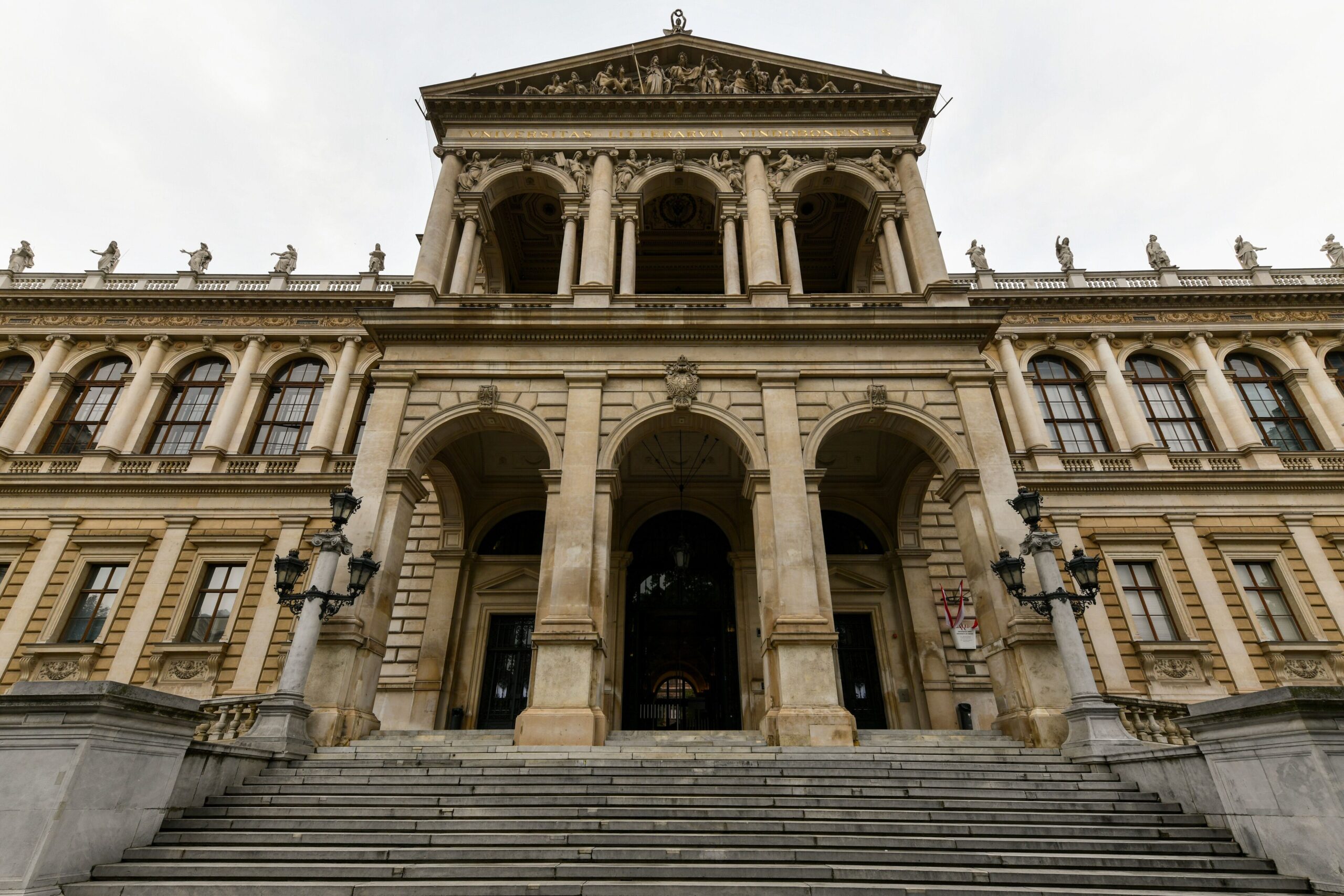
Helene (Lene) Lieser was born on December 12, 1898, as the middle of three children in a wealthy and respected industrialist family in fin-de-siècle Vienna. On her mother’s side, Lieser was distantly related to Ludwig von Mises. Following certain Viennese traditions of her era, she tried her hand at the piano under the supervision of Arnold Schoenberg (1874–1951). Because women had been admitted to the study of philosophy in Austria since 1897, she began studying at the University of Vienna after completing her secondary education with honors. After the end of WWI with the chaotic collapse of the Austro-Hungarian Monarchy, starting in spring of 1919 women were admitted to study at the University of Natural Resources and Life Sciences (BOKU) as well as at the Faculty of Law and Political Science. However, with the departure of leading professors such as Boehm-Bawerk, Wieser and Philippovich, the faculty was a state of academic decline and administrative disarray. For political reasons, prominent scholars like J.A. Schumpeter (1883-1950), Ludwig von Mises (1881-1973), and Karl Pribram (1877-1973) were blatantly marginalized as apparent candidates, and professorships were hastily filled with less qualified and, in some cases, rather problematic individuals. However, the fact that despite this lamentable situation the Austrian School succeeded in bringing about an unsurpassed wealth of groundbreaking works in interwar Vienna is essentially due to Ludwig von Mises and the intellectual life outside the university. Inspired by Mises’ teachings, Lieser decided to switch to the Faculty of Law and Political Science, got various philosophy courses credited and thus was able to obtain her doctorate in political science as early as June 1920. She was commended in the press as the first female student graduating with a Dr. rer. pol. in the new Republic of Austria. According to her colleagues among them Hayek, Haberler, Morgenstern or Rosenstein-Rodan, she was ever so proud that she had beaten her male colleagues to it by a year or two. Martha Steffy Browne (1898-1990) was the second female to get her degree there.
Lieser’s dissertation on “Die währungspolitische Literatur der österreichischen Bankozettelperiode" was primarily supervised by L.v. Mises (officially also by Othmar Spann, 1878-1950). Her detailed historic research of and theoretical approach to one of the most dramatic monetary- and fiscal policy episodes of Imperial Austria between 1762 and 1811 established her academic standing. Within this period the first large-scale issuance of government-emitted paper money took place in Austria and these hastily issued Bancozettel served primarily to reduce the enormous national debt and to continue financing the Coalition- and Napoleonic Wars. The options for taking on new debit from domestic and foreign banks or from the estates of the Crown Lands were running thin as for the most part government revenues had already been pledged, and interest payments were placing a massive strain on the budget. Thus, increasing the money supply through paper money (like today!) was seen as a way to generate additional funds at virtually no cost. As a consequence the money supply between 1796 and 1810 increased from about 44 million Guilder to over 940 million Guilder and ultimately triggered the Empire’s bankruptcy. In the spring of 1811, these obscure and detested Bancozettel were exchanged for Einlösungsscheine at a ratio of 5:1 (an 80% loss!) and finally withdrawn from circulation by the end of 1812. The subsequent Wiener Währung failed and was replaced after only one year by Antizipationsscheine. And to stabilize the completely shattered monetary system, the independent Privileged Austrian National Bank was founded in 1816.
Beyond academia: An intellectual force in Vienna
With Mises’ help and his extensive connections to the financial sector, Lieser found an influential position at the “Verband österreichischer Banken und Bankiers”. Soon she skillfully began to play a central role as an eloquent hostess and sharp debater at the meetings of the Nationalökonomische Gesellschaft. From 1922 onward, she also worked part-time for the Gustav Fischer Verlag (Jena) as editor of Adam Heinrich
Müller’s book an “Attempts at a New Theory of Money. With Special Consideration of Great Britain”. Lieser used her explanatory introduction to subject Müller’s romantic, organic, and state-oriented theories, to a critique from the perspective of Mises’ monetary approach. Müller’s work was published as the 2 nd volume of the (somewhat baffling) series “Die Herdflamme. Sammlung der gesellschaftswissenschaftlichen
Grundwerke aller Zeiten und Völker” under the auspices of Othmar Spann.
Despite her undisputed talents her publication list is rather short compared to her contemporaries. And yet due to her countless seminar- and discussion contributions, short comments and momentous academic as well as social activities, Lene Lieser must be considered an important figure of the 4 th generation of the Austrian School of Economics. In the fall of 1926 Lieser joined Ludwig von Mises and F.A. von Hayek in their tireless efforts advocating the establishment of a non-partisan research institute in Vienna. She served as a member of the steering committee and enthusiastically contributed to the launch of the “Austrian Institute for Business Cycle Research”. The institute officially commenced its work on January 2, 1927, with von Hayek as its scientific director and Oskar Morgenstern as its initial sole employee. Lieser actively participated in the academic committee and initiated several projects and regularly attended its meetings as secretary of the Verband österreichischer Banken und
Bankiers until 1937. However, due to the statutes, neither Lieser, nor Martha Steffy Browne or Ilse Mintz were able to participate in the meetings of the so-called Geist Kreis, an intellectual circle founded in 1921 by Hayek and his close friend Herbert von Fürth (also G.v.Haberler’s brother-in-law).
During the discussion that concluded his last paper at the Mises-Seminar on Dec. 20, 1929 Paul Rosenstein-Rodan warned his friends about the looming dangers of a Nazi take-over in Vienna and revealed that he is secretly preparing for his imminent departure. He left Vienna in the spring of 1930, followed by F.A. von Hayek one year later, and L. v. Mises, G.v.Haberler, Marianne v. Herzfeld among others in the fall of 1934. With Rosenstein-Rodan and Hayek in London, Mises, Haberler or Herzfeld in Geneva, the famous seminar in Vienna came to an abrupt end. Mises accepted the life-saving invitation from William E. Rappard and Paul Mantoux to the Institut Universitaire des Hautes Études Internationales in Geneva. Dismayed and saddened, the philosopher Felix Kaufmann (1895-1949) composed the Farewell to Professor Mises song, which affectionately parodied the intense and fruitful debates in the seminar meetings, and was recited to the tune of an Austrian folk melody.
Exile, resilience, and a forgotten legacy
Starting in late fall of 1937, Lieser also covertly began to organize her parting from Austria and thus agreed to a so-called marriage of convenience with Karl Berger (born in Munich in 1901 with a Yugoslavian citizenship) in July 1938 (she barely knew him and was officially divorced in 1950). Provided with the surname Berger, a valid Yugoslavian passport and the payment of the demeaning Reichsfluchtsteuer, she, her sister and her nephew managed to escape Nazi-occupied Vienna and arrived distressed in Geneva at the end of July 1938. Some of her close relatives tragically
perished in concentration camps and large parts of her family’s assets were confiscated.
In Geneva, she met up again with her doctoral advisor L.v. Mises and her colleagues G. v. Haberler and Marianne v. Herzfeld. Mises was about to prepare his Nationalökonomie: Theorie des Handelns und Wirtschaftens for printing and asked Lieser to take on the task of proofreading theapproximately 700 galley proofs. L.v. Mises’ German magnum opus was published in Geneva in mid-June 1940. However due to the raging war and the political circumstances, it could no longer reach German-speaking readers. The English version (not a translation) was published 9 years later in September 1949 as “Human Action: A Treatise on Economics“. As Switzerland was dangerously surrounded by Nazi troops, in July 1940 Mises decided to leave Geneva and fled with his wife Margit von Mises via France and Spain to Lisbon and from there to New York.
Lieser remained in Geneva until the end of WWII and was involved there in helping displaced victims of Nazi terror. She is also said to have worked for or in the vicinity of various intelligence agencies. However, several months after the end of WWII Lieser returned to Vienna with an attempt not only to reclaim her family’s confiscated assets and start the restitution proceedings. Lieser also tried to learn about the fate of her former colleagues and revive academic contacts. For these reasons Lieser participated in the first events of the ‘European Forum Alpbach’ (formerly ‘Internationale Hochschulwochen’) in Tyrol from fall of 1946 onwards. There she was an active and highly respected participant in the discussions with scholars like v. Hayek, Karl R. Popper(1902-1994), Erwin Schrödinger (1887-1961) or Ludwig von Bertalanffy (1901-1972). In spring of 1947, Lieser was re-elected to the Board of rustees of the Austrian Institute for Economic Research. She left however Vienna for Paris in 1948 to accept the position of secretary to Sir Donald MacDougall, the first director of the Organisation for European Economic Co-operation (a precursor to the OECD). In her intellectually significant status she helped shaping the early socio-economic direction of the new organization. In mid 1949, Lieser assumed the ranking position of Secretary-General of UNESCO (United Nations Educational, Scientific and Cultural Organization) and the International Economic Association (IAA) in Paris. She represented this important institution at international congresses and also organized numerous seminal conferences. In the spring of 1961, Lieser translated a lengthy essay by Francois Perroux (1903-1987) “Économie et société. Contrainte, échange” (1960) for a German publisher. Although Perroux’s early works were heavily influenced by the ideas of the Austrian School, over time he developed a rather different approach. He attempted to prove that markets are characterized by power imbalances and dominance, and thus advocated state-directed economic planning and the concept of guided “pôles de croissance”.
Shortly after her retirement at the end of 1961, Lieser left Paris and returned to Vienna, where she died of cancer on September 20, 1962, rather lonely and largely forgotten.
Our Partners