
A new game of balance in the Middle East
The Mecca Joint Defense Agreement was signed in Islam’s holy city, Mecca. The tri-party agreement between Pakistan, Saudi Arabia and Turkiye was agreed between President Recep Tayyip Erdogan of Turkiye, Crown Prince Mohammed bin Salman of Saudi Arabia and Prime Minister Shehbaz Sharif of Pakistan.
This is a pact between the three strongest predominantly Sunni powers in the Middle East and Arabian Sea area. The combination is both interesting and telling. Pakistan, with its 260 million inhabitants, is a nuclear power with an influential army. Turkiye has NATO’s second-largest military after the United States with a thriving and innovative defense industry. Saudi Arabia’s armed forces have the most modern weapons systems, but above all, the country is a crucial player on global oil markets and has abundant financial means.
Saudi Arabia and Pakistan have a good and long-standing relationship. Riyadh bailed out Islamabad a number of times in the country’s repetitive financial crises. Ankara and Riyadh overcame their past tensions and both now have pragmatic and forward-looking agendas. And in light of the new situation in Syria, Turkiye is satisfied and the Saudis can live with it.
Their common interest is peace in the region.
Stronger together
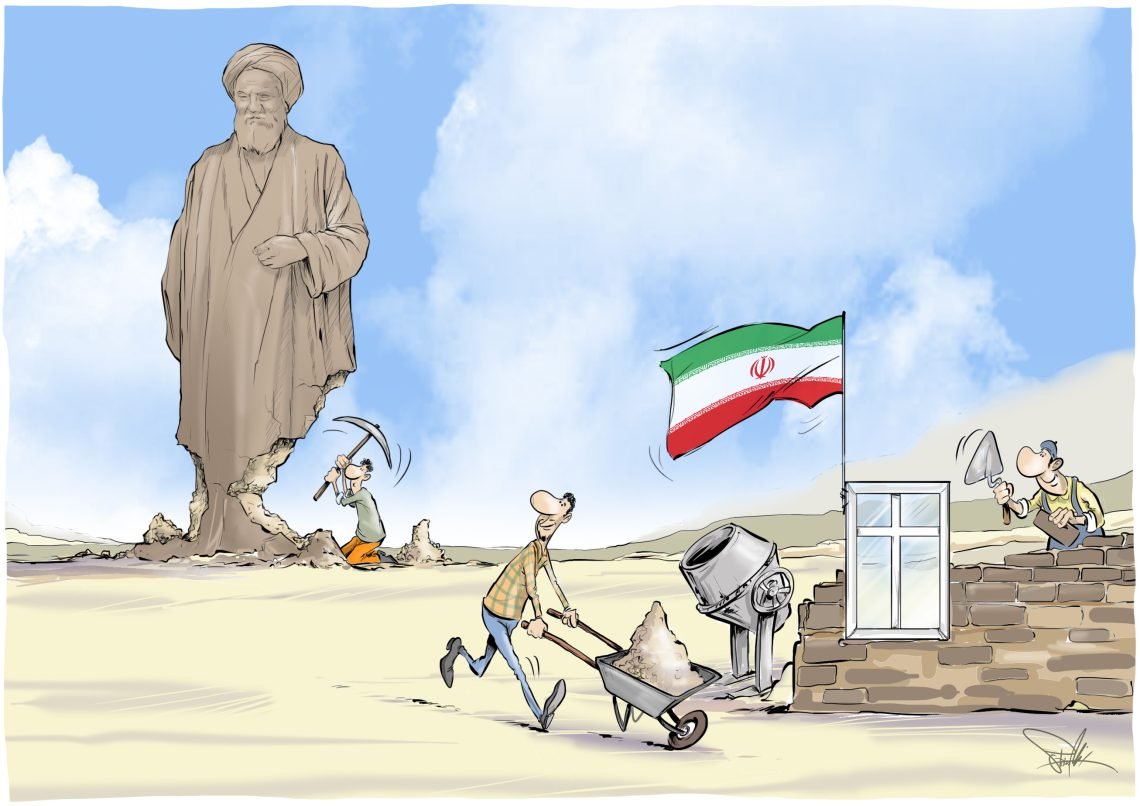
Iran was the mastermind behind many of the regional troubles and terrorist movements. It still destabilizes Yemen, the southern parts of the Arab Peninsula and impedes the access to the Red Sea. Tehran ensures there is permanent war around Israel by supporting Hamas and Hezbollah, which in parallel devastates Lebanon. Iran stirs tensions in Iraq, and until not long ago was the main supporter of the Assad regime in Syria. In all these cases, Tehran, whose regime was established on Shia theocracy, utilizes the Shia connections.
The Mecca Joint Defense Agreement appears to be the blueprint of a new world order, in which regional powers assume greater responsibilities.
It is obvious that the now-associated three powers, Pakistan, Saudi Arabia and Turkiye − all neighbors of Iran − are better equipped to deal with Tehran than the global superpowers or the JCPOA group, who made the redundant nuclear agreement with the regime in 2015.
The objective of the new defense association is not only handling the situation of Iran, although that is the most pressing matter. All three are interested in maintaining a regional balance and ensuring peace. This is good news for the other countries in the region, as the associated powers’ need to keep the balance among and around themselves will deter unilateral measures against smaller countries.
The Middle East and Arabian Sea region used to be a playground for global powers. This in turn created conditions for permanent conflicts, as global policies and interests were unable to generate political, economic and military solutions within the region. Islamabad, Riyadh and Ankara know the problems very well and are directly affected. Without explicitly making a proclamation, they are very conscious of Tehran’s destructive role and the necessity for a local replacement of the present global security architecture.
What is happening there is encouraging, but miracles do not happen overnight. The process will take time. Nevertheless, this new constellation could work to extend the reach of the Abraham Accords and to integrate Israel in a new balance, while protecting Israeli sovereignty and security.
The Mecca Joint Defense Agreement appears to be the blueprint of a new world order, in which regional powers assume greater responsibilities. In an era of increasing multipolarity, this is actually a good omen.
Our Partners