
The architecture of human freedom
The following series of articles presents the Austrian School of economics, 1000 words at a time. Nine economists. Twenty-seven articles. One coherent tradition that the establishment has been trying to ignore for 150 years. They were right.
Human Action, the most ambitious work in the history of economics. Article 7/27
Geneva. 1940.
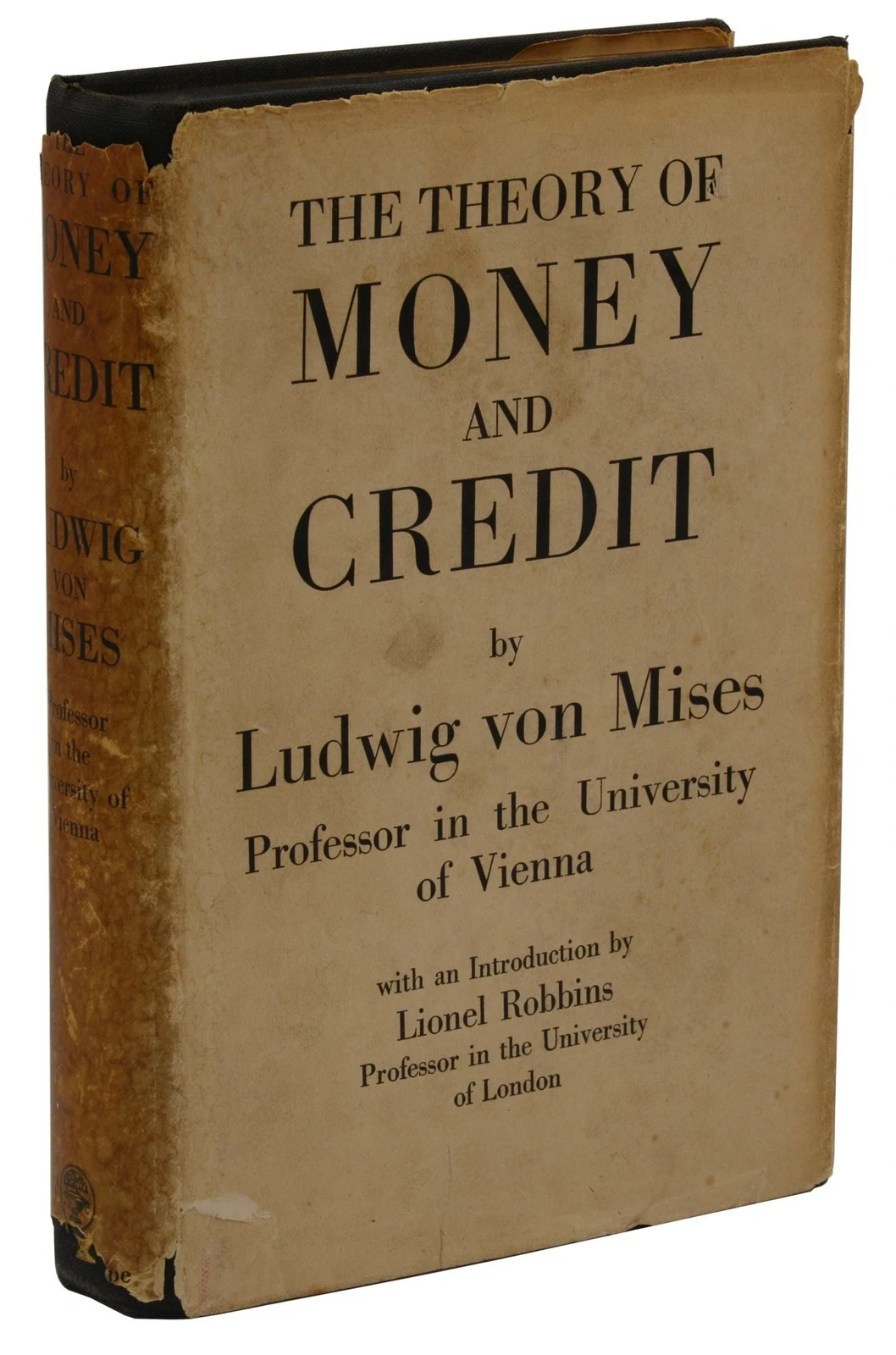
Ludwig von Mises hands the finished manuscript of Nationalökonomie to his publisher. It is the work of six years; a complete reconstruction of economic theory from first principles, written during his exile from Austria while the Nazis consolidated their grip on Europe. It is the most ambitious thing he has ever written, possibly the most ambitious work in economics since John Stuart Mill.
Within weeks of publication, France falls. The Wehrmacht rolls toward Switzerland. Mises and his wife Margit flee through southern France, across Spain and Portugal, and board a ship to America. The book, printed in German in a continent now under Nazi occupation, essentially vanishes. Almost nobody reads it. Almost nobody reviews it.
He arrives in New York at fifty-eight with no job, no income, and a manuscript that the world has just swallowed whole.
Over the next nine years, working unpaid as a visiting professor at New York University — his salary funded not by the university but by private donations from businessmen — Mises rewrites the book. Not translates it. Rewrites it, in English, expanding and deepening every argument, sharpening every proof. He is sixty-seven years old when he finishes.
Henry Hazlitt, who had reviewed Austrian economics for Newsweek and understood exactly what he was holding, personally carried the manuscript to an editor at Yale University Press. It was published on September 14, 1949. Eight hundred and eighty-nine pages. Hazlitt called it, in his Newsweek column the following week, “a landmark in the progress of economics” and “the most uncompromising and most rigorously reasoned statement of the case for capitalism that has yet appeared.”
The economics profession, now thoroughly Keynesianised and increasingly in love with mathematical models, largely ignored it. The book sold well, very well, for an academic treatise. The people who read it were transformed by it. The people who ran economic policy didn’t read it.
This book deserves more than a summary, but here goes:
One man on an island — the method made clear
Before Mises builds anything, he has to establish what economics actually is and how it works. The mainstream of his day, and ours, treats economics as an empirical science. Observe behaviour, collect data, build models, test predictions. Mises thought this was a category error; a fundamental confusion about what economics studies and how knowledge about it is even possible.
To show why, he starts where Rothbard would later also begin Man, Economy, and State: with a single man, alone on an island.
Stage one: Crusoe alone
No markets. No prices. No other people. Just a man, his needs, and the world around him.
Crusoe is hungry. He can wade into the shallows and catch fish with his bare hands. It works and he eats today. But it’s slow, exhausting, and produces barely enough to survive. He notices something: if he spent a few days weaving a net from vines, he could catch far more fish with far less effort. And if he spent longer still, weeks, he could build a boat, row further out, and return with enough fish to eat well and have surplus left over.
Three methods. Three different outcomes.

The pattern is clear. The more roundabout the production process — the longer the detour through capital goods — the greater the eventual output. But there’s a catch. During those three days weaving the net, Crusoe catches almost nothing. He goes hungry. He is sacrificing present consumption for future production.
This sacrifice has a name: time preference. People naturally value present goods over future goods. A fish today is worth more than a fish next week, because today is certain and next week is not, and because Crusoe is hungry now. The only thing that makes it rational to build the net anyway is the expectation that the future output will be large enough to compensate for the present suffering.
Psychologists see this same structure in what became known as the marshmallow test. Children who can resist eating one marshmallow now in exchange for two later consistently outperform those who can’t, across almost every life outcome measured. The capacity to defer gratification is one of the most powerful predictors of long-term prosperity, in individuals and in civilisations.
Crusoe, building his net and then his boat, is making the same calculation. He is postponing consumption today to invest in productive capacity that will multiply his output tomorrow. This is the entire logic of capital accumulation; the mechanism behind every factory, every piece of machinery, every supply chain, every technological improvement in human history. You choose to consume less today so you can produce far more tomorrow.
There is no exploitation in this. No one is being robbed. Crusoe is simply trading with himself across time. The net is his capital good. The return on that trade — the extra fish the net produces beyond what his hands could catch — is the return on his capital
Now a second man appears on the island. Friday’s strengths are different from Crusoe’s. Crusoe, having spent months on the island, has become an excellent fisherman. He knows the tides, has a good net, and can reliably pull in 10 fish a day. He’s a mediocre rabbit hunter; he catches 2 rabbits a day if he tries, but it takes most of his afternoon and he’s not very good at it.
Friday is the opposite. He grew up tracking animals and can catch 8 rabbits a day without breaking a sweat. But he’s unfamiliar with the sea, clumsy with a net, and only manages 3 fish a day when he tries.
Working alone, each doing both tasks, splitting their time, the numbers look like this:

Both men are fed. Neither is thriving. Each spends half his day doing something he’s not particularly good at, producing modest results across the board.
Now Crusoe faces a choice that cuts to the heart of what economics is actually about.
Friday has 4 rabbits. Crusoe wants those rabbits. He has two options.
He can kill Friday and take them. Two rabbits today. Problem solved, for today. But Friday is gone, and so is every rabbit Friday would ever have caught. The future stream of value Friday represents is destroyed in a single act of violence.
Or he can trade.
If Crusoe proposes that he focuses entirely on fishing and Friday focuses entirely on rabbit-catching, and they split the output, the numbers change completely:

Crusoe went from 5 fish and 1 rabbit to 5 fish and 4 rabbits. Friday went from 1.5 fish and 4 rabbits to 5 fish and 4 rabbits. Both eat more. Both are better off. Neither worked harder.
The violence option gets Crusoe 2 rabbits once. The trade option gets him 4 rabbits every single day, plus it keeps his trading partner alive and productive. This is why civilization exists. Not because humans became morally superior, but because they figured out that cooperation produces more than conquest, and that a live trading partner is worth more than a dead one.
Mises builds this observation into the foundations of Human Action. Voluntary exchange is not just economically superior to violence; it is the only arrangement under which both parties gain simultaneously. Every forced transaction makes one party worse off. Every voluntary transaction makes both parties better off, or it wouldn’t happen. Scale this across millions of people and thousands of goods, and you have a market economy. The price system that emerges from all those voluntary exchanges is not a human invention but the spontaneous result of people doing what Crusoe and Friday did on their island, over and over, until the signals became prices and the trades became markets.
No one designed this. No authority allocated them to their roles. The arrangement emerged from their different abilities and one rational calculation: cooperation beats plunder, every time, in the long run.

Stage three: But what if Crusoe is better at everything?
Now change the scenario slightly and watch the intuition break.
Suppose Crusoe has been on the island long enough that he’s become excellent at both tasks. His net is better, his technique is sharper, and he now knows the best rabbit runs, too. He can catch 10 fish a day, or, if he switches entirely to hunting, 6 rabbits a day. He’s better than Friday at both.
Friday, meanwhile, can catch 4 fish a day or 3 rabbits a day. Worse at fishing. Worse at hunting.
Most people’s instinct at this point: Crusoe should do everything himself. Why trade with someone inferior at both tasks?
This instinct is wrong. And understanding why it’s wrong is one of the most important things economics has to teach.
Look not at what each man can produce in a day, but at what each man gives up to produce it.
When Crusoe spends a day fishing, he gives up 6 rabbits he could have caught instead. Every fish he catches costs him 0.6 rabbits in foregone hunting. When Crusoe spends a day hunting, he gives up 10 fish. Every rabbit costs him 1.67 fish.
Now look at Friday’s trade-offs. When Friday spends a day fishing, he gives up 3 rabbits. Every fish costs him 0.75 rabbits. When Friday hunts, he gives up 4 fish per day. Every rabbit costs him only 1.33 fish.
The crucial comparison:

Crusoe produces fish more cheaply in terms of rabbits given up, he sacrifices less per fish than Friday does. Friday produces rabbits more cheaply in terms of fish given up; he sacrifices less per rabbit than Crusoe does. Crusoe has a comparative advantage in fish. Friday has the comparative advantage in rabbits. Even though Crusoe is better at both tasks in absolute terms, each man has something the other cannot replicate as efficiently.
Now look at what happens when each specializes fully versus when each tries to do both:

Total fish production jumps from 7 to 10 and total rabbits drop slightly. Assuming fair trade terms between them and how the gains are shared, both end up with more produce at the end of the day than they would have had they done it alone.
The principle matters far beyond the island. It explains why international trade between countries with wildly different productivity levels still benefits both sides. It explains why a surgeon who also happens to type faster than her secretary should still hire the secretary. Every hour spent typing is an hour not spent in surgery, where her comparative advantage is enormous. It explains why even the weakest economies find something to trade, and why protectionism, which tries to insulate domestic producers from foreign competition, destroys the gains that comparative advantage would otherwise generate.
None of this requires a planner. No authority on the island told Crusoe to fish and Friday to hunt. It emerged from the mathematics of their situation and their rational self-interest. Trade creates the surplus. Exchange distributes it. Both men end up richer than either could be alone. Not because anyone designed it that way, but because voluntary exchange, built on comparative advantage, is the most powerful wealth-generating mechanism humans have ever discovered.
Add a hundred people to the island. Then a thousand. Then millions, spread across continents, with specializations so fine and interdependencies so complex that no single mind can comprehend the whole. The underlying logic: purposeful action, cost as foregone alternatives, mutual gain from voluntary exchange, remains identical. Scale changes the surface complexity. It changes nothing about the deep structure.
That deep structure is what Human Action is about. And the method for studying it, Mises argues, cannot be empirical — because you cannot run a controlled experiment on an economy, cannot isolate variables in social life the way you can in a laboratory, cannot derive universal economic laws from historical data any more than you can derive the laws of gravity from the history of falling apples. The laws were there before the apple fell. History illustrates them; it doesn’t generate them.
This is the foundation Mises lays before building anything else. A man, an island, a choice — and from that, the entire structure of economic life made visible. What follows in the nine hundred pages of Human Action is the systematic construction of that structure, derived step by step from the action axiom, through exchange and prices and capital and money, all the way to a complete account of why free markets work and why every alternative to them must fail.
The method he uses to build it — praxeology, the science of human action — is where we go next. And it is the most radical and most important methodological claim in the history of economics.
This material was originally published here: https://handre.substack.com/p/the-architecture-of-human-freedom

Our Partners