
The man who destroyed Marx in print
The following series of articles presents the Austrian School of economics, 1000 words at a time. Nine economists. Twenty-seven articles. One coherent tradition that the establishment has been trying to ignore for 150 years. They were right.
Böhm-Bawerk vs. Hilferding.
Article 4/27
Vienna. 1905.
Rudolf Hilferding takes his seat in Böhm-Bawerk’s seminar at the University of Vienna.
This is not a casual attendance. Hilferding is already a prominent figure in Marxist economic circles — a contributor to the theoretical organ of the German Social Democratic Party, and the author of the only serious academic attempt to answer Böhm-Bawerk’s 1896 critique of Marx. That response, Böhm-Bawerk’s Criticism of Marx, had been published four years earlier. The Marxist movement had embraced it as their official rebuttal. Hilferding himself considered the matter largely settled.
And yet here he is. In the seminar of the man he had tried to refute. Sitting alongside a young man named Ludwig von Mises, who is twenty-four years old and absorbing everything.
Böhm-Bawerk runs his seminars with what one contemporary described as “systematic clarity” and “intellectually buoyant presentation.” He is not hostile to his critics. He engages them. He finds the flaw, names it precisely, and waits while the room works through the implications.
Hilferding attended the seminar for the full academic year of 1905–06. He never produced another major response to the Austrian critique. Böhm-Bawerk’s arguments against Marx, the ones Hilferding had supposedly answered, are considered definitive to this day.
The crack in the foundation
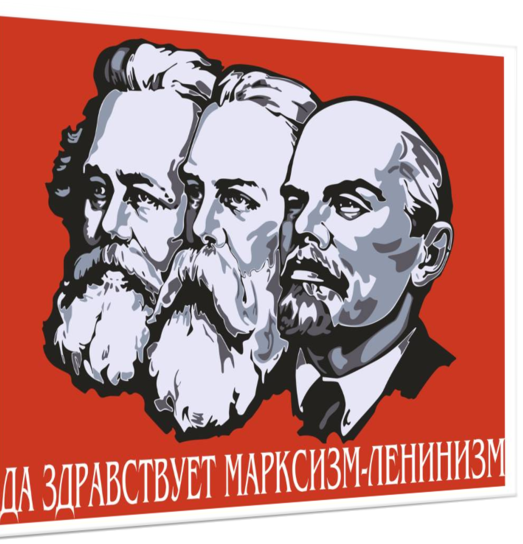
Karl Marx’s Das Kapital is three volumes. Volume 1, published in 1867, lays out the labour theory of value — the idea that the value of any commodity is determined by the socially necessary labour time required to produce it. Profit, in this framework, is surplus value extracted from workers. The capitalist pays workers less than the value they produce. The difference is exploitation. This is the entire intellectual foundation of Marxist economics and the political programme built upon it.
Volume 3 of Capital was published posthumously in 1894, eleven years after Marx’s death. Engels compiled it from Marx’s notes.
Böhm-Bawerk read both volumes carefully. Then he read them again. And he found something that Marx himself had acknowledged privately but never resolved publicly: Volumes 1 and 3 contradict each other.
Volume 1 says value is determined by labour content. Volume 3 says prices of production deviate systematically from labour values — that profit rates equalise across industries regardless of how labour-intensive they are. Marx even wrote, in his own notes, that he was aware of the contradiction and intended to deal with it later. He never did.
Böhm-Bawerk put it plainly: Marx had promised in Volume 1 to prove something that Volume 3 quietly abandoned. The system didn’t close. The mathematics didn’t work. This wasn’t a peripheral quibble — it was the load-bearing wall of the entire edifice.
What Marx got wrong about your boss
But Böhm-Bawerk’s deeper argument wasn’t about the internal consistency of Das Kapital. It was about what actually happens between workers and capitalists in a market economy.
Marx’s exploitation theory rests on a simple claim: workers create all value, capitalists pocket the surplus. The profit that goes to the factory owner is value that rightfully belongs to the worker who produced it.
Böhm-Bawerk’s response draws directly from his theory of time preference. Workers don’t wait for their wages. They’re paid weekly or monthly — well in advance of the moment when the goods they helped produce are actually sold. The capitalist, by contrast, advances those wages out of his own capital, then waits — sometimes months, sometimes years — for the revenue to come in.
Who bears the time-risk? The capitalist. Who provides the present goods — the wages — in exchange for future goods — the finished products? The capitalist. Profit is not stolen labour. It is the return on that time-advance, the same premium that explains interest throughout the economy.
The worker who demands his wages the day he finishes work is receiving present goods. The capitalist who pays those wages and waits for the market to return a profit is accepting future goods. Time preference explains the entire relationship without exploitation entering the picture at all.

The rebuttal that changed nothing
Hilferding’s written response to all of this was long, technically dense, and — by the assessment of most economists outside the Marxist tradition — a comprehensive failure. He evaded the transformation problem rather than solving it. He challenged Böhm-Bawerk’s premises without addressing his logic. Paul Sweezy, a socialist economist who edited the combined volume containing both arguments decades later, tried his best to rescue the Marxist position in his introduction. The Austrian still came out on top.
None of this mattered politically. Marxism didn’t spread because it won economic debates. It spread because it offered a compelling moral narrative — exploitation, class struggle, inevitable historical justice — that required no technical economics to accept. You didn’t need to understand the transformation problem to feel that your boss was getting rich while you weren’t. The emotional logic was enough.
Böhm-Bawerk was operating in a different register entirely. He wasn’t trying to make people feel anything. He was trying to show that the foundation of an ideology that would go on to govern a third of the world’s population in the twentieth century was built on a logical contradiction and a misunderstanding of what capital actually does.
He was right. The ideology spread anyway. A hundred million people died in the experiments that followed.
Profit is not what socialists think it is
The legacy of Böhm-Bawerk’s critique extends well beyond the debate with Marx. His framework for understanding profit and interest reorients how you think about every argument for redistribution, every attack on “excessive” corporate profits, every proposal to cap returns on capital.
Profit is not a residual extracted from workers. It is the return on time — on the willingness to defer consumption, bear uncertainty, advance resources now in exchange for uncertain returns later. Compress or eliminate that return through taxation, regulation, or expropriation, and you don’t make workers richer. You make capital formation less attractive. Investment slows. The roundabout production processes that generate real wages stop being built. Productivity stagnates.
Every country that has tried to eliminate profit as a category has discovered this. Not because capitalism has good propaganda, but because Böhm-Bawerk was right about what profit actually is and where it actually comes from.
Hilferding attended the seminar for a year. He watched Böhm-Bawerk make the argument in person, week after week, with full opportunity for challenge and rebuttal. He left without a convincing answer.
The politicians who followed Marx’s programme into the twentieth century never attended the seminar at all.
“It is not the capitalists who are to blame that the workers do not get the full product of their labour, but the conditions of production themselves.”
Eugen von Böhm-Bawerk, Capital and Interest
This material was originally published here: https://handre.substack.com/p/the-man-who-destroyed-marx-in-print

Our Partners