When policies qualify as madness
The European Council summit of March 19-20 was overshadowed by the Iranian crisis in the Strait of Hormuz and Hungary blocking a 90 billion-euro loan to Ukraine. But crucially, European leaders also chose to move forward with the Savings and Investment Union.
The initiative provides high-level political backing for tapping into an estimated 10 trillion euros in household savings to finance the Green Deal, the digital transition and defense. The measure is presented as an economic “nudge” to help the continent seize new opportunities, and will likely be reinforced through legislative and administrative measures.
The Savings and Investment Union is packaged as a step toward a European capital market. This is misleading. A functioning capital market does not rely on political direction; it is driven by supply and demand among free actors. Governments are participants, not central planners, and should operate on the same footing as private actors.
Instead of reducing the size and cost of the state, thus liberating capital and talent, policymakers are doubling down through further centralization of debt at the European level.
A genuine European capital market is indeed urgently needed and worth pursuing. However, directing investment flows at the EU level risks undermining precisely the market dynamics such a system depends on.
Much of the intellectual basis for this initiative stems from the Draghi Report on European competitiveness. While the report accurately diagnoses Europe’s problems – excessive bureaucracy, overregulation and structural inefficiencies – its proposed solutions emphasize debt centralization. This is a dangerous approach. Meanwhile, EU institutions continue to layer on new rules, such as the proposed Industrial Accelerator Act. Legislation alone does not accelerate industrialization; in most cases, removing existing constraints would be more effective.
A failed solution under a new label
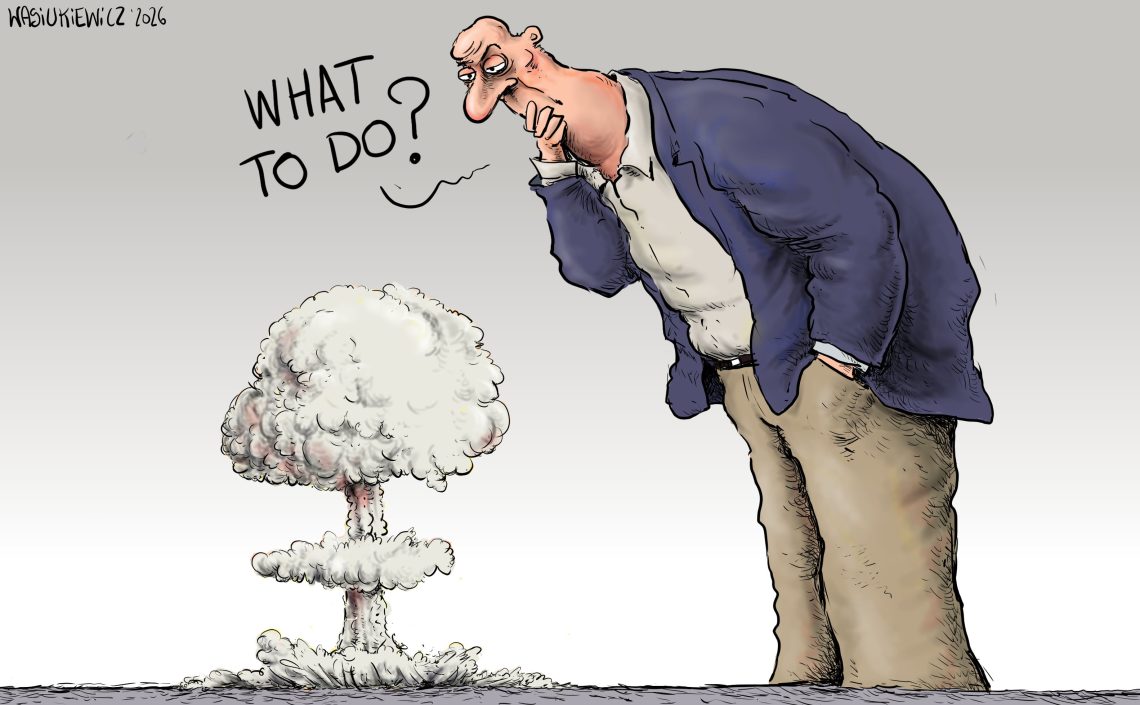
These policies reflect Albert Einstein’s famous assertion that “insanity is doing the same thing over and over again and expecting different results.”
Europe’s current malaise is the product of excessive regulation, persistent state intervention, an oversized public sector and high public spending. Yet instead of reducing the size and cost of the state, thus liberating capital and talent, policymakers are doubling down through further centralization of debt at the European level. This is not a solution. It is the same policy approach repackaged under a different label.
The stated goal of the Savings and Investment Union is to fund key EU priorities, including the European Green Deal, digital transformation and enhanced security. However, history offers a clear lesson: Governments have repeatedly shown that they are not capable of efficiently managing the economy. The failures of centrally planned economies, from the past to present-day examples such as Cuba, make this very clear.
Since the Lisbon European Council in March 2000, 26 years ago, European policymakers have pursued the ambition of becoming “the most competitive and dynamic knowledge-based economy in the world” largely through regulatory means. The result has been a steady erosion of global competitiveness.
Respect for property rights remains the foundation of a prosperous economy and society. It is therefore shocking that the European Union – an entity intended to safeguard the internal market and free economic activity – is now moving toward channeling private savings into government-directed projects that carry a high risk of failure.
This comment was originally published here: https://www.gisreportsonline.com/r/eu-savings-union/
Our Partners