The rise of Asia’s mineral resource nationalism
Across the Asian continent, the past two decades have witnessed a profound shift in how states view and manage their mineral endowments. What was once largely framed as a technical issue of extraction and export has evolved into a core strategic concern tied to national security and geopolitical leverage.
This shift – commonly termed resource nationalism – often involves seeking to maximize the potential domestic economic benefits from foreign actors operating locally or utilizing supply dominance for geopolitical influence. Resource nationalism is not new to Asia, but it has been transformed in recent years by global competition for critical minerals essential to renewable energy technologies, electric vehicles, semiconductors, aerospace and defense manufacturing.
Asia’s most influential case of resource nationalism is China’s long-running rare earths and critical minerals strategy. However, other states – particularly Indonesia, Malaysia, Thailand, Myanmar and India – are pursuing their own forms of resource assertiveness, reflecting national priorities as well as regional and global dynamics.
China’s rare earth and critical minerals strategy
China’s trajectory in rare earths and critical minerals represents one of the most successful and consequential examples of resource nationalism in the world. Its dominance stems not only from its possession of large reserves of rare earth elements, but also from decades of strategic policy interventions that began in the 1980s and intensified in the 1990s and 2000s. Over this period, the country consolidated state-owned enterprises into large conglomerates to improve efficiency, environmental compliance and strategic coordination.
Investments in global mining ventures abroad, particularly in Africa, Latin America and Southeast Asia, expanded China’s supply security well beyond its borders. Beijing also built strategic stockpiles of critical minerals to insulate against external shocks.
Critical minerals are not merely economic assets, they are also instruments of state power.
Today, China controls the vast majority of global processing capacity for rare earths and several other critical minerals, giving it enormous leverage across multiple sectors of the world economy. The “Made in China 2025” initiative and subsequent industrial policies identified rare earths, cobalt, lithium, graphite and other minerals as essential to high-tech self-reliance.
The country’s resource nationalism in rare earths reaches global attention during geopolitical episodes. In 2010, amid tensions with Japan, China restricted rare earth shipments to Japanese companies, prompting global alarm. At the start of 2026, China again imposed embargoes on exports of the materials to Japan.
As its competition with the United States intensifies, China has signaled its willingness to employ restrictions on mineral exports as leverage, including through new export license regulations on technologies related to rare earth magnet manufacturing. Such actions underscore the political dimension of China’s mineral strategy: Critical minerals are not merely economic assets, they are also instruments of state power.
In early October 2025, China’s Ministry of Commerce dramatically expanded export controls on rare earths and critical minerals. The new rules added five additional rare earth elements (holmium, erbium, thulium, europium and ytterbium) to a previous April list of seven controlled rare earth exports (REEs) – bringing the total to 12 out of 17 rare earth metals under new restrictions.
More controversially, the restrictions extended beyond raw ores to include specialist technological equipment, processing machinery, refined materials and even products manufactured overseas that incorporate Chinese-origin REEs or rely on Chinese technologies. The ministry framed the move as a matter of national security, citing the dual-use nature of rare earths – their critical applications in both civilian high-tech industries and defense systems. The announcement sent immediate shockwaves through global supply chains, raising fears of severe disruptions in sectors dependent on REEs.
Many Western governments and multinational corporations viewed the controls as a strategic maneuver to coerce economic and geopolitical concessions from the U.S. and its allies. The steep dependence on China for both mining and processing meant that even partial restrictions had the potential to upend production lines worldwide.
This Busan agreement is better understood as a tactical pause rather than a genuine or lasting rollback.
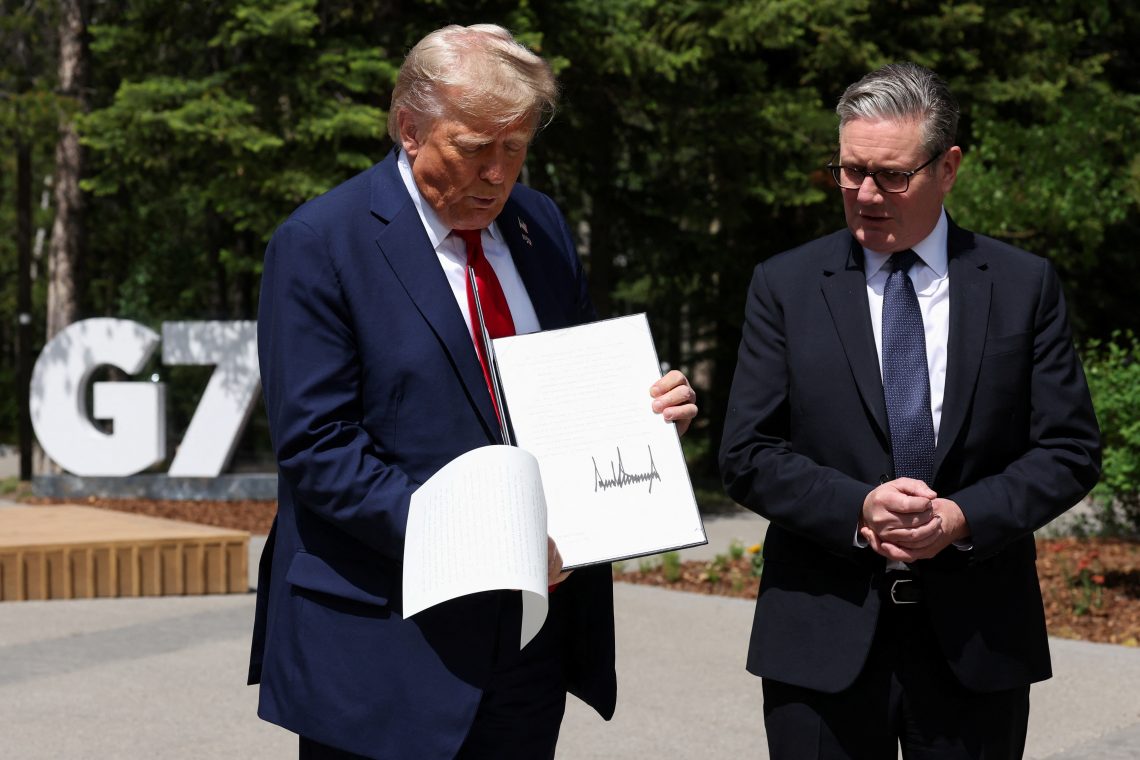
Under pressure and with global markets rattled, both Washington and Beijing moved fast to de-escalate. On October 30, at a high-profile meeting in Busan, South Korea, Presidents Donald Trump and Xi Jinping agreed to a temporary truce: China would suspend the new export controls for one year, until October 9, 2026. In return, the U.S. agreed to reduce tariffs on Chinese goods and to roll back some of its own counter-measures, including certain port fees and additional export-control measures tied to U.S. policies. The accord was widely hailed – especially in media and business circles – as a “settlement” of the rare earth dispute. U.S. officials described the issue as “settled for the world,” suggesting a return to stability for global supply chains.
However, a deeper look suggests this Busan agreement is better understood as a tactical pause rather than a genuine or lasting rollback. The suspension applies only to the latest round of controls from October 2025 – the ones adding five REEs and extraterritorial rules – while earlier April 2025 restrictions remain fully in place. The licensing regime established in April still binds companies exporting the original restricted REEs and magnets, meaning that many critical supply-chain constraints and regulatory burdens remain. For global industries, governments and competing powers, this means the specter of supply-chain disruption remains real.
Indonesia: Nickel nationalism and industrial upgrading
Indonesia’s approach to mineral resource nationalism has become one of the most assertive in Asia, particularly with respect to nickel, which is critical to EV batteries. The Southeast Asian nation holds the world’s largest nickel reserves and has pursued policies designed to transform itself from a raw-material exporter into a hub for higher-value manufacturing.
Beginning in 2014, Indonesia implemented a ban on the export of unprocessed nickel ore to force foreign companies to invest in domestic smelting and refining. Major Chinese companies, facilitated by China’s Belt and Road Initiative and supported by Indonesian incentives, invested heavily in smelters and industrial parks dedicated to nickel processing and battery precursor production.
Indonesia further tightened its resource nationalism by expanding upstream and downstream integration requirements. Investors seeking access to Indonesia’s mineral wealth were now required to partner with local firms, transfer technology and contribute to domestic industrial ecosystems.
Former President Joko Widodo framed this strategy as essential to Indonesia’s economic modernization, stating that exporting raw minerals is a “colonial” model that must be replaced with industrialization. The broader impact of Indonesia’s assertive resource nationalism has been to reshape global nickel markets and demonstrate how policy intervention can drive domestic industrial upgrading.
Malaysia: Rare earths, bauxite and strategic balancing
Malaysia’s resource nationalism has been more moderate, but still reflects strategic concerns. The country has limited rare earth reserves compared to China or Myanmar, yet Malaysia plays an important role in global supply chains because of its refining capabilities. The Lynas Advanced Materials Plant, operated by Australia’s Lynas Corporation, is one of the few rare earth processing facilities outside China.
Public pushback has periodically pressured the government to tighten regulations on rare earth processing, particularly with regard to radioactive waste management. Malaysia’s stance has illustrated a form of resource nationalism grounded not in reserve control but in sovereign regulation of strategic industries and environmental governance.
Malaysia has also grappled with bauxite mining controversies. In the mid-2010s, a surge in bauxite exports to China caused severe environmental degradation, prompting a moratorium on mining. Although the ban was later lifted, the government implemented stricter licensing and monitoring systems. This reflected Malaysia’s broader trend toward asserting regulatory control over mineral activities even while maintaining an open posture toward investment.
Thailand: Mining governance and public resistance
Thailand’s mineral resource nationalism is shaped less by geopolitical considerations and more by domestic governance and public sentiment. The country has modest mineral reserves, including potash, gold and some rare earth elements. However, strong community opposition to mining – notably gold mining – has caused the Thai government to rethink its regulatory framework.
The closure of the Chatree gold mine in 2016 after allegations of environmental contamination marked a turning point. The government subsequently strengthened environmental regulations and asserted greater oversight over mining activities.
Bangkok has also expressed interest in participating in regional critical mineral supply chains, including rare earth processing. Yet the scale of its ambition is constrained by limited reserves and concerns over waste management. Thus, Thai resource nationalism operates more through regulatory sovereignty and social accountability than through export restrictions or state domination.
Myanmar: Conflict minerals and strategic vulnerabilities
Myanmar, though often overlooked, is one of Asia’s most significant sources of heavy rare earths. Much of Myanmar’s production occurs in the northern border regions under the control of ethnic armed groups, with substantial involvement of Chinese companies operating through informal or semi-formal channels.
After extraction, raw materials are usually transported to China for processing. Myanmar’s minerals have become strategically important to Beijing, especially after China imposed stricter environmental controls on its own rare earth mining. Periodic border closures or conflict-related disruptions in Myanmar have caused significant fluctuations in Chinese supply chains.
For Myanmar, the challenge remains transforming resource wealth into national development amid ongoing political upheaval.
India: Strategic resilience and domestic industrial policy
India possesses reserves of several critical minerals, including rare earths, lithium, graphite and titanium. The government’s resource nationalism is driven largely by concerns over supply-chain security and technological sovereignty.
New Delhi has launched initiatives to map critical mineral resources, expand domestic mining and reduce dependence on Chinese imports. India has also encouraged state-owned enterprises, such as Indian Rare Earths Limited, to increase production and refine processing techniques.
Recent policy reforms – such as opening previously restricted minerals to private mining and proposing strategic stockpiles – show how India is intensifying its focus on critical minerals to achieve its industrial and defense ambitions. While India’s resource nationalism remains less interventionist than Indonesia’s or China’s, it nonetheless reflects a broader global trend toward strategic autonomy.
Scenarios
Most likely: Asian resource nationalism intensifies
Asian governments will continue to strengthen their control over mineral resources while deepening industrial policies that push extraction industries further up the value chain. Environmental governance will tighten unevenly but gradually, allowing governments to claim both developmental and sustainability narratives.
China’s dominance in rare earth processing, Indonesia’s nickel industrialization and India’s push for critical mineral self-reliance suggest a long-term consolidation of state authority over mining, refining and export mechanisms.
As a result, resource nationalism becomes institutionalized across the region: States maintain export restrictions on unprocessed ores and craft supply agreements that simultaneously attract foreign investment and preserve sovereign leverage. The effect is a region-wide reinforcement of mineral nationalism that remains compatible with global supply chains, even as it complicates diversification efforts by Western and East Asian manufacturers.
Fairly likely: Emergence of coordinated regional strategies
As China and the U.S. deepen their contest over technological dominance, Southeast Asian states may leverage their mineral resources to negotiate collective advantages. This could be implemented either through regional blocs or informal alignment around processing, environmental standards and investment frameworks.
Indonesia and Malaysia could push for harmonized export policies or shared industrial hubs for EV battery materials, while Thailand and Vietnam might position themselves as processing and manufacturing nodes complementing upstream producers. Meanwhile, India could seek stronger bilateral partnerships with Southeast Asian states to counterbalance China’s influence.
Resource nationalism evolves into a form of strategic multilateral assertiveness: Asian countries still prioritize their national interests but recognize the benefits of coordinating on standards, bargaining power and technological collaboration.
Less likely: Significant rollback of resource nationalism
Economic pressures, environmental crises or political changes may undermine state capacity to control extraction sectors. For example, prolonged downturns in mineral prices could prompt governments to liberalize mining regulations to attract investment. This could loosen export bans and reduce domestic processing requirements.
Environmental scandals could lead to temporary moratoria that weaken state ambitions for industrial upgrading, as seen previously in Malaysia’s bauxite sector.
Political transitions in countries with less institutional stability may disrupt coherent long-term strategies, leading to inconsistent regulation and reduced attractiveness for downstream investors.
Unlikely: Asian states abandon resource nationalism
Asia’s mineral-rich states revert to laissez-faire, export-driven mining regimes resembling those of earlier decades. Global supply chains would dictate investment patterns and domestic processing ambitions would collapse.
This outcome would require an improbable combination of external shocks: a global technological shift away from mineral-intensive clean energy systems, a dramatic de-escalation of geopolitical tensions and a widespread political consensus across Asia favoring deregulated foreign extraction.
Given the momentum of national industrial policy, strategic resource planning and rising expectations for domestic value creation, such a reversal would run counter to prevailing regional and global trajectories.
This report was originally published here: https://www.gisreportsonline.com/r/asia-mineral-resource-nationalism/

Our Partners