
The conundrum of war and peace
The world has never been a peaceful place, and it never will be. Unfortunately, war and conflict appear unavoidable. Fighting is part of human nature, even though mankind longs for peace. The solution to this conundrum was already known to the ancient Romans: If you want peace, you must prepare for war. Diplomacy cannot replace effective defense.
In a utopian spirit, it was once believed that organizations such as the United Nations could prevent war, acting as a kind of “world government.” In reality, the UN can provide little more than a forum for dialogue and a venue for international agreements.
There are still advocates of a form of world government. This is an illusion, and it would likely develop into an oppressive, central-planning monster, without alternatives or competition. We therefore have to deal with war and conflict as enduring realities.
The fantasy of permanent peace
After the collapse of the Soviet Union, some thinkers, such as Francis Fukuyama, believed that the “end of history” had arrived and that the world was “mature for democracy.” The opposite turned out to be true.
Several major misconceptions prevailed. Western-style democracy is not a system of governance accepted in all cultures; it requires adaptation to local conditions. It was also believed that democracies do not start wars. This is a comforting narrative and, in theory, often valid, but not universally so. More dangerously, in Europe this belief led democracies, out of expediency and a certain arrogance, to neglect defense while simultaneously turning themselves into bureaucratic monsters.
Today, wars rage in many parts of the world, with the bloodiest conflicts in Africa. In Asia, an increasingly assertive China is seen as a threat to Taiwan and as a force constraining its neighbors in the maritime domain. Other regions are also worrying, such as India and Pakistan, both of which are nuclear powers. The Middle East remains a region of constant conflict.
Building credible defense capabilities at a time of excessive public debt requires statesmanship, which is in short supply.
I remember that in the 1990s and the early 2000s, the prevailing belief in Europe was that war on the continent was unthinkable. It was a feel-good, sleep-well narrative that proved deeply irresponsible.
It now appears that a ceasefire, or “peace,” may be achieved in Ukraine. Although it is monstrous that Ukraine would lose territory and parts of its sovereignty, ending the bloodshed may be necessary, as reconquest does not appear feasible.
Such a ceasefire would not resolve the underlying problem. Although Europeans, out of a strange mix of arrogance and inferiority complex, enjoy criticizing the Trump administration, it must be acknowledged that Washington is making real efforts. That the United States also pursues its own interests is entirely normal. Europe’s inability and inactivity have left the U.S. as the only actor capable of engaging Russia. European leaders should analyze the adversary’s intentions and develop a strategy that is supported not only by defensive measures, but also leaves room for escalation.
This is the unfortunate situation today. Europe should learn from it and get its act together. Russia is likely to pursue further territorial claims. The new National Security Strategy makes clear that the U.S. will stand by its allies, but only on the condition that those allies make adequate military and defense efforts themselves.
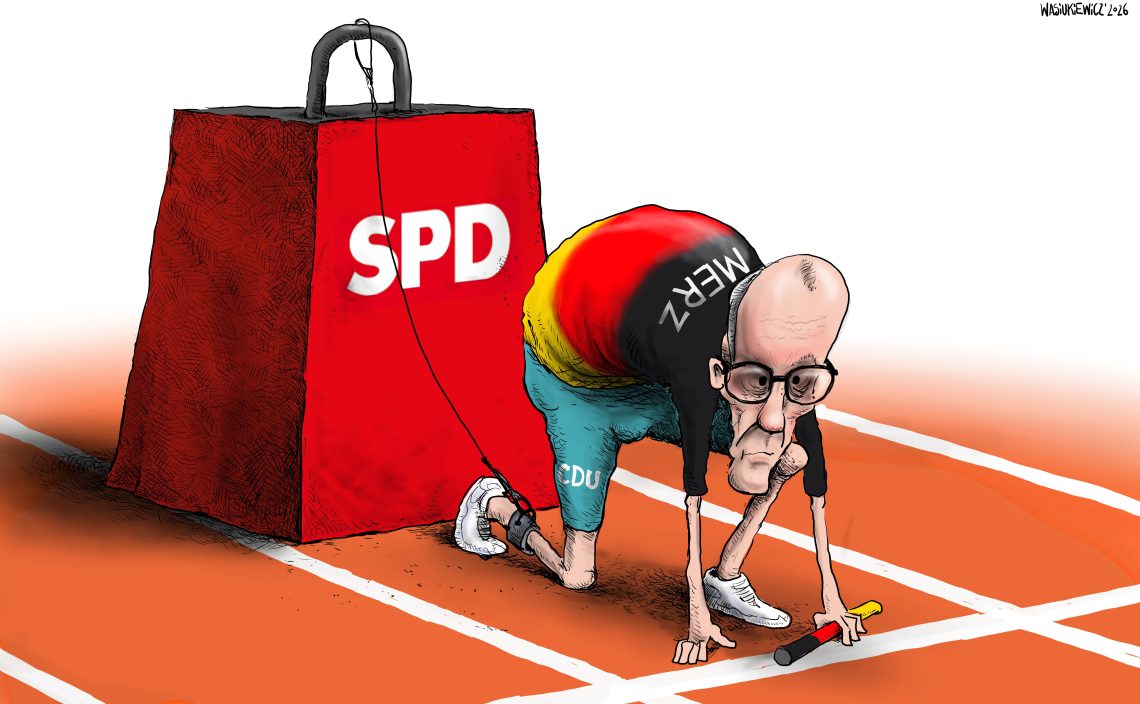
So far, European leaders have held summits proclaiming unity. What is worrying, however, is that neither France nor Germany nor the United Kingdom currently has an effective government. Building credible defense capabilities at a time of excessive public debt requires statesmanship, which is in short supply. This weakness also feeds a misunderstood pacifism among citizens, leaving societies unprepared to fight for their freedom.
This comment was originally published here: https://www.gisreportsonline.com/r/war-conundrum/
Our Partners