
Resource-rich countries seek a grand bargain
Resource-rich regions occupy a central position in the global economy by supplying the raw materials that underpin industrial, technological, energy and food security. Among these regions, Africa and Latin America stand out for the diversity and scale of their natural resources. They possess abundant reserves of critical minerals, hydrocarbons, agricultural land, forests, freshwater resources and renewable energy potential.
At the same time, both regions are increasingly reshaping their relationships with international partners in developed countries. Rather than simply exporting raw materials, many governments now pursue cooperation that supports industrial development and technology advancement, while also facilitating environmental sustainability and long-term economic resilience.
The central question is therefore not only what these regions have to offer the world, but also what they expect in return from external partners. Their growing emphasis on value addition and equitable partnerships reflects an important evolution in international economic relations.
The scale of Africa’s resource wealth
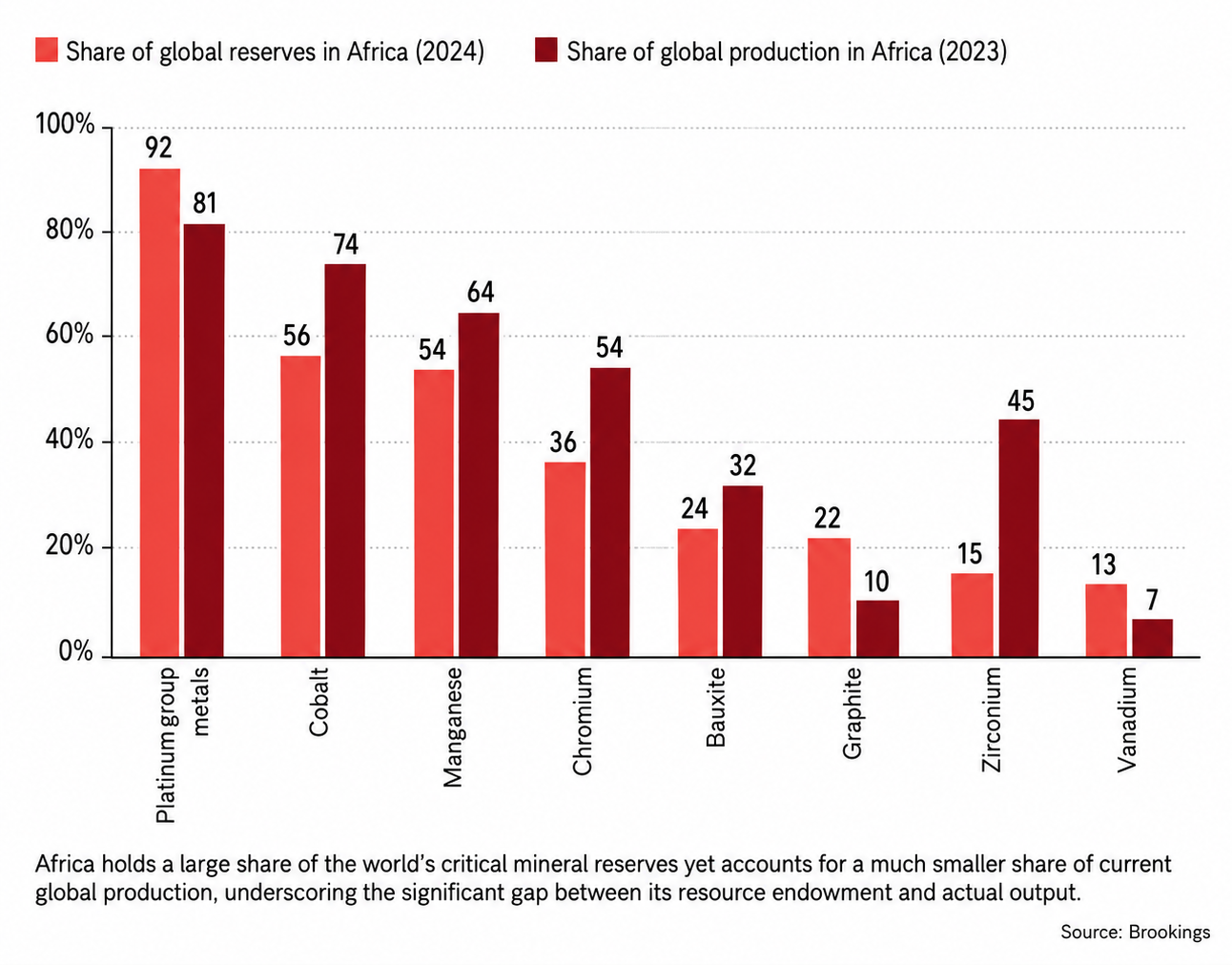
Africa possesses some of the world’s most significant concentrations of natural resources. The continent holds large reserves of gold, platinum, diamonds, cobalt, copper and rare earth elements, as well as manganese, chromium, bauxite, uranium and iron ore. It is also home to substantial deposits of lithium and graphite, which have gained strategic importance amid the global transition to electric vehicles and battery storage systems.
Countries such as the Democratic Republic of the Congo dominate global cobalt production, while South Africa remains a leading producer of platinum-group metals and manganese. Guinea has some of the world’s largest bauxite reserves, the key raw material for aluminum production, while Zambia is internationally recognized for its copper industry.
Oil and natural gas form another major pillar of Africa’s resource base. Substantial reserves are found in Nigeria, Angola, Algeria, Libya, Mozambique, Senegal and Tanzania, while significant offshore discoveries continue to expand the continent’s role in global energy markets.
Agriculture is another major strength. The continent contains approximately 60 percent of the world’s uncultivated arable land, offering opportunities to expand agricultural output. Cocoa production is concentrated in West Africa, particularly in Ivory Coast and Ghana. Coffee, tea, cotton, sugar, fruits and horticultural products are also exported to global markets.
The Congo Basin contains one of the world’s largest tropical rainforest systems. These extensive forest resources play an essential role in biodiversity conservation and global climate regulation.
Renewable energy potential further enhances Africa’s strategic importance. Many countries enjoy exceptional solar irradiation, especially across North Africa and the Sahel, while wind resources along the coasts, geothermal energy in the East African Rift Valley, and hydropower potential in the Congo, Nile and Zambezi river systems offer further opportunities for low-carbon electricity generation.
A youthful, rapidly growing population adds another dimension to Africa’s economic outlook. With the youngest demographic profile of any major region, the continent offers an expanding labor force.
Urbanization is rapidly progressing across numerous African nations, leading to a heightened demand for infrastructure, housing, telecommunications, financial services, healthcare and education. These sectors, in turn, have the potential to revitalize the dwindling growth rates of advanced economies, especially when considering the vast upgrades and expansions they require.
African states seek equitable partnerships and capacity-building
Despite its considerable resource wealth, Africa is looking for relationships that go beyond traditional extractive investment. Many governments aim to move up the global value chain by encouraging local processing and industrialization. Policymakers increasingly prioritize investments in refining facilities, battery manufacturing, metal processing and downstream industries that generate higher-value exports and skilled employment rather than simply exporting raw minerals.
Similar ambitions exist in agriculture, where African governments are encouraging food-processing industries rather than dependence on unprocessed commodity exports.
Infrastructure development remains one of Africa’s top priorities. Many countries need substantial investment in transport corridors, ports and railways. Electricity generation, water systems and digital connectivity remain equally urgent priorities. International partners offering financing and long-term infrastructure cooperation are therefore particularly attractive to African governments. Many African nations prefer sustainable financing free of heavy debt burdens and the conditions often attached to Western development packages.
Facts & figures: Concentration of selected critical mineral resources in Africa
Technology transfer has become another central objective. Access to advanced mining technologies and renewable energy systems ranks high, as do digital infrastructure, artificial intelligence applications and manufacturing capabilities. Partnerships that include research collaboration, vocational training, university cooperation and knowledge exchange are also viewed more favorably than relationships centered exclusively on resource extraction.
External cooperation that supports higher education and workforce development directly contributes to national development objectives. These investments strengthen local capacity while reducing dependence on foreign expertise over time.
Climate finance and sustainable development now form key elements of Africa’s international agenda. Governments are seeking financial backing for various initiatives, including climate adaptation, renewable energy investments, conservation efforts and the development of resilient infrastructure.
Beyond sector-based cooperation, African governments press for greater participation in global decision-making institutions. Representation in international financial institutions, improved access to development finance, fairer international trade rules and stronger voices in global governance are increasingly central to economic negotiations.
The resource foundations of Latin American economies
Latin America has exceptional natural resource wealth across a diverse geographical landscape extending from Mexico to Patagonia in South America. The region is among the world’s leading producers of copper, lithium, silver, iron ore, bauxite, nickel and gold, as well as a wide range of agricultural commodities.
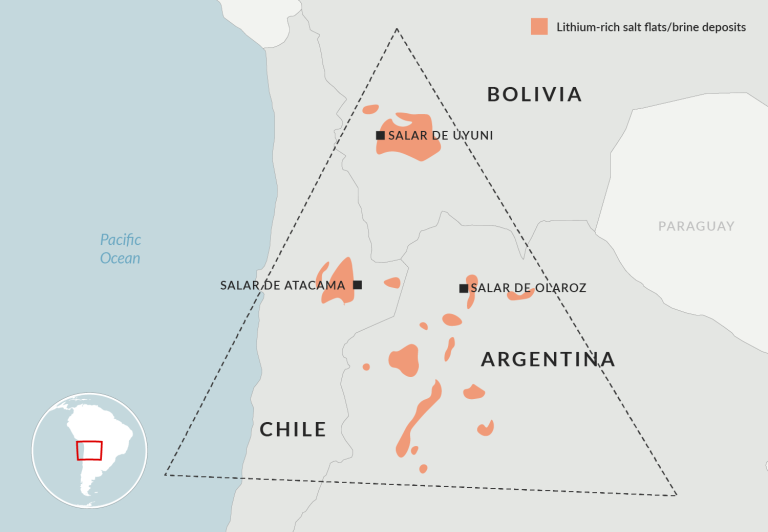
Chile and Peru together dominate global copper production. Chile, Argentina and Bolivia hold most of the world’s known lithium resources in the Lithium Triangle, while Brazil possesses vast reserves of iron ore and niobium and Mexico remains an important silver producer.
Energy resources constitute another major strength. Venezuela possesses some of the world’s largest proven oil reserves, while Brazil has developed major offshore petroleum production in its pre-salt fields. Mexico remains an important oil producer, and countries including Argentina have significant unconventional natural gas reserves, particularly within the Vaca Muerta formation.
Hydroelectric power already contributes substantially to electricity generation in Brazil, Colombia, Paraguay and several other countries. Solar development in northern Chile, wind generation in Patagonia and northeastern Brazil, and geothermal resources in parts of Central America further expand the region’s renewable energy options.
Agriculture stands as one of Latin America’s strongest comparative advantages. Brazil ranks among the world’s leading exporters of soybeans, beef and poultry, and is also a major supplier of coffee, sugar, orange juice and maize.
Argentina is a major exporter of soybeans, wheat and beef. Central American countries supply bananas, coffee, sugar and tropical fruits, while Chile has built internationally competitive fruit and wine industries and Ecuador is among the world’s largest banana exporters.
The region’s fertile land, favorable climates and abundant freshwater resources support large-scale agricultural production capable of meeting growing food demand across the advanced economies of North America, Europe and Northeast Asia.
The Amazon rainforest, extending across multiple South American countries, represents the largest tropical rainforest on Earth and plays a critical role in global carbon storage and biodiversity conservation.
Latin America’s industrial and social ambitions
Like Africa, Latin America is pursuing partnerships that support economic diversification rather than dependence on commodity exports. Many governments recognize that reliance on volatile commodity prices can create economic instability and constrain long-term development.
Governments are pushing local manufacturing and mineral processing while seeking to build capacity in renewable energy equipment and other technology-intensive industries. Lithium-rich countries, for example, prioritize investment that supports domestic battery value chains instead of exporting only raw materials.
Facts & figures: The Lithium Triangle in South America
Technology and innovation are increasingly important within Latin America’s development strategies. Governments are looking for partners in digital infrastructure and biotechnology, as well as in renewable energy, advanced manufacturing and scientific research. Digital transformation represents another major area of international cooperation that Latin American countries are negotiating with global partners.
Infrastructure investment remains a continuing priority throughout much of the region. Although infrastructure quality generally exceeds that of many other developing regions, substantial investment is still required in transport networks, logistics systems, ports, railways, urban mobility, electricity transmission and digital connectivity.
Sustainable development now occupies a prominent place in Latin America’s international engagement. Deforestation, biodiversity loss, water management and climate resilience present significant policy challenges that the region’s governments are working to resolve with support from the advanced world. Access to international carbon markets, conservation financing and payments for ecosystem services serve as vital mechanisms for the region to balance economic development with environmental protection.
Social inclusion also shapes Latin America’s expectations of international cooperation. Many countries continue to experience substantial income inequality, regional disparities, and unequal access to education, healthcare and employment opportunities. Governments therefore favor inward investment that generates quality employment, strengthens local supply chains, promotes skills development and contributes to broader socioeconomic development.
Shared priorities of the Global Majority
Both Africa and Latin America share several common goals. First, both regions aim for greater value addition within their domestic economies rather than remaining exporters of unprocessed raw materials. Second, both emphasize technology transfer, workforce development and industrial upgrading as essential to sustainable development. Third, infrastructure investment remains fundamental to competitiveness and regional economic integration. Fourth, environmental sustainability and climate resilience increasingly shape policy priorities as both regions aim to balance resource exploitation with long-term conservation.
Both regions are also becoming more selective regarding international partnerships. Governments increasingly evaluate potential partners according to the quality of investment, environmental standards, transparency, financing conditions and contributions to domestic development.
Competition among external actors – including advanced economies, emerging powers, multinational corporations and regional institutions – offers African and Latin American governments more bargaining opportunities than in previous decades.
This evolving geopolitical environment enables many countries to negotiate more comprehensive agreements that incorporate investment, education, technology, infrastructure, and industrial cooperation, alongside resource access. Even so, successful cooperation increasingly depends on recognizing the development priorities of resource-rich countries rather than focusing exclusively on resource extraction.
Scenarios
Most likely: Strategic and selective cooperation
As demand for critical minerals, energy resources, agricultural commodities, and renewable energy inputs continues to rise, both Africa and Latin America are expected to strengthen their bargaining positions.
Governments are likely to place greater emphasis on partnerships that combine investment with technology transfer, infrastructure development, local industrialization, skills development and environmental sustainability. Rather than serving solely as suppliers of raw materials, these regions are likely to seek greater participation in global value chains.
Competition among external partners for access to strategic resources is also likely to provide regional governments with greater leverage to negotiate more balanced and mutually beneficial agreements.
Moderately likely: Progress to remain uneven across countries
Political instability, governance challenges, financing constraints, commodity price volatility and infrastructure gaps may limit the ability of some states to fully realize the benefits of their natural resources.
In this scenario, successful countries will be those that strengthen institutions and improve regulatory certainty, while investing in human capital and maintaining stable investment environments. Others will continue to experience cycles of resource dependence and slower economic transformation.
Less likely: Deterioration in global cooperation
A deterioration in global cooperation, driven by geopolitical rivalry, protectionism or prolonged economic shocks, may hinder cooperation between resource-rich states and advanced economies. Intensified competition for critical minerals and energy resources could encourage transactional relationships focused primarily on resource access rather than sustainable development. Under such conditions, investment may become more fragmented, environmental standards could weaken, and opportunities for technology transfer and industrial upgrading might diminish.
While resource-rich regions would remain strategically important, the broader developmental benefits of international cooperation would be more limited.
The trajectory ultimately pursued will depend on the willingness of both resource-rich countries and external partners to build long-term partnerships based on shared interests, transparency and mutual economic development rather than short-term resource extraction alone.


Our Partners