
Peace in Ukraine?
There is a growing discussion surrounding the potential end of the bloodshed in Ukraine. Washington is pushing for a resolution, the pope is calling for peace, and various countries and individuals are either proposing or stepping forward to mediate. Ukrainian President Volodymyr Zelenskiy reached out to Russian President Vladimir Putin in an open letter, suggesting that they engage in direct talks. However, as expected, Moscow rejected the proposal.
On June 7, 2026, the leaders of the United Kingdom, France and Germany met in London with President Zelenskiy to discuss further support. They agreed on a five-point plan to negotiate with Russia that includes the involvement of the United States and other European nations. While this demonstrates continued support, similar efforts in the past have yielded no results.
Peace initiatives or provocations?
Are there truly any meaningful efforts behind these initiatives, and can we expect results? It does not look likely.
If the intent is genuine negotiation, an open letter is not the proper channel. It should be addressed directly or through a trusted intermediary. The move appears more like an attempt to signal a desire to be seen as a peacemaker than a serious commitment to dialogue. It may also be aimed at the public and at Washington. A true desire for talks would not coincide with an attack on an oil terminal in St. Petersburg precisely while President Putin was hosting the St. Petersburg International Economic Forum – a major Russian prestige project. This is a clear provocation that only makes sense if escalation is the goal.
At the St. Petersburg Forum, President Putin interestingly urged major businesses to decentralize away from the Moscow area. This indicates that the Kremlin wants to promote regionalization to mitigate vulnerabilities. It represents a further step toward solidifying the wartime economy and indicates that the war is not expected to end soon.
Neither warring party shows much willingness to engage in meaningful negotiations.
The situation is delicate for the European powers.
Four years have passed since the full-scale invasion of Ukraine and 12 years since the annexation of Crimea. Yet, Europe remains unprepared.
Europe’s rearmament: Promise and pitfalls
Since 2022, the continent has committed to reinforcing its defenses. The big three – the UK, Germany and France – have taken significant steps to revitalize their long-neglected military capabilities. After a cowardly and lackluster start, support for Ukraine has gained momentum. Poland is spearheading the rearmament drive, setting a shining example alongside Finland and the Baltic states.
Despite a combined population several times larger than that of Russia and far greater industrial output, European countries still feel ill-equipped to confront Russian aggression. They appear to be buying time now for rearmament. Therefore, achieving peace in Ukraine does not seem opportune if it allows Russia to regain strength.
Four years have passed since the full-scale invasion of Ukraine and 12 years since the annexation of Crimea. Yet, Europe remains unprepared.
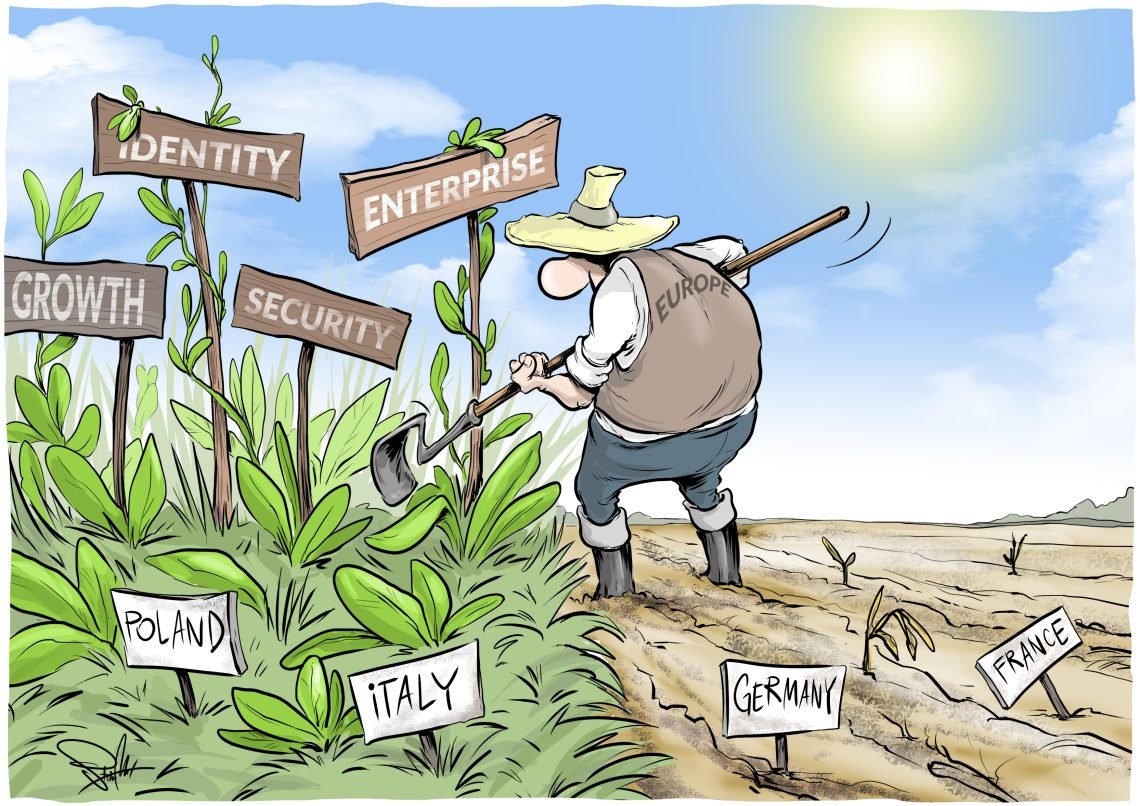
Although Europeans are not adequately armed, the real problem lies elsewhere. Political leadership lacks the courage and vision for decisive action. A majority of citizens across the continent are also unwilling to fight for their freedom. Overly generous welfare states and policies (already taught in schools) that downplay patriotism have contributed to a weakened society. As a result, freedom is viewed as an entitlement, taken for granted by many.
While it is encouraging that rearmament has begun, progress is unfortunately slow. Additionally, crucial areas remain neglected. Defenses against air and cyberattacks on the hinterland need strengthening. Plans for emergency shelters must be developed, and strategic reserves of food and medical supplies established. Most importantly, a mindset that recognizes the necessity of defending freedom must be cultivated. Current leadership is setting a disappointing example in this regard.
Considering all this, the biggest impediment to peace in Ukraine is not only the Kremlin and the warring parties, but also Europe’s own weakness and political expediency.
Our Partners