
The eurozone’s FROGS problem
France is facing multiple economic and social challenges at the worst possible time. As the European Union’s second-largest economy, France has become a major concern for other European capitals and investors. Echoing the “PIIGS” label used for Portugal, Italy, Ireland, Greece and Spain in the 2010s, experts have dubbed the new sick man of Europe FROGS: French Oversized Government and Social Security.
France’s sovereign debt is now close to 119 percent of gross domestic product (GDP), nearly twice the 60 percent threshold set by the EU’s criteria. The new deficit target among French politicians is 5 percent of GDP, well above the bloc’s 3 percent limit. France will need to borrow a staggering 340 billion euros in 2027, including 220 billion euros to roll over existing debt at much higher interest rates. Interest payments alone across all levels of government will rise from 79 billion euros in 2026 to 91 billion euros in 2027, surpassing spending on national education to become the largest budget item.
Investor concerns over France
France now pays more than Italy or Greece to borrow for 10 years. On October 21, 2026, the yield on France’s 10-year government bond touched 5 percent. Investors demanded a premium of about 157 basis points over the equivalent German bond, up from 55 basis points in February. The widening gap suggests investors are losing confidence in French debt. Foreign investors hold 56 percent of French government debt on average and 81 percent of its short-term bills.
Investment funds are increasingly selling French bonds on the secondary market, pushing yields higher. The cost of insuring against a French sovereign default through credit default swaps more than doubled, rising from below 40 basis points in early September to 80 in early October.
France’s tax burden, at 44 percent of GDP, is the second highest in the OECD. Public spending, at 57 percent of GDP, is the highest. The government increasingly relies on debt to finance that spending, even as borrowing costs rise. The IMF expects the French economy to grow by just 0.4 percent in real terms in 2026. This will leave the government little room to narrow the deficit.
Social anger amid the French population
Higher debt and interest rates are slowing growth and fueling public resentment. Deindustrialization continues, unemployment is rising and French households have lost purchasing power. War in the Middle East has added to inflationary pressures.
Recent protests by high school and university students have ended in riots, adding to fears of instability. A minority of rioters damaged public property and looted shops in several cities on October 17. Yet the students have legitimate grievances about how France runs its centralized education system. Many school buildings are in poor condition, teachers are in short supply or absent and the national university admissions system works poorly.
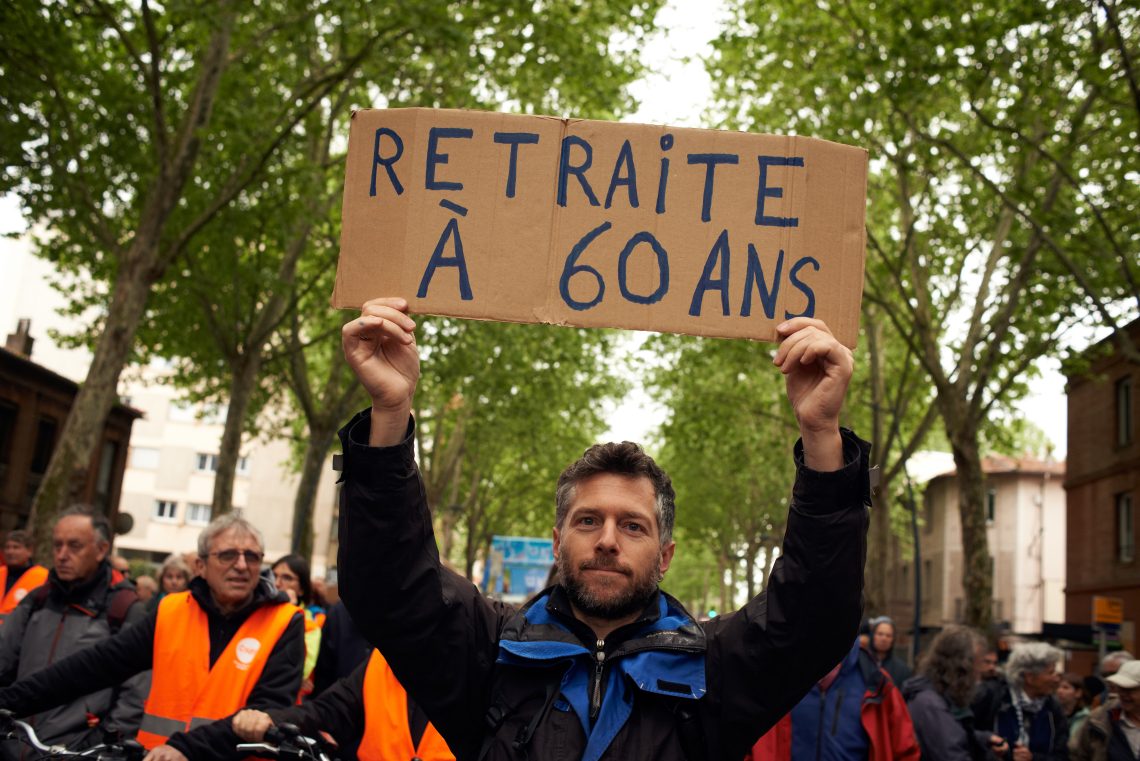
The police response has often been violent and indiscriminate, though the use of force was likely unavoidable given the actions of the looters. The crackdown has left young protesters, most of them minors, and their families with a sense of injustice reminiscent of the yellow vest protests. This bodes ill for talks with the government in the near term. The student protests have given voice to frustrations felt across much of French society. Small farmers, firefighters and trade unions have joined the demonstrations and gone on strike. France’s history of revolutions is unlikely to be lost on investors.
Fragmented French politics
The disorder extends beyond the streets. The National Assembly has lacked a clear majority since 2022. The gridlock deepened after President Emmanuel Macron dissolved the assembly in 2024, making it harder for lawmakers to agree on reforms.
Mr. Macron has been unable to fully unwind the spending that followed his pledge to do “whatever it costs” to fight Covid-19 and the recession it caused. In the past, the government has used Article 49.3 of the constitution to pass legislation without a vote in the National Assembly. The practice has heightened tensions among those who see it as undemocratic. Lawmakers’ inability to agree on reforms at a time of fiscal urgency has added to investors’ anxiety.
On November 4, the National Assembly unanimously rejected the amended revenue section of the 2027 budget, sending the government’s original draft to the Senate. The government could still invoke Article 49.3 when the bill returns to the assembly.
France needs deep reforms to strengthen accountability, reduce bureaucracy and prevent the diversion of public funds for private gain across its many layers of government and its costly welfare system. The government has again chosen to paper over the cracks. It proposes to slow the growth of pension and health spending, hold central government spending steady, cut funding for local governments and tax certain high-sugar foods. It plans to cut just 1,000 civil service posts.
Many expected French lawmakers to improve the government’s disappointing draft budget. But opposition groups have already said they will vote against it and back a no-confidence motion if the government again invokes Article 49.3. In early October, before the parliamentary debate began, the National Assembly’s finance committee rejected 4 billion euros in proposed savings, including measures to scale back a tax break for pensioners and tax sickness benefits.
Political extremes unite
Investors also worry about a polarized presidential election in which the two main contenders are seen as political extremes. Marine Le Pen of the far-right National Rally, well ahead in the polls, has backed away from earlier calls to leave the euro and increase spending. Her party’s proposed counter-budget calls for deep spending cuts, chiefly in areas related to immigration. Several economists on both the right and the left consider the cuts unrealistic. The National Rally also wants the European Central Bank to buy French bonds through quantitative easing in exchange for France’s commitment to a “golden rule” requiring it to reduce deficits gradually.
Jean-Luc Melenchon of the far-left party La France Insoumise has long advocated higher public spending, greater state intervention and higher taxes on businesses and the wealthy. He recently called for retirement at 60 and argued that the ECB should cancel the French government debt it holds, which he put at 18 percent of the total. Should either candidate win, officials President Macron has appointed to key posts could act as a counterweight. Even so, the prospect of a populist victory remains a concern for investors.
Euro angst
In 2012, ECB President Mario Draghi’s pledge to do “whatever it takes” to preserve the euro created a moral hazard, despite the reform conditions that followed. Today, France’s European partners resent the willingness of French politicians to assume their country is “too big to fail,” even as its fiscal problems risk spreading across the continent. France is putting its own credibility, that of the eurozone and that of the wider European project at risk. The ECB could soon face a dilemma of its own if intervening to support France calls its commitment to price stability into question.
Bank lending rates tend to follow government bond yields. Higher borrowing costs add to the uncertainty facing French households and businesses and weigh on growth. France is supposed to be a pillar of the eurozone and attract investment, particularly in defense given its new NATO spending commitment. France is also a major export market for its neighbors. A French recession would weigh on growth across the eurozone.
France’s fiscal troubles have contributed to the euro’s decline, making imports more expensive across the eurozone. With energy prices already soaring and growth slow, the added inflationary pressure complicates the ECB’s task. About 10 percent of French government debt is indexed to inflation, so rising prices also increase the cost of servicing that debt.
Some eurozone countries may benefit as investors shift away from French bonds. But a broader flight to safety could again drive eurozone bond yields apart, raising borrowing costs for southern European countries such as Italy despite their efforts to put their public finances in order.
Finally, a fall in French bond prices could weaken the balance sheets of eurozone banks that hold them, making it more expensive for those banks to refinance using the bonds as collateral. Other European banks are exposed through their ties to French banks with large holdings of government debt. The failure of a French bank could trigger a severe banking crisis elsewhere in Europe.
Scenarios
Likely: A gradual deterioration at a slightly faster pace
France is in a stronger position than Greece was in 2009. Tax collection works, French households have substantial savings, foreign direct investment is significant and the economy is diversified, with solid infrastructure. The government pays an average interest rate of 2.2 percent on its debt. That is still manageable, and the average maturity of eight and a half years gives France time to refinance.
This helps explain why demand consistently exceeds supply at French sovereign bond auctions, although investors ask for a premium. In this scenario, France’s European partners and the ratings agencies hold off on further action for fear of triggering a financial crisis, at least until the presidential election. The ECB stays on the sidelines. The government’s budget passes largely as proposed because the government invokes Article 49.3. The government survives the ensuing no-confidence vote, as it did over the previous budget.
Given the budget’s limited ambition despite the efforts of several lawmakers, debt continues to rise. Interest payments also increase as France refinances maturing debt at higher rates. This scenario has a 40 percent chance of materializing before the election.
Also likely: Further downgrades trigger a market crisis and a technocratic government takes office
France’s economy is over 10 times the size of Greece’s. French debt accounts for 22.5 percent of total EU public debt, the largest share of any member state. France is too big to fail and too big to rescue.
Until the summer of 2026, ratings agencies had been cautious about downgrading France for fear of triggering a financial crisis. In September, Scope Ratings cut France’s rating from AA− to A+. Riots in major French cities have since added to the uncertainty, and growth prospects remain weak. In October, Moody’s kept France’s rating at Aa3 with a negative outlook. Further downgrades, particularly if the government falls, could make investors more reluctant to lend and push up borrowing costs.
There are several factors negatively influencing the country’s fiscal outlook. The first is the budget debate. Many had expected lawmakers to improve the government’s draft budget. However, this has clearly not been the case. If the government invokes Article 49.3, a no-confidence vote is the more likely prospect.
The second factor is the response of the ratings agencies. A sharper downgrade, especially if the government falls, could have serious consequences. Banks and investment funds whose rules require a minimum credit rating could have to sell some or all of their French bonds. Forced sales could then spread losses across European and global financial markets. The agencies would probably wait for the outcome of the budget debate or a no-confidence vote before acting (and anticipate their planned schedule).
The third factor is the ECB. The bank sets monetary policy for the entire eurozone. Intervening to support France could put its own credibility and that of the euro at risk (but not intervening could as well).
If conditions deteriorate, the ECB’s first move would probably be a public assurance along the lines of Mario Draghi’s 2012 pledge to do “whatever it takes.” Such a pledge might carry less weight today, though it could still calm markets in the short term.
The ECB could also slow the pace at which it reduces its bond holdings. Limited purchases of French bonds could bring yields down or at least slow their rise.
As a preventive measure, the ECB could consider using its Transmission Protection Instrument. This allows it to buy bonds on the secondary market if it judges that an unwarranted deterioration in a country’s borrowing conditions threatens the transmission of monetary policy across the eurozone. There is no preset ceiling on purchases. France has been under an EU excessive deficit procedure since 2024. Its eligibility for the ECB measure would depend in part on whether it had taken effective action in response to EU recommendations and whether the ECB considered its debt sustainable.
In this scenario, the ECB and France’s European partners would press Paris to form a technocratic government, as Italy did under Mario Monti in 2011. Its task would be to impose emergency austerity measures. Further protests would be likely. Senior officials could set an example by cutting their own pay and benefits as part of a broader agreement over how to share the costs. This scenario also has a 40 percent chance of materializing before the election.
Least likely in the short term: A major crisis
Two events could occur in either order. At a bond auction, investors might bid for less debt than France offers, leaving the Treasury short of the amount it intended to raise. If it could not make up the shortfall in time to repay maturing debt, it could default on those payments. Ratings agencies might also signal a sharp downgrade. Banks and funds subject to minimum-rating requirements could then be forced to sell French bonds, spreading losses across European and global financial markets.
The ECB could consider buying short-term French debt under its Outright Monetary Transactions program. France would first need to secure a qualifying assistance program from the European Stability Mechanism (ESM) and accept strict conditions and budgetary oversight. The decision to buy bonds would rest with the ECB. For now, Banque de France Governor Emmanuel Moulin has said that responsibility for solving France’s fiscal problems lies in Paris.
ESM assistance could help avert a crisis, but it would subject France’s budget to close external scrutiny. Berlin would likely press for deeper spending cuts despite Germany’s own economy being weak, as the rise of the Alternative fur Deutschland has increased domestic pressure for a tougher line on EU partners. A dispute over austerity would strain the Franco-German relationship that has underpinned the euro since its inception. Social tensions in France would intensify.
If rescue efforts failed over several years, the survival of the euro itself could be at stake. The ESM’s maximum lending capacity is 500 billion euros, which could quickly prove inadequate given the scale of France’s borrowing needs. A rescue led by the ESM alone appears unlikely for now, as does an intervention by the International Monetary Fund. European partners would probably first increase pressure on the French government to act. This scenario has a 20 percent chance of developing before the election.


Our Partners