
eurozone
by Tom Bugdalle and Moritz Pfeifer, Institute for Economic Policy, Department of Economics, University of Leipzig We revisit the euro’s promise of convergence through a new Divergence Monitor tracking business and financial cycle synchronization since the 1980s. Business cycles became more aligned after 1999, but financial cycles stayed volatile and split into persistent core–periphery […]
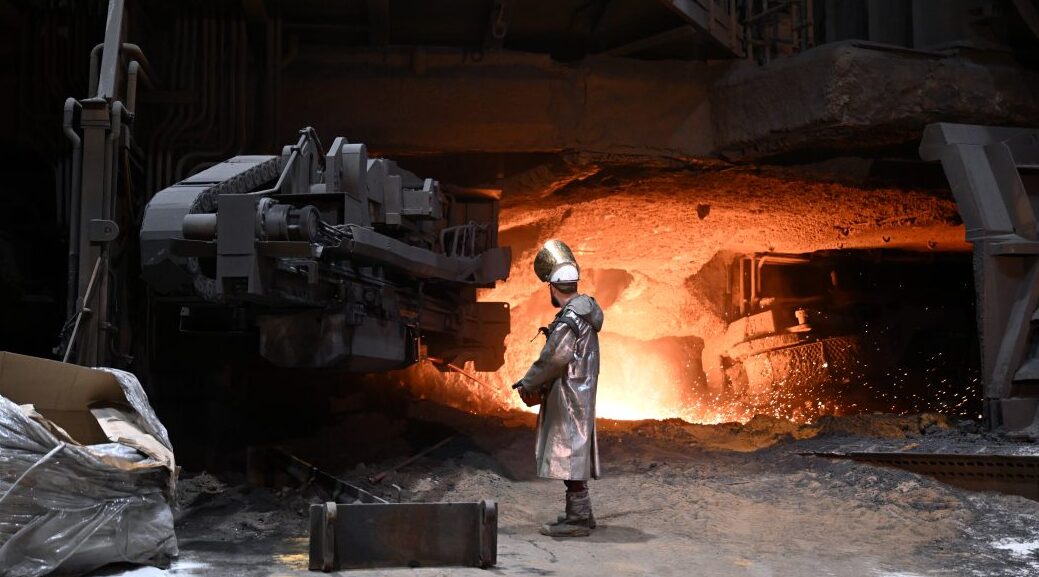
Over the past two decades, the European Union has experienced deindustrialization (a reduction in industrial capacity), partly due to the shift of manufacturing overseas, which has created strategic vulnerabilities. This issue is particularly pronounced in essential sectors such as batteries, semiconductors, renewable energy, aerospace and defense. The Covid-19 pandemic and Russia’s invasion of Ukraine […]

The eurozone’s two largest countries, France and Germany, could drag the continent into a crisis. The year 2023 was bad for eurozone economies already, with sluggish overall growth a meager 0.6 percent. While short-term factors such as inflation and the necessarily tighter monetary policy can explain the latest developments, longer-term forces, especially in Germany and […]
Our Partners