For ‘A Fistful of Dollars’: Low-cost private schools in Africa and Asia, and in the US
1. The extraordinary grassroots movement of low-cost private education
Across the developing world, in urban slums and low-income communities, and rural villages, parents are abandoning public schools en masse. Instead, they are sending their children to private schools, low-cost private schools, typically created by educational entrepreneurs. Research over two decades has revealed several salient findings about these low-cost private schools. Here are five: First, low-cost private education is ubiquitous, especially in sub-Saharan Africa and South Asia. For instance, in Lagos State, Nigeria, it was estimated that there were 14,000 low-cost private schools, enrolling 2.12 million children, some 70 percent of preschool and primary-aged children. 1 Similarly, recent research from Nairobi (Kenya), 2 Kampala (Uganda), 3 and Accra (Ghana) 4 gives parallel results – the highest percentage is from Kampala, where 84 percent of primary-aged children in poor areas are in private education.
In South Asia, in urban India at least 70 percent of children are in unaided private schools, while the comprehensive Annual Status of Education Report (ASER) shows 30 percent of rural children in private schools, a figure that is growing each year. Extrapolating from recent studies 5 suggests an estimate of 92 million children in India alone in low-cost private schools, in around 450,000 low-cost private schools.
Second, this movement away from government schools is of positive benefit, for children and adults alike. In government schools, there is a lack of accountability; research has shown teachers teaching only half the time 6 . This leads to lower quality of education: research typically finds that children in low-cost private schools outperform those in public schools, even after controlling for socio-economic background variables. A Department for International Development (DFID) commissioned review of the research literature concluded that “Pupils attending private school tend to achieve better learning outcomes than pupils in state [i.e., public] schools.” 7 They pointed to studies from South Asia and sub-Saharan Africa.
Other studies have emerged since this publication: one from rural Andhra Pradesh, India 8 showed that when children with school vouchers transferred from regional-language public schools to regional-language private schools then “the estimated impact … is positive for every subject”. 9 Children in private schools outperformed their government-school peers in Telugu, English, Hindi, mathematics, social science and science. Another recent study from Lagos, Nigeria 10 , compared government schools with low-cost private schools. In literacy and numeracy, 62% and 64% of children respectively in low-cost private schools performed above the sample average, compared to only 18% and 24% in government schools. Large differences in performance remained once background variables were controlled for.
Third, in many parts of the world, low-cost private schools do not typically suffer from gender-bias. For instance, Joanna Härmä’s impressive studies from Lagos, Nigeria showed that “Slightly more girls than boys are enrolled in private schools … indicating that families do not select school types according to their child’s gender.” 11 In many countries, like Nigeria, Sierra Leone, Liberia, and most of India, there is gender parity between girls and boys, or more girls than boys, in low-cost private schools. In other places, such as remote rural Pakistan, where there are sometimes cultural objections to girls’ education, private schools act to improve the position of girls. 12
Fourth, low-cost private schools are affordable to families on the poverty line. Studies have shown that there are large numbers of low-cost private schools in poor areas which require families on the poverty line to spend 10 percent of their total income on private school fees for all their children. Moreover, once additional costs of schooling are considered, such as transportation, uniform, shoes, books, etc., the cost to a parent of sending a child to a government school can be 75 percent of the cost of sending to a low-cost private school 13 .
Finally, some studies reveal that the majority of low-cost private schools are run as small businesses by educational entrepreneurs (with a minority run by religious organisations and charities), without subsidy from any organisation, whether state or philanthropic. 14
All of this means that low-cost private schools are a sustainable and scalable solution to the challenge of improving educational standards for all 15 . The movement of low-cost private education in developing countries is an extraordinary self-sufficient private sector solution to a public dilemma.
2. Why not in America?
When I was doing my research over two decades in Africa and Asia, I would frequently be asked the question: why is the same not happening in America, or in England? While not being my primary focus, I intuited that there could be six reasons why, in theory, the phenomenon of low cost private education might not have caught on 16 :
- Public schools are not as bad as they are in the developing world.
- Public education alternatives crowd out low-cost private schools.
- Regulations are too onerous.
- Costs too high, meaning that private education can never truly be affordable.
- The lure of welfarism.
- No educational entrepreneurs or investors are interested in the sector
But what about in practice, rather than theory?
I was fortunate to find an organisation, VELA 17 , that agreed it was important to find out. With their assistance in locating alternative schools of all shapes and sizes, I journeyed six times across the US, from West to East Coast, to investigate if indeed a parallel phenomenon of low-tuition 18 private schools that I’d found in Africa and Asia also existed in America.
I defined a category of school that I don’t believe anyone else has been investigating in America, a category subtly different from other types of educational settings that have been defined in recent years in America, such as the hybrid 19 school, the microschool, as well as the homeschool.
First, our new category of low-tuition private school means that the educational settings are private. That is, they are privately owned, managed and funded.
By “low-tuition” I mean that the educational settings charge low tuition to parents or fee-payers. These fees cover all or most of their costs through tuition, so that the “low-tuition” also means that the school is low-cost to run too.
How low is low? In my earlier research, I went along with the intuitive idea that schools in slum areas, or poor rural areas, were low-tuition because they were affordable to the poor. In Africa and South Asia I was finding schools that were charging $5 to $20 per month. As my research deepened, I developed a more scientific approach and defined low-tuition schools as being those that were affordable to families on a poverty line were they to spend up to 10 percent of their family income on tuition for all their school-aged children (Tooley and Longfield, 2015).
I’m not as advanced with my United States research and understanding. In England I’ve co-created a low-tuition private school that charges in the region of $5,000 to $6,000 per student per annum tuition. I’ve used those figures as ballpark for America too. If an educational setting is operating for fewer than the customary five days a week, then I’ve calculated the tuition as if it would be operating for that number of days.
Finally, a school is an organized institution or environment where typically children and young adults go (perhaps virtually) to learn. It is usually structured, where other agents (typically called teachers, or guides, or educators, but can be peers or AI software) guide the children and young adults through a curriculum of knowledge, skills, and values.
How do low-tuition private schools fit with the other two new categories of educational setting emerging in America, hybrid and micro-schools? Microschools are distinguished by size, typically enrolling no more than 30 students. Hybrid schools are distinguished by modality; their students attend live classes for fewer than five days per week and are educated at home for the rest of the time. Low-tuition private schools are distinguished by tuition, but can be small in size, hybrid in modality, or both.
Some qualitative findings
On my journeys, I visited 40 educational settings, most of which could be characterised as low-tuition private schools (and those which weren’t, I learnt much about the potential for alternative models of schooling). I am writing up the stories I heard from the founders of these alternative schools, and from the parents and students using them, so won’t go into any details here 20 . Except to say that the kind of schools I found covered a huge range of educational and geographical environments. Schools like Onward Learning, in Pine Ridge Indian Reservation, South Dakota. Created and managed by Mary Jo Fairhead, the school has around 30 students drawn from the Reservation. It was created by her in direct response to what she saw as the inhumane treatment meted out to students on the reservation. She charges around $5,000 per student per year.
Or schools like EPIC, in rural Mississippi, a few hours’ drive from Jackson. This school, created and managed by the husband-and-wife team, Kenneth and Tracelia Nelson, operates in three trailers, and caters for around 30 students, who might be called ‘refugees’ from the public schools, where bullying and teacher indifference appears rife. The annual tuition is $3,500.
Or schools like Deen Academy, in a disused section of a mosque in Clarkston, Atlanta, Georgia. This time a school for actual refugees. It was founded and run by Guhad Ahmed Salah, a refugee from Somalia, largely serving refugee children from Syria, Iraq, Ethiopia and similar. Now it has 60 students and charges annual tuition of $3,500 per year.
Interviews with parents, teachers and children suggest there are “push” factors – reasons why families leave public schools for these alternative schools – and there are “pull” factors too – what they seek education-wise which they can only find in alternative schools.
On “push” factors, public school classrooms are too crowded and chaotic. What support there is for individual learning needs is derisory. Parents see that their children face bullying, unchecked by brow-beaten or just indifferent teachers. Or children are exposed to violence, drugs and guns, and no-one seems willing or able to combat it. Families’ cherished personal beliefs and worldviews often clash with those of the school. When this happens, the school wins. There is an overemphasis on standardized testing, reified by supporters as the only way of keeping public schools accountable, but taking up too much precious time at the expense of individual needs.
On “pull” factors, parents choose alternative schools because they are deeply integrated into their communities. Parents trust the school leaders and feel aligned with their values and educational vision. Their values are reflected and protected. The alternative schools are perceived as safe – physically and, increasingly importantly, intellectually. Smaller class sizes make each child feel seen and supported. Differentiation in the curriculum is of crucial importance. The alternative schools offer flexible and engaging learning models, including self-paced and project-based learning, a greater emphasis on movement and outdoor activities, and a focus on creativity and understanding rather than pressure to pass standardized tests.
Some quantitative findings
To supplement the qualitative work, I was keen to explore similar questions that I’d asked in my original research in Africa and South Asia, requiring quantitative research 21 . This section looks at two of these question: how many schools are there?
And who uses them?
Because we were most interested in low-tuition private schools, which were likely to be used predominantly by lower-income families, we asked the polling organisation, Morning Consult, to oversample respondents from lower-income families who were sending their children to private schools. We then corrected for this oversampling so that we had a nationally representative sample. In total, our survey conducted in April 2024 incorporated 5,390 families.
The study adopts a preferred definition of $5,000 annual tuition, adjusted for the number of days per week, for the definition of a low-tuition private school. (More or less the same findings are found if instead we look at tuition of up to $6,000).
The survey collected information on parental demographics, including gender, ethnicity, employment, annual household income, age, educational attainment, marital status, household size, region of the country, political views, and religion. Parents of children in private schools were asked to report annual tuition and the number of days per week of in-person instruction at the school site. Parents were instructed that the amounts should be based on the information that school advertises for enrolment, not adjusted for any scholarships, financial aid, vouchers, or education savings accounts that may reduce total tuition and mandatory fees.
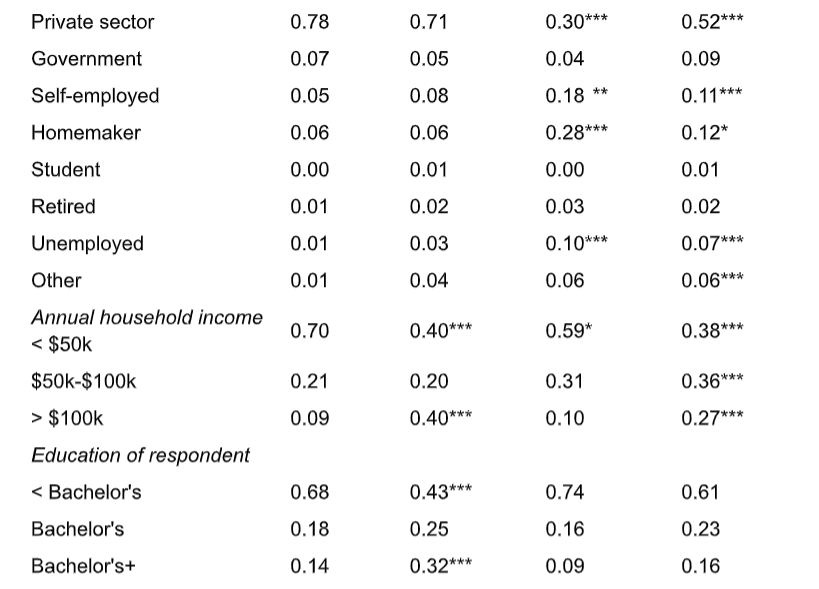
Some headline results are shown in Table 1.
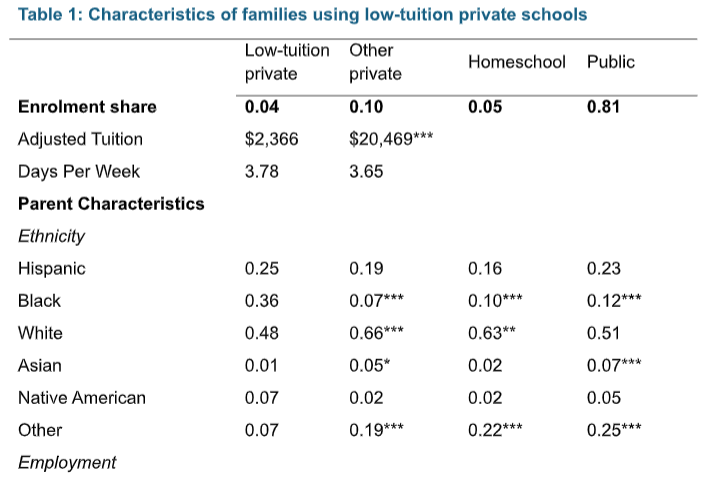
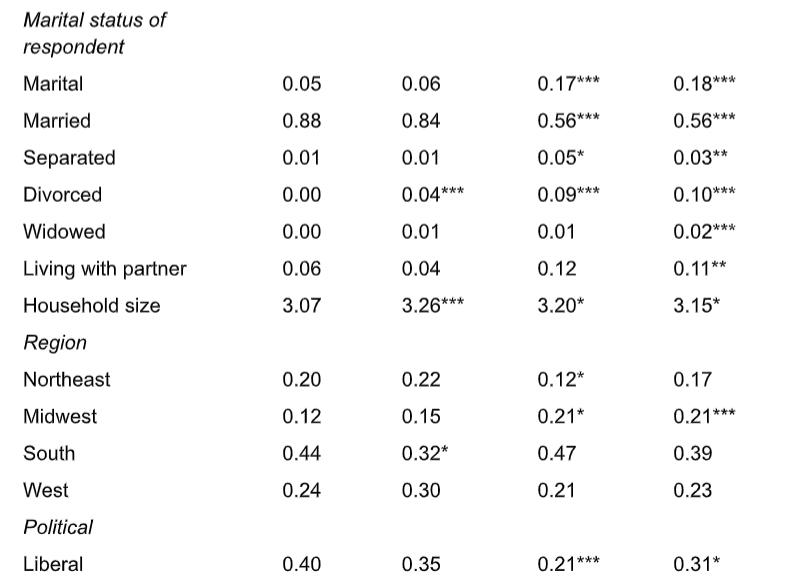
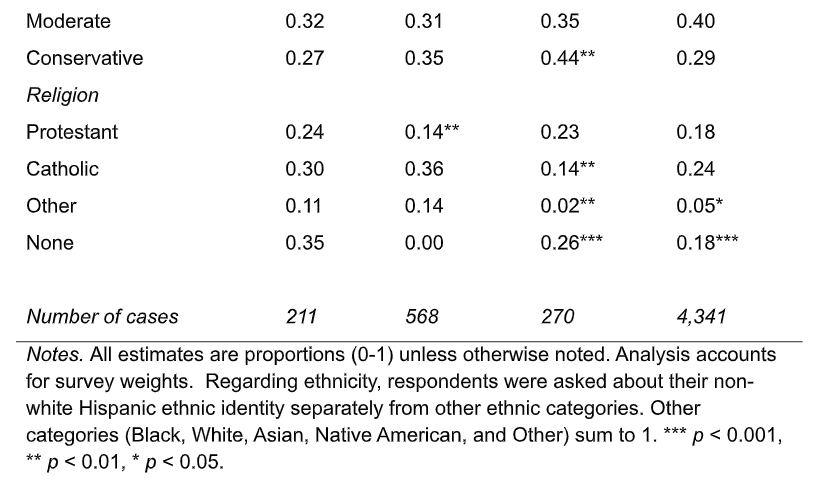
The key headline figure is that we found four percent of children enrolled in low-tuition private schools (Table 1, first row). This is of course much lower than the 70 to 80 percent that we typically find in urban settings in Africa and South Asia.
However, I do not believe it is too low to be worth spending time on. First, recent estimates have suggested that there are over 54 million students enrolled in public or private schools in the US. Hence enrolment in low-tuition private schools could account for over two million students enrolled.
Although the percentage may be small, the absolute number of students is substantial—equivalent to the total number of students in the state of Illinois, for instance. This figure cannot be ignored, especially considering both qualitative and quantitative evidence suggesting a decline in public school enrollment, with students increasingly opting for alternatives such as homeschooling, hybrid models, and microschools 22 . The National Center for Education Statistics (NCES) 23 projects that public school enrollment will continue to decrease, from approximately 50.8 million at its 2019 peak to about 46.9 million by 2031, a drop of approximately 7.6%. It’s likely that most of these will transfer across to the school alternatives including low-tuition private schools.
The number of low-tuition private schools is also likely to be large. If they were on average 40 students, this would mean that there could be 50,000 low-tuition private schools across America. If they were on average smaller, say 20 students, then there would be 100,000 schools.
We defined low-tuition private school as those which charged tuition of $5,000 per year or less. The average in our sample charged $2,366 in adjusted tuition per year, only about 12% of the $20,469 charged by other private schools. Interestingly, the average days per week attended for both low-tuition private schools and other private schools was around four per week (3.78 in the LTPS and 3.65 in the other private schools). This suggests that we are capturing parents who use schools for a majority of schooltime, even if they are hybrid schools. Reading the demographics of the families using low-tuition private schools makes for interesting reading. Low-tuition private schools have a very distinctive demographic –
and one which should be of interest to policymakers and opinion leaders.
Black parents are significantly more likely to send their children to low-tuition private schools than to other school types. Families whose annual household income is less than $50,000 are significantly more likely to be in low-tuition private schools than other school types. Families with highest incomes (greater than $100,000) made up only 9% of families in low-tuition private schools, compared to 27% in public schools, 40% in other private schools and 10% homeschooling. Low-tuition private school parents tend to be less educated – 68 percent of parents of children in low-tuition private schools reported to having maximum certification of less than a bachelor’s degree, compared to 43% of parents in other private schools; meanwhile only 14% have higher than a bachelor’s degree, compared to 32% in other private schools.
Low-tuition private school students largely come from intact family structures, are less likely to be divorced than other school types. About 40 percent of parents define themselves as politically liberal (compared to 21% who homeschool and 31% who use public schools).
Some of these findings align with research on targeted school vouchers whose recipients are ethnic minorities and low-income families. However, our findings that low-tuition private school families are more associated with politically liberal families stands in contrast with other school choice research in the U.S. 24 (Shakeel & Peterson, 2023).
Conclusion
The movement of low-cost private schools in Africa and South Asia in particular is now well-documented. Large majorities of poor children are using low-cost private schools. Children in these schools outperform those in public schools. Girls are not discriminated against in the private schools, which are affordable even to families on the poverty line. Finally, low-cost private schools are typically run as small businesses – making them a scalable and sustainable solution to education for all.
My intuition had always been that there were good reasons why the phenomenon of low-tuition private schools was not emerging in the US. However, funded by VELA, I began conducting qualitative and quantitative fieldwork, and found to my surprise that there is a growing movement of low-tuition private schools in the US too. It’s still at the embryonic stage – with around 4% of students attending such schools, which could represent up to 100,000 schools. Low-tuition private schools are more likely to serve students from historically disadvantaged groups: they draw higher proportion of families who are Black, with annual household income less than $50,000.
For “a fistful of dollars” … poor parents in Africa and South Asia have for decades been able to access high-quality, low-cost private education. It now appears that parents can do the same in America too. The movement of low-tuition private schools in America is still small but it is growing. How big can this movement get? It looks like a very exciting space to watch as it grows in size and influence, in America and across the world.
1]J Härmä and F Adefisayo, “Scaling up: challenges facing low-fee private schools in the slums of Lagos, Nigeria.” In Low-fee private schooling: aggravating equity or mitigating disadvantage?, ed. P Srivastava (Oxford: Symposium, 2013), 129).
2] “Banking on Education, Nairobi,” CapPlus, http://capplus.org/files/2016/12/Banking-on-Education-in-Nairobi-05.01.pdf.
3] “Low Fee Private Schools in low-income districts of Kampala, Uganda,” CapPlus, http://capplus.org/files/2017/04/Kampala-Private-Schools-Market-Study-2017-03-24.pdf
4] “Banking on Education, Accra,” CapPlus, http://capplus.org/files/2018/03/Banking-on-Education-in-Accra-2018-03-20.pdf
5] J. Tooley, Really Good Schools (Independent Institute, 2021)
6] Tooley, J, The Beautiful Tree: A personal journey into how the world’s poorest are educating themselves, Cato Institute, Washington DC and Penguin, New Delhi, 2009.
7] Laura Day Ashley et al., “The role and impact of private schools in developing countries: a rigorous review of the evidence” (Department for International Development, 2014), 15.
8] Karthik Muralidharan and Venkatesh Sundararaman, “The Aggregate Effect of School Choice: Evidence from a two-stage experiment in India,” Quarterly Jounral of Economics 130, no.3 (2015); see Tooley, James (2016): Extending access to low-cost private schools through vouchers: an alternative interpretation of a two-stage ‘School Choice’ experiment in India, Oxford Review of Education, DOI: 10.1080/03054985.2016.1217689
9] The mean impact across all subjects is 0.53σ, statistically significant. Muralidharan and Sundararaman, 1051.
10] Edoren, Learning in Lagos: Comparing Student Achievement in Bridge, Public and Private Schools, (Edoren, Abuja, Nigeria, 2018)
11] J. Härmä, “Access or quality? Why do families living in slums choose low-cost private schools in Lagos, Nigeria?” Oxford Review of Education 39, no.4 (2013): 557, emphasis added.
12] J. Tooley and D. Longfield, The Role and Impact of Low-cost Private Schools in Developing Countries: A Response to the DFID-Commissioned Rigorous Literature Review (London: Pearson, 2015);
13] Tooley, J. and Longfield, D, Affordability of Private Schools: Exploration of a conundrum and towards a definition of “Low-cost”, Oxford Review of Education, Vol 42.4, (2016): 444-459.
14] Tooley, J and Longfield D., (2017) Education, War and Peace, London, Institute of Economic Affairs; Tooley, James (2009), The Beautiful Tree: A personal journey into how the world’s poorest people are educating themselves. Cato Institute, Washington DC
15] Tooley, The Beautiful Tree.
16] J. Tooley, Really Good Schools (Independent Institute, 2021)
17] VELA | Own Your Education™
18] Now that I’ve switched to America, I’ve switched to ‘low-tuition’ as a more natural way of referring to the schools.
19] “Hybrid Schools” typically operate as normal schools, but for only two to three days per week. The remainder of the time the student is homeschooled. “Microschools” are schools which are defined, solely, by their size. Typically people think of them as having a maximum of around 30 children. Homeschools are where children engage with learning in their own homes.
20] This will be published as Tooley, James (2027) The Beautiful Tree in America, Independent Institute, Oakland, CA.
21] The quantitative part of this paper owes much to Matthew H. Lee, M. Danish Shakeel and Andreea Dogar – we will publish a paper on the quantitative work together.
22] Sequeira, R. (2025) “Public school enrollment continues to fall&”, Stateline, 14 July. Available at: https://stateline.org/2025/07/14/public-school-enrollment-continues-to-fall/ (Accessed: 20 September 2025).
23] National Center for Education Statistics (NCES) (2024) “Press Release – NCES Data Show Public School Enrollment Held Steady Overall From Fall 2022 to Fall 2023”, 5 December. Available at: https://nces.ed.gov/whatsnew/press_releases/12_5_2024.asp (Accessed: 20 September 2025). National Center for Education Statistics (NCES) (2023) “Enrollment in public elementary and secondary schools, by region, state, and jurisdiction: Selected years, fall 1990 through fall 2023”, Digest of Education Statistics. Available at: https://nces.ed.gov/programs/digest/d13/tables/dt13_203.20.asp (Accessed: 20 September 2025).
24] Shakeel, M. D., & Peterson, P. E. (2023). Are School Reforms Liberal, Conservative, or Populist? Populism and Education Policy Opinions in the United States. Journal of School Choice, 17(4), 465–496. https://doi.org/10.1080/15582159.2023.2211799
Our Partners