
Europe’s indirect support of terrorism
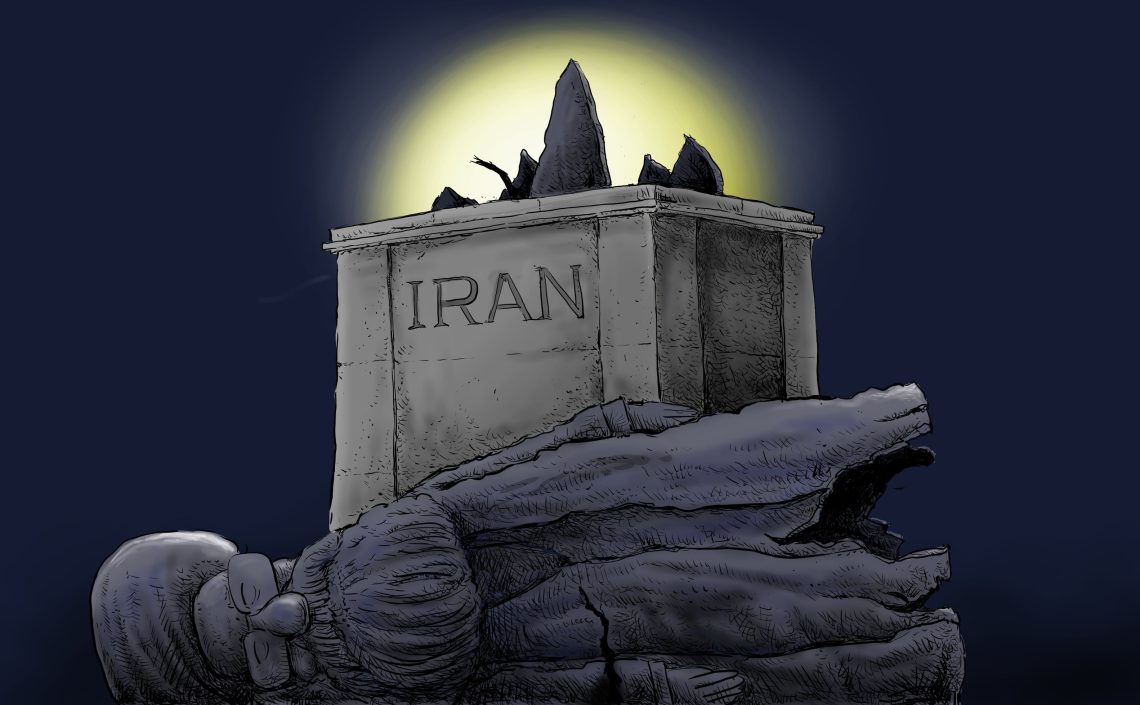
The world’s primary sponsor of terrorism is the regime in Tehran. Not only is it the force behind terrorism, it also seeks the total annihilation of Israel and its people, creates civil wars all over the Middle East, develops missiles and nuclear weapons for these purposes and brutally oppresses its own population. Just two months ago the Republican Guards, an elite military force reporting to the mullahs, murdered 30,000 peaceful demonstrators.
The United States and Israel are now tackling the mullahs’ regime. They want to root out the terrorist machinery and assist the Iranian opposition to free their country. European governments, instead of supporting the operation at least verbally and reducing diplomatic relations with Tehran, are admonishing Washington to de-escalate and respect international law (thus suggesting a breach).
Especially shocking was last week’s declaration by German Federal President Frank-Walter Steinmeier: “In my opinion, this war is a violation of international law.” He emphasized that it was “a politically fateful mistake,” spoke of a deep rift with the U.S. and compared the rupture in transatlantic relations to the one caused by Russia’s invasion of Ukraine.
Europe is justifiably afraid of terrorism. Nevertheless, not enough is done by Europe in fighting terrorism on the continent and globally.
Equally shameful is that Spain does not permit its NATO ally to pass its airspace or use joint airfields on missions to Iran. Similarly, Italy has denied the U.S. permission to land military aircraft at an airbase and France has refused American overflight requests.
Cowardice and consequences
Whining about respect for international law and calling for de-escalation when fighting the preeminent global sponsor of terrorism is disgraceful cowardice.
Stopping the war while leaving the fanatic regime in place would have very negative consequences. It would destabilize the entire region and encourage further terrorism, even on European soil. A situation with such spillover would then not be due to alleged mismanagement by President Donald Trump and Prime Minister Benjamin Netanyahu, but rather the lack of support from Europe.
Europe is justifiably afraid of terrorism. Nevertheless, not enough is done by Europe in fighting terrorism on the continent and globally. This is left to the U.S., which also protects Europe.
While Europe has installed many state surveillance measures − neglecting its own citizens’ right for privacy − the avoidance of terrorist attacks, such as at concerts and public events, has succeeded mainly thanks to information provided by the U.S. intelligence services. This was also the case in some operations against child pornography.
Instead of being appreciative, European intellectuals, media and some politicians criticize Washington.
Insufficient effort
The threat of terrorism disturbs our daily life and anti-terrorism measures weigh heavily on budgets. Christmas markets in Germany are no longer peaceful, safe places. More and more costly protection is necessary if the traditional gatherings are to continue.
Last week after meetings in Milan I wanted to briefly visit a cathedral, the famous historic Duomo. Entering took some time while passing two ranks of security controls. This is irritating as visiting a church should be welcoming and easily accessible.
Being delayed in entering the church might be minor, yet the necessity of this security itself is telling. It made me think once again about the insufficient protection in Europe toward imported terrorism. But attacking the root of terrorism in Tehran is considered wicked?
This comment was originally published here: https://www.gisreportsonline.com/r/europes-indirect-support-of-terrorism/
Our Partners