
European security, mindset collapse
The gravest threat to Europe is neither Russia nor migration. It is internal: a loss of confidence in its own civilization. No army can defend a society that no longer believes in itself.
While a delegation from the United States negotiates with Moscow over a potential peace settlement in Ukraine – without European participation – the White House has released its new security strategy.
The document reiterates Washington’s pivot to the Pacific, confronts Europe with sharp criticism and shows some understanding for Russian positions in specific areas, yet keeps the possibility of defense cooperation with Europe open under certain conditions.
A central criticism is Europe’s immigration policy, which the strategy warns could lead to “civilizational erasure.” It also echoes U.S. Vice President JD Vance’s remarks at the Munich Security Conference, arguing that dissenting opinions are suppressed in Europe and that Europeans are blocking efforts to achieve peace with Russia.
In response, British Prime Minister Keir Starmer, German Chancellor Friedrich Merz and French President Emmanuel Macron met in London with Ukrainian President Volodymyr Zelenskiy. Their meeting signaled unity with Ukraine, but beyond commitments of money and equipment it produced no tangible results. Neither Moscow nor Washington perceives Europe as acting with unity – instead, they see impotence.
A peace agreement or ceasefire that disadvantages Ukraine has become increasingly unavoidable. The question is what comes next.
Impotence and a lack of conviction
The U.S. has indicated it could support European defense under certain circumstances, yet it is undeniable that European countries must build self-sufficiency, based on close cooperation among the continent’s main powers. Unfortunately, the European Union has proven it is not up to that task.
Russia is Europe’s neighbor, and that will not change. Limited territorial gains in Ukraine and the neutralization of the country will not satisfy the Kremlin in the long term. Europe must eventually reestablish a working relationship with Russia. This will be possible only if Europe develops credible military capabilities. The primary obstacle, however, is not equipment, capital or cooperation, but mindset. A mindset among politicians, intellectuals and the media has shaped public attitudes to deny values such as courage and individual responsibility, including standing up for freedom. If necessary, freedom must be defended with weapons.
Europe’s problem is not primarily a shortage of tanks but a shortage of courage.
Here the U.S. strategy document offers an uncomfortable but accurate observation: Europe’s “civilizational erasure.” Only a small share of the population is willing to fight for their own country and defend freedom. No technology can compensate for this lack of conviction.
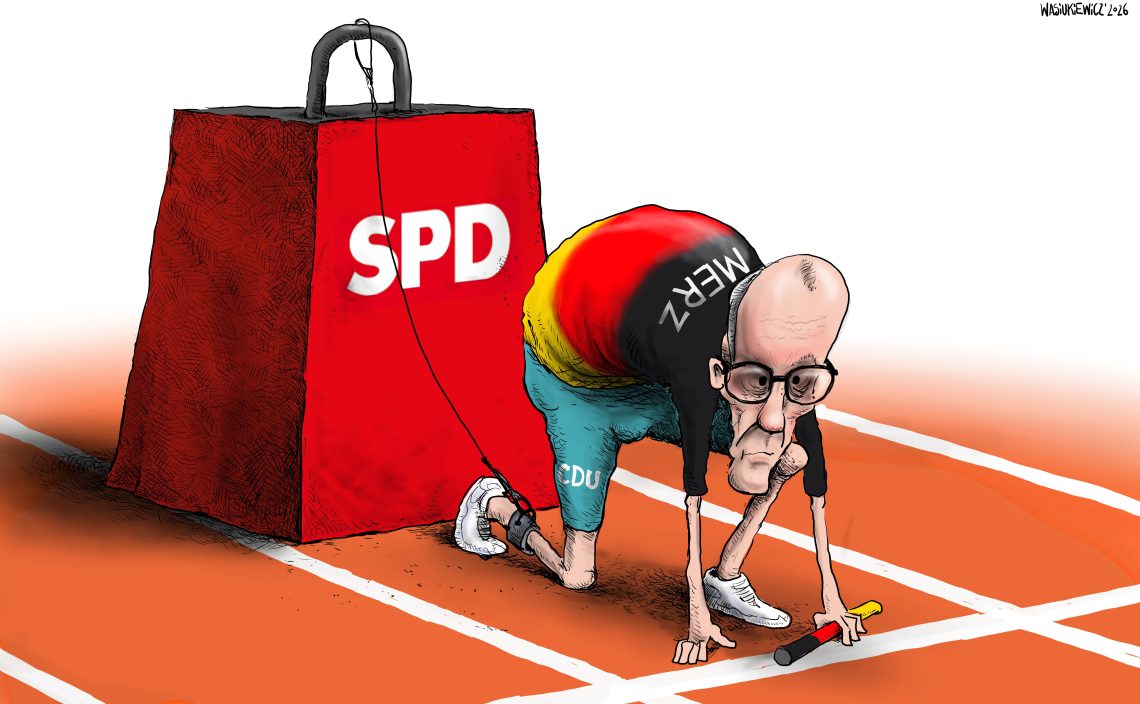
In Germany, planned conscription – the only realistic way to fill the ranks – has been replaced by a weak political compromise. Public motivation to defend the country is low.
Doubts about European identity
When it comes to migration, the movement of people from disparate cultures is, in and of itself, not the core issue. The deeper problem is Europe’s inability to manage it.
Europe struggles with its past and its cultural roots. Doubts about identity are taught in schools. A critical view of history is legitimate, but denying or rejecting entire chapters undermines healthy patriotism. During the Cold War, the Soviet Union supported disinformation campaigns that infiltrated parts of the political left and the media. Fake news is not a phenomenon unique to our time.
Patriotism, love for one’s country, culture and history, is routinely consigned to the domain of the radical right. The outcome is predictable: a broad unwillingness to defend one’s own country, with exceptions in some Central European states and Finland.
Compounding this is weak, mediocre political leadership. Lacking courage, leaders fear the public’s corresponding disorientation and respond with a flood of regulations and exaggerated controls. In the name of “defending democracy,” they restrict individual freedom and marginalize differing opinions – the core of democratic life. Opinion polls in Germany show that citizens increasingly fear expressing their views openly.
A society in such a fragile condition is especially vulnerable to the pressures of immigration. When a nation denies its own past, healthy integration – with newcomers embracing the European way of life and respecting its culture – becomes nearly impossible. Traditional cultural practices and religious traditions are discarded, replaced by vague multiculturalism.
Europe is psychologically disarmed
Europe’s problem is not primarily a shortage of tanks but a shortage of courage. The continent is psychologically disarmed. A society that suppresses unpopular opinions cannot be resilient. This toxic combination of public mindset and ineffective leadership fuels a nihilistic atmosphere. Those who point this out risk being labeled radical right or allies of Russian President Vladimir Putin. Europe has chosen to avoid confronting these issues. It is deeply embarrassing that Americans feel compelled to point them out.
Europe’s population far exceeds Russia’s, while Germany’s industrial output alone is significantly higher than that of the eastern neighbor. Europe should be ashamed that it is unable to stop Russian aggression militarily. Worse still, the prevailing mindset erodes the foundations of free and prosperous societies.
Russia should one day become a valuable partner for Europe, but that will remain a distant possibility as long as Europeans appear uncertain about defending their own freedom. Respect from Moscow will come only when Europe behaves like a continent that knows what it stands for and is prepared to protect it.
Without a shift in attitude, Europeans will continue to criticize Russian behavior while maintaining the same power imbalance that leaves the continent a puppet between Moscow and Washington.
This comment was originally published here: https://www.gisreportsonline.com/r/european-security/
Our Partners