
The EU’s shaky start to balancing trade with China
In recent years, China’s trade surplus with the European Union has reached levels that are causing significant concern among Europeans. In 2026, Europe’s trade deficit with China has widened by about 1 billion euros each day – a staggering figure.
In June 2026, China’s trade surplus with the EU surged 27 percent annually to $32.9 billion, a new record high. Even more unsettling for Brussels, for the first time, every EU member state recorded a trade deficit with China that month. Then in July, the deficit reached 36.5 billion euros, or roughly 1.18 billion euros per day. The bloc’s trade gap with China is expected to reach 400 billion euros in 2026, compared with 360 billion euros in 2025.
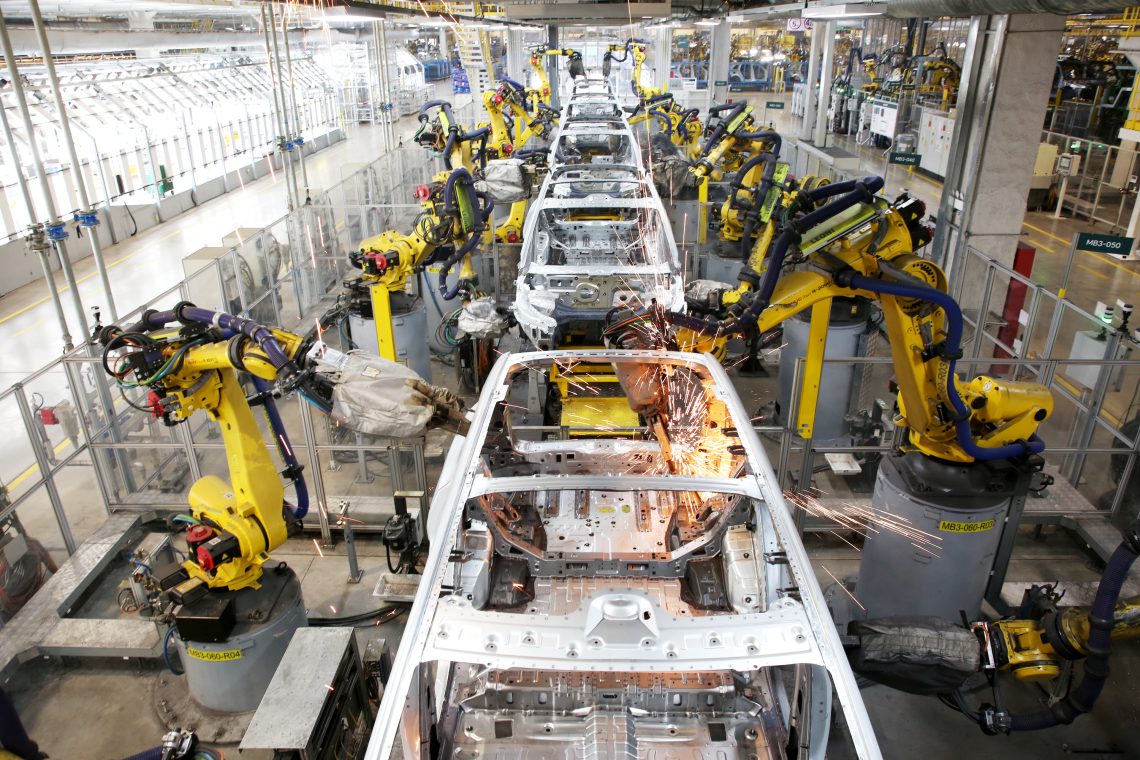
China’s manufacturing sector has not yet reached its full potential. Thanks to the country’s abundant and inexpensive electricity, advances in automation and technology, and its overwhelming control over critical minerals and rare earth elements, its export growth potential is enormous. China’s share of global industrial output is projected to rise from the current 37 percent to as much as 45 percent by 2030.
Western countries have witnessed two shocks since China joined the World Trade Organization (WTO) in 2001. The first came shortly after China’s accession, when Chinese exports dealt a severe blow to labor-intensive, low-tech European industries. The second is taking place now. Unlike the first shock, the sectors currently under pressure are those Europe views as core to its economic and technological future – electric vehicles (EVs) and batteries, as well as steel, chemicals and wind turbines.
From slumber to assertiveness
Europe harbors a romanticized empathy toward China – a sentiment that seems to have made it less vigilant about Beijing’s long-standing ambition-driven mercantilist policies. Since the 1980s, European nations have, to some extent, helped China establish its dominant position in global manufacturing. After 2000, misjudgments by certain European industries regarding China’s market strategy and technological advancements, such as in EVs, significantly weakened the EU’s competitive edge against China.
Over the past decade, Europeans have begun to recognize the unfair trade between China and Europe and now realize that the causes stem from a combination of factors, including the Chinese government’s non-market-oriented industrial policies (including subsidies) and exchange rate manipulation.
EU member states’ differing policies to China have made it easier for Beijing to divide and conquer. For example, Germany – driven by its own industrial sector, particularly the automotive industry – has long relied on huge profits from China. Berlin had openly opposed and blocked even slightly tougher EU measures against Beijing.
Only this year did some major German companies realize that China’s industrial policies were not particularly favorable for foreign enterprises, and that Germany could no longer cling to its dream of perpetual enormous revenue in China. Consequently, they began advocating for a tougher stance toward Beijing. Meanwhile, Chinese electric vehicles have flooded the European market, forcing many of the bloc’s automakers to lay off large numbers of workers and close factories.
The pre-negotiation climate
Under the current circumstances, China lacks the incentive to make major adjustments to its existing trade policies. However, with the United States already imposing restrictions on Chinese imports, the European market has become particularly important. But given inconsistencies in EU member states’ policies on China and the EU’s heavy dependence on China for components and raw material supply chains, Beijing remains convinced it can continue along its mercantilist path. That is why Sino-EU economic and trade negotiations have been deadlocked.
Yet the bloc is undergoing a major shift toward a hardline stance on Beijing. In the second half of 2026, Brussels resolved to reduce its massive trade deficit. Ahead of EU-China negotiations in October, Brussels repeatedly emphasized that China had to produce concrete results; otherwise, it would face “more stringent measures.” In early July, European Commission President Ursula von der Leyen issued an ultimatum: If China did not respond proactively, “we will take action in the fall.” Beijing took the EU’s ultimatum seriously and adopted a slightly different strategy.
The result was an interim deal reached in October, under which China’s exports of hybrid vehicles to the EU will be slowed. While the EU does not have many cards to play, its market is a very powerful one and of major importance to China.
The shift in the EU’s trade policy vis-a-vis China is directly linked to the influence of U.S. trade policy. On December 27, 2023, the EU enacted the Anti-Coercion Instrument (ACI). This legislation aims to counteract third countries that use economic measures – such as tariffs, trade restrictions or investment restrictions – to coerce the EU or its member states. This law, which has caused unease in Beijing, is a direct response to coercion by China and was later discussed as a way for the EU to push back against U.S. tariffs. But due to the complex and lengthy implementation procedures, the law has not been invoked since its enactment and publication.
On March 4, 2026, the European Commission officially released draft legislation for the Industrial Accelerator Act. The bill has been submitted to the European Parliament and the Council of the EU for review. The bill’s core objectives include reindustrialization, aiming to increase manufacturing’s share of the EU’s gross domestic product (GDP) from the current 14.3 percent to 20 percent by 2035. Another objective is to reduce dependence on a single third country (such as China) in critical supply chains.
Beijing views these EU objectives as targeting its own mercantilist trade policies and has therefore opposed them since the draft was first published.
The EU’s lengthy procedures and cumbersome regulations have prevented it from responding promptly and effectively to China’s unfair trade practices. For example, initiating the ACI requires several months of investigation and the support of a majority of EU member states, making it extremely difficult to implement in practice. In the past, Germany was one of the main opponents of invoking the ACI. In recent months, however, Berlin’s stance on trade with China has shifted dramatically.
French and German views on China converge
In May 2026, French President Emmanuel Macron proposed establishing a European version of the “Section 301” mechanism, the U.S. trade law that authorizes Washington to investigate and retaliate against foreign government policies or practices that violate trade agreements or threaten U.S. commerce.
At the time, German Chancellor Friedrich Merz did not support the approach due to the German business community’s strong pro-China stance. But in July, he criticized China’s currency as being undervalued, claiming that his country was losing 10,000 industrial jobs each month as a result. In its recently unveiled reform plan, the German government called for “robust protection against unfair competition,” particularly through faster, sector-specific implementation of EU-wide measures.
In a joint letter to the EU in early October, Chancellor Merz and President Macron urged that the European Commission be granted the ability to respond more swiftly to trade threats. The proposal aims to strengthen Trade Commissioner Maros Sefcovic’s powers in the next round of negotiations expected in March 2027. They called for urgent action, stating that the EU’s existing trade defense tools “are no longer sufficient.” They proposed measures referred to as a “second-strike weapon” that can be used when necessary if trade disputes escalate.
Clearly, Germany’s shift and the joint German-French initiative have significantly increased the pressure the EU is beginning to exert on China. Although Brussels is concerned that China might take strong countermeasures, EU representatives now appear determined to break new ground in working toward balance in trade.
Ahead of the October negotiations, Beijing publicly warned the bloc that if the EU took tough measures, China would retaliate, and do so even more forcefully. Regarding the October negotiation, however, both sides hoped to achieve their goals without confrontation, as both realized that a direct conflict would result in a lose-lose situation.
Outcome of the negotiations
The EU’s goal in the October negotiations was to get Beijing to accept a new trade defense measure: import quotas on Chinese goods. Once the volume of Chinese imports to the bloc exceeds a specific threshold, additional tariffs would be triggered. To reduce the EU’s dependence on China, the bloc would impose additional tariffs on products where Chinese supply accounts for more than 40 percent of the EU’s total imports.
Naturally, this combination of quotas and tariffs is disadvantageous to China’s trade objectives. Nevertheless, Beijing now appears more willing to accept quotas under certain conditions if the EU is flexible on the exact method to be used. Following the negotiations, the two sides issued a joint statement that lacked specifics. From the EU perspective, the talks achieved three key outcomes.
Quotas on automobiles
In 2025, China accounted for 30 percent of the EU’s plug-in hybrid vehicle imports by value. In August 2026, Chinese-made hybrid vehicles accounted for about a quarter of Europe’s total sales of these cars, including those made in the EU. The surge is partly due to hybrids not being subject to the 2024 tariffs the bloc imposed on Chinese-made pure electric vehicles.
The EU’s plan to cap imports of Chinese hybrid vehicles at 350,000 units per year is set to take effect as early as December 1, 2026. The quota will increase by 6 percent annually starting in the second year, with the measures in effect for a total of four years. The initial quota is based on 2025 import levels, whereas China insists that cap should be based on its factual production amount. Mr. Sefcovic claimed that this should cut expected Chinese imports of hybrid vehicles to the EU by more than half. But he might have failed to predict how quickly China’s productivity increases.
This consensus and what was agreed behind closed doors provides an incentive for Chinese automakers to increase production in Europe. Immediately after the negotiations, the Chinese finance ministry announced that, effective April 1, 2027, the value-added tax export refund rate for Chinese-made new energy vehicles would be cut from 13 percent to 9 percent. The subsidy reduction is undoubtedly linked to pressure from the EU.
Rare earths
China suspended its strictest export restrictions on rare earths, materials and equipment in 2025 in a policy that ended on November 10, 2026. Following the October talks, Beijing indicated that it is willing to continue expediting approvals of rare earth exports to the EU and signaled a willingness to make concessions: the approval process for exports of urgently needed raw materials to the EU will be further streamlined. In reality, however, there was no substantial move on the Chinese side in favor of the EU.
European exports to China
The two sides also agreed to expand market access for a range of EU products in China by reducing most-favored-nation tariffs. This covers products ranging from auto parts and olive oil to footwear, worth a current total export value of approximately 4 billion euros. The move is expected to save a modest 225 million euros in tariff costs.
Where Brussels and Beijing disagree
During the negotiations, the two sides had fundamental disagreements on two issues. First, in recent years, Beijing has denied that China engages in non-market practices and has instead worked harder to portray its mercantilist export and manufacturing policies as compliant with WTO rules. This has hindered the EU’s progress in negotiations.
Brussels is seeking to treat the agreement on hybrid EVs as a replicable blueprint to protect other EU industries currently under pressure.
Junhua Zhang
Methodologically, Brussels is seeking to treat the agreement on hybrid EVs as a replicable blueprint to protect other EU industries currently under pressure, such as the chemical and machinery sectors. China is doing its utmost to prevent Europe from establishing a policy practice of imposing restrictions as soon as Chinese industries gain a competitive advantage. Beijing is working to steer dispute resolution back toward a case-by-case approach to avoid setting a precedent for the large-scale implementation of restrictive measures.
Scenarios
Now that the year’s negotiations have concluded, the EU is still far from achieving its goal of establishing balance in its trade with China. The bloc must coordinate its internal policy regarding China. Hungary once clashed directly with Brussels over China policy; now it is Spain that is giving the EU headaches. China will likely try to exploit this lack of coordination within the bloc.
Given Beijing’s robust and highly efficient manufacturing sector but sluggish domestic consumption, mercantilist exports have become the lifeline for the Chinese economy. Although China and the EU have contained economic and trade frictions through this year’s consultations, the coexistence of cooperation and competition remains unchanged, and “negotiating while clashing” is expected to become the new norm.
More likely: The EU’s divided approach to China persists
In the short and medium term, the EU continues to operate as before, with member states remaining divided on China policy and taking little action to ensure autonomy in supply chains and critical materials. Even if the EU’s trade deficit with China narrows slightly, the bloc will still be far from achieving a new balance.
Beijing will continue to use coercive tactics to extract concessions from the EU, such as halting or drastically reducing rare earth exports, or restricting EU agricultural imports to China by launching anti-dumping investigations or sanitary-standard measures. China may also mask the origin of its exports to the EU via third countries. It will build plants in Europe half-heartedly, mostly to assemble imported components rather than to manufacture locally. Beijing is unlikely to wage a massive trade war against the EU, but there will be friction with individual EU member states.
Even if the EU is willing to apply the tool Germany and France have proposed, the EU lacks the capacity (in terms of sufficient staff) and experience to tackle China’s non-market approaches.
Less likely: The EU coordinates regarding China
Recognizing the growing dominance of China in trade, the EU becomes more united than ever, with member states adopting increasingly aligned policies toward China. The bloc also implements effective and rapid reforms to accelerate its own re-industrialization. As a result, Beijing will have fewer loopholes to exploit, leading to a fundamental transformation of Europe’s own industry and exports.
In this case, China would invest more in Europe by establishing plants and grudgingly helping the bloc meet EU localization requirements. This would significantly contribute to creating a new balance in trade.
Our Partners