
1914, 1938, 2026: War as a result
of political cowardice
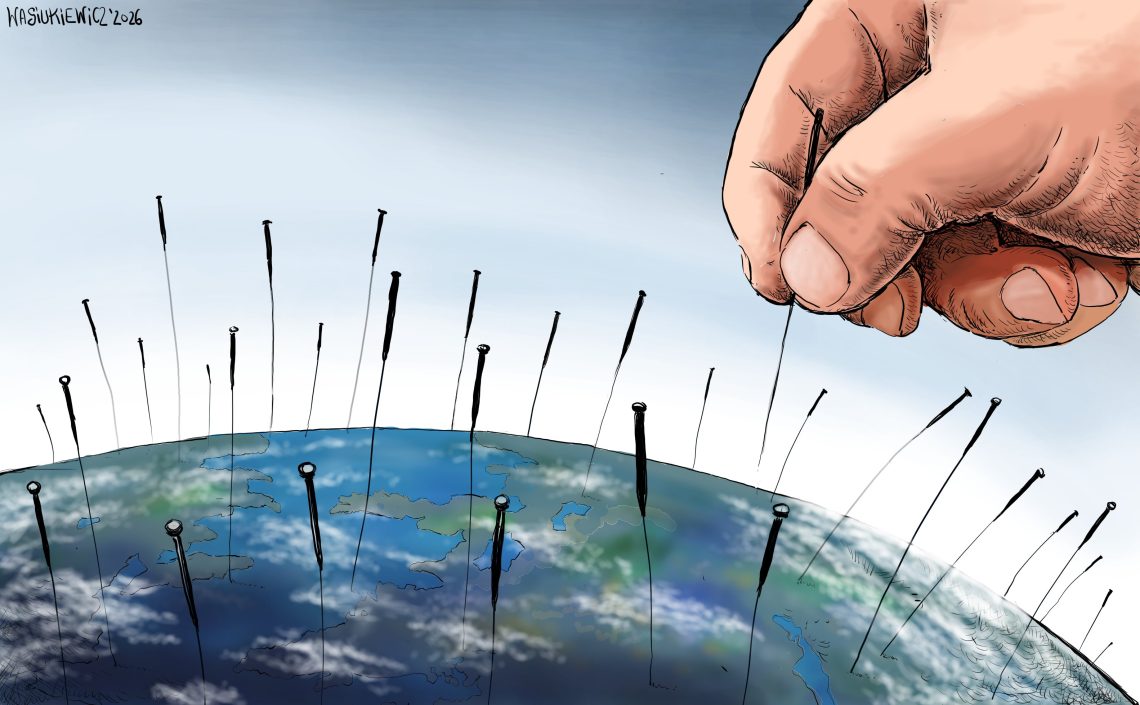
Advent should be a peaceful time in expectation of Christmas, the season of love and peace, and the turn of the year. Yet not only during Advent, but actually the entire year 2025 was overshadowed by wars, which is culminating now at the year’s end.
The most terrible tragedy is happening in Sudan, but conflicts and civil wars rage on in Eastern Congo, Myanmar and the Middle East. War in Ukraine threatens Europe directly. Hybrid warfare has become a global permanence. The activities of the Maduro regime in Venezuela and its close cooperation with China and Russia might force the United States to intervene militarily.
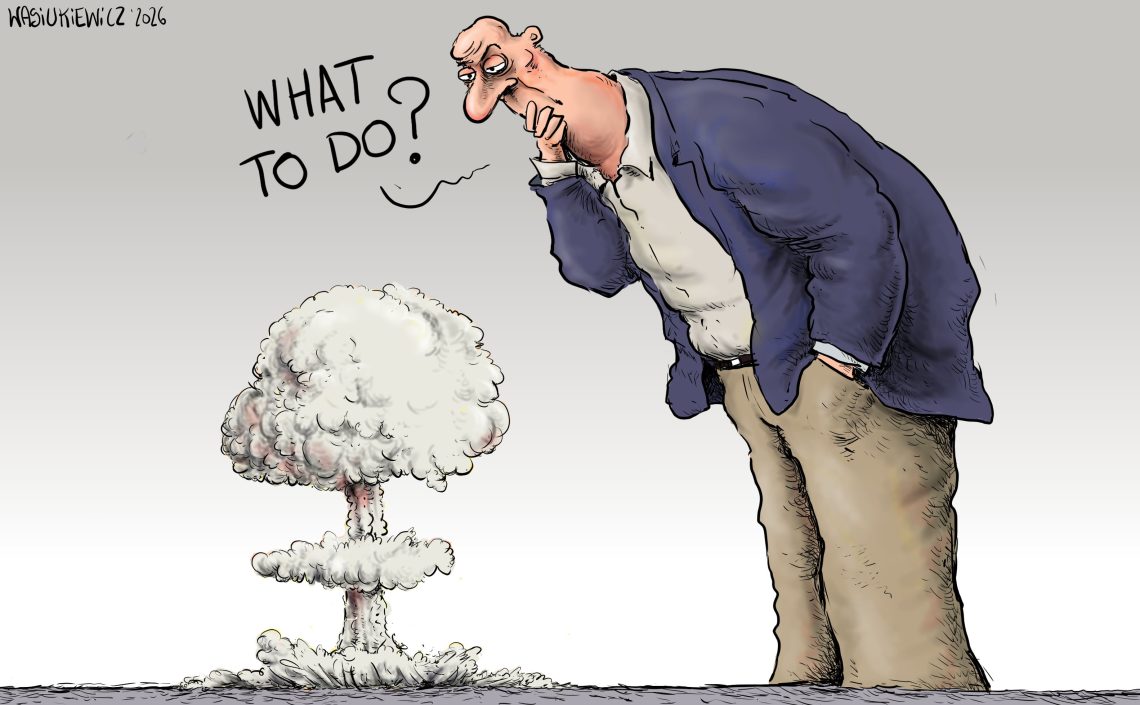
In Europe, the approach toward Russia’s war in Ukraine appears uncoordinated and lukewarm, despite plenty of lip service. We are now witnessing discussions on whether the West’s approach to the Ukraine war corresponds to the British-French indecisiveness and weakness at the Munich Conference in 1938, or the sleepwalking into war in 1914 as described by Cambridge professor Christopher Clark. Both moments of inaction led to world wars. Although it is always good to learn from history, it is necessary to assess the situation from today’s facts.
Europe’s approach to Russia in the post-Cold War era
Major missteps have already taken place since the collapse of the Soviet Union. Moscow, the once-proud successor of the former Russian Empire and the Soviet Union was – in its economic and internal crises – humiliated by paternalistic lecturing from the U.S. and Western Europe. This school-mastering with the objective to enforce Western-style democracy and way of life in Russia was deeply resented and reached a peak during the administration of President Barack Obama.
We are now witnessing discussions on whether the West’s approach to the Ukraine war corresponds to the British-French indecisiveness and weakness at the Munich Conference in 1938, or the sleepwalking into war in 1914.
It was fortunate that the belt of nations from the Baltics to Romania − with the core being Poland, Hungary, the Czech Republic and Slovakia − could use that historical power vacuum to join the Western alliances. It was, however, tragic that this enlargement did not include Ukraine and Georgia. Far-sighted politicians such as Otto von Habsburg, saying that not including these countries into the Western alliances in the 1990s would lead to war at a later stage, were not heard.
Mediocre politicians then clung to the comfortable illusion that the whole world – including Russia – would become peaceful and democratic. The question remains why politicians at that time ignored the facts. The answer might be a combination of mental laziness, indecisiveness, a lack of knowledge and no courage.
The attempt to convert Russia to democracy failed by necessity. For the West, democratization was a good reason to ignore Russian aims and frustrations. Then it gave way to concerns in Russia that the West might try to influence its internal governance.
The West’s underwhelming response to Russian expansionism
In 2014 Russia attacked Crimea and the Donbas. The U.S. reaction was disapproval and a message of sanctions coupled with the declaration that military involvement was excluded. On top of that weak reaction, President Obama insulted Russia by declaring the country “just a regional power.” The president ignored the basic rule that you should encounter an adversary with force, but also with respect. A Western double blunder. The European countries − lacking courage − retreated into a naive and comfortable belief of the effectiveness of sanctions.
Unfortunately, this political insufficiency prevails to this day. When Russia’s troops amassed on Ukraine’s border, there was – again − a lack of credible deterrence from the West. President Joe Biden warned that something would happen, then he insulted President Vladimir Putin as a murderer while putting no real deterrence in place.
Now we are approaching the completion of the fourth year of full-scale war. Washington is currently negotiating in a more direct way with Moscow, ignoring the Europeans and trying to force peace on Moscow and Kyiv. It might be the right moment to end the fighting, although it will be to the detriment of Ukraine.
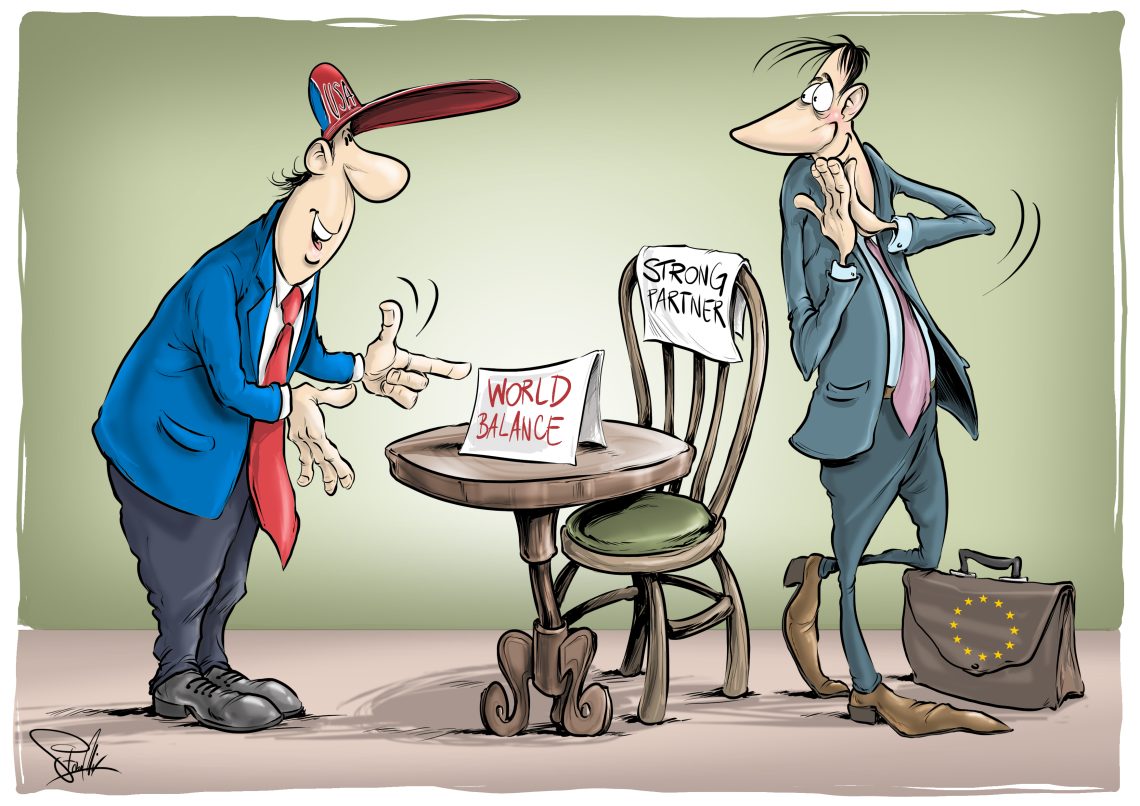
European governments have started to sense the danger. Unfortunately for them, they are − despite declarations of unity, military rearmament and support for Ukraine − not credible enough in implementing their own defense. Neither Washington nor Moscow takes the Europeans seriously. Moscow, helped by European inconsistency, is successfully driving a wedge in the Euroatlantic alliance.
It is to the credit of German Chancellor Friedrich Merz that financially broken Ukraine received an 90 billion-euro credit line to be paid from January 2026. The circumstances around the decision, however, were doubtful.
First, the very questionable plan put forward was to use frozen Russian funds held by Euroclear in Belgium. The Belgian government, in light of the legal dubiousness of the idea, convinced its partners to abstain. Instead, it was agreed that the European Commission would raise the funds on capital markets. This is now the third incidence of the EU breaking its own rule that the bloc must not incur debt. Unfortunately, this is yet another step towards a system of common European debt, a movement embraced mainly by already highly indebted European countries, such as France, and by socialist followers of centralism and debt financing.
This strategy of borrowing to help Ukraine avoid insolvency is necessary, though it is shortsighted for a financially broken Europe. Additionally, European uncertainty around this financing mechanism and helpless attempts to include themselves in the American-Russian talks gives rise to ridicule from the Kremlin.
Although Chancellor Merz has provided leadership, Europe’s past − and partially still its present − negligence on defense, coupled with unconvincing maneuvering and weak leadership remain the main danger for the continent in the near future.
Europe’s security problem is the following: Although Russia in theory lacks the potential for a further attack in the near future, it has determined leadership. The Kremlin’s biggest assets are the shortsighted, indecisive politicians of Europe. This is an analogy to 1914 and 1938.
This comment was originally published here: https://www.gisreportsonline.com/r/war-political-cowardice/
Our Partners