
3rd Award in Vernon Smith Prize 2025
ex aequo (2 of 2)
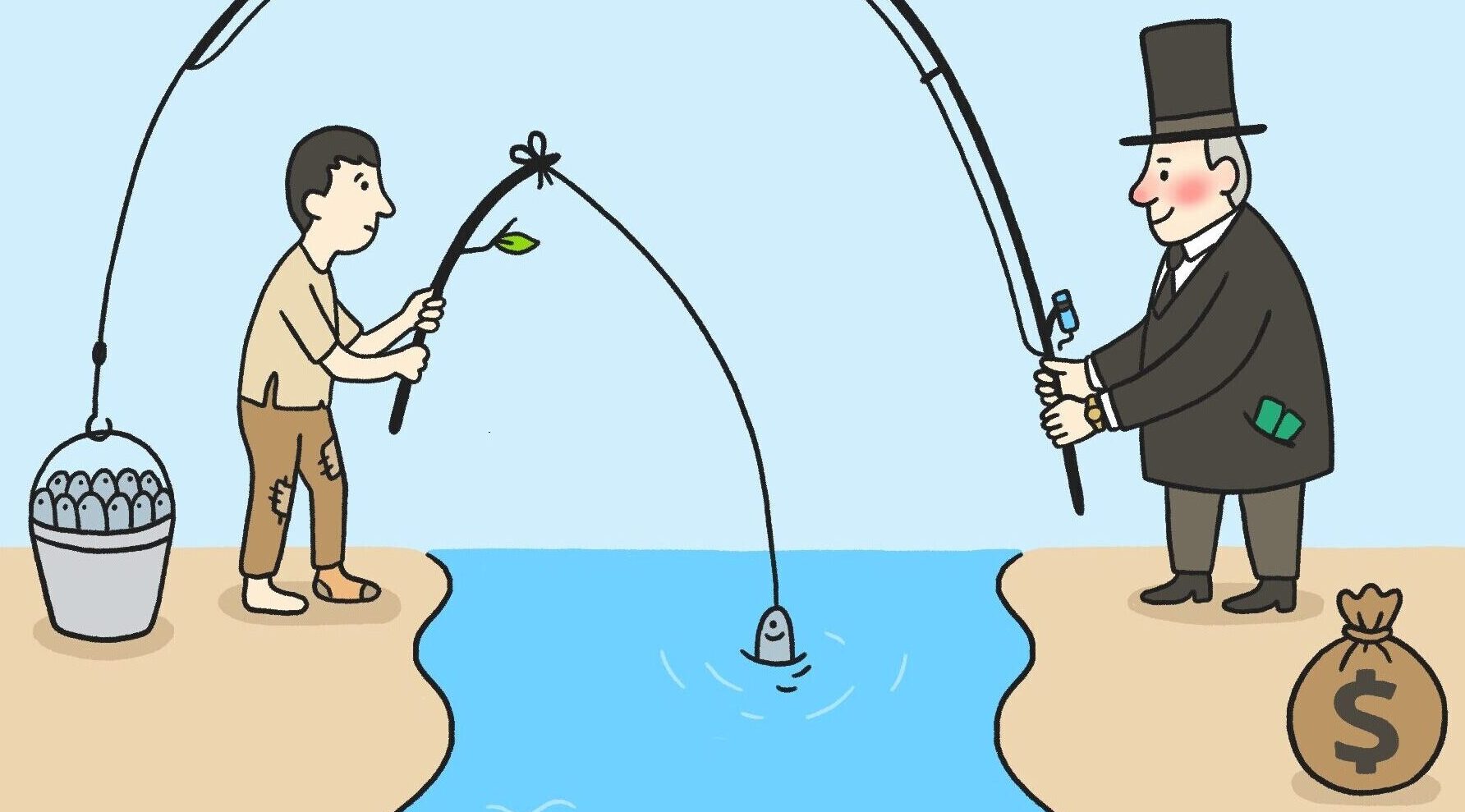
Are the Poor getting poorer because the Rich are getting richer?
Abdulganiyy Olanrewaju
ABSTRACT
Public debates about inequality often rest on an intuitive but flawed assumption: that wealth in society resembles a fixed pie. From this view, when the rich gain, the poor must inevitably lose. Yet economic history, empirical evidence, and the logic of market processes all point to a different conclusion. Wealth in modern economies is not a static stock but the product of innovation, voluntary exchange, and institutional quality. When markets function well, supported by secure property rights, predictable rules, and open competition, economic growth can expand opportunities for all, enabling both the rich and the poor to advance simultaneously.
This article argues that the poor are not becoming poorer because the rich are becoming richer. Instead, poverty declines where institutions enable people to create value, and it persists where political privilege, rent-seeking, and corruption undermine productive activity. The real divide is not between the rich and the poor, but between societies that foster wealth creation and those that suppress it. Understanding this distinction is crucial for designing policies that foster broad-based prosperity without falling into the zero-sum reasoning that fuels resentment and misleads public discourse.
Introduction
Few economic claims are as emotionally powerful—or as widely accepted—as the idea that the rich grow wealthier at the expense of the poor. News headlines spotlight rising billionaire wealth, political rhetoric frames society as a battle between “haves” and “have-nots,” and inequality statistics are often interpreted as evidence of exploitation. Beneath these narratives lies the assumption that wealth is finite, so one person’s gain must come at the expense of someone else’s loss.
Yet the historical record contradicts this intuition. Over the past century, and especially since the late 20th century, global living standards have risen dramatically. Extreme poverty has fallen, life expectancy has increased, health and education outcomes have improved, and access to technology has expanded. These gains occurred during the same period in which individual fortunes at the top reached unprecedented heights. Far from a zero-sum contest, the simultaneous rise in wealth and decline in poverty reflects deeper structural forces: market-driven innovation, institutional improvements, and the expansion of economic opportunities that are achievable only in open, competitive environments.
This essay examines why the fixed-pie assumption fails, how inequality statistics can mislead, how market processes lift living standards, and why institutions—not redistribution—determine whether people experiencing poverty can prosper. It also considers the transition costs of economic change and proposes policy reforms that help societies support the vulnerable without suppressing creativity or entrepreneurship. The core claim is simple: the poor do not become poorer because the rich become richer. Instead, both groups rise or stagnate together depending on the institutional framework that structures economic life.
The static-pie fallacy: why wealth is not a fixed quantity
A central error in many debates about inequality is the assumption that wealth exists as a predetermined stock to be divided. However, modern economies do not operate in this manner. Wealth is dynamic, constantly created, reorganised, and expanded through innovation and voluntary exchange. As Mises (1949) noted, market transactions occur only because both parties believe they will be better off after the transaction. Economic activity, under conditions of choice and competition, is inherently positive-sum.
This becomes even clearer through Hayek’s (1945) insight into decentralised knowledge. Markets coordinate the information held by millions of individuals, information that no planner or central authority could gather. As these actors discover new technologies, business models, and solutions, society gains access to previously unimaginable products and services. Wealth, in this sense, is not transferred but produced.
A concrete illustration can be found in the technological revolutions of the past few decades. The emergence of mobile phones, digital payments, affordable computing, and online commerce did not enrich innovators by taking from others; instead, it enriched them by creating new opportunities. Instead, these innovations drastically lowered costs, widened access, and created opportunities for millions of low-income households. The economic “pie” grew, not merely in monetary terms, but in the availability of tools that improve human well-being.
Understanding wealth as dynamic also clarifies why envy-based narratives persist. Zero-sum thinking offers moral simplicity: if some individuals accumulate large fortunes, others must have been left behind. This framing resonates politically because it provides villains and victims.
However, once we recognise the creative and cumulative nature of wealth production, the logic collapses. Gains at the top can—and often do—coexist with, or even contribute to, gains at the bottom when markets function effectively.
Why inequality statistics can mislead
Public perceptions of inequality rely heavily on headline-grabbing statistics, many of which obscure more than they reveal. These measurements often fail to distinguish between trends in wealth concentration and trends in poverty reduction, leading to mistaken conclusions about the relationship between the rich and the poor.
One reason for confusion is the use of wealth rather than income or consumption as the primary indicator of welfare. Wealth is influenced by asset valuations, debt classification, and financial structures that vary widely across populations. Deaton (2013) notes that wealth is an inferior measure of well-being among younger adults, students with loans, and individuals in low-income countries with limited access to formal financial systems.
A classic example involves global reports that claim a medical student in the United States with heavy student debt is “poorer” than a debt-free subsistence farmer. This classification fails to capture future earning potential or access to essential services such as health, education, and infrastructure. It reveals the pitfalls of using net wealth as a proxy for human welfare.
Another problem arises from asset-price fluctuations. When housing or stock markets boom, the apparent wealth of the rich increases even if no one else becomes worse off. Inequality appears to rise sharply, yet living standards for low-income groups may continue to improve simultaneously. Such shifts distort long-term trends and fuel narratives of divergence that do not accurately reflect changes in material conditions.
Most importantly, inequality metrics often ignore the extraordinary decline in global extreme poverty. According to the World Bank (2024), more than a billion people escaped extreme poverty between 1990 and the late 2010s—a decline unmatched in history. Improvements in life expectancy, education, access to electricity, and the cost of essential goods further underscore the progress experienced by the world’s poorest populations.
Thus, while inequality statistics can highlight disparities, they do not demonstrate that the rich are advancing at the expense of the poor. They often fail to answer the key empirical question: Are people with low incomes getting poorer? The evidence overwhelmingly says no.
How markets lift the poor: global and African lessons
If rising wealth at the top harmed people experiencing poverty, we would expect market-oriented reforms to worsen poverty. Instead, the opposite is consistently observed. Countries that liberalised sectors, opened to trade, or encouraged entrepreneurship experienced sharp declines in poverty—regardless of how inequality shifted.
China’s transformation is the most striking example. After adopting market incentives in the late 1970s, the country achieved the most significant and fastest poverty reduction in history, lifting hundreds of millions of people out of extreme deprivation (World Bank, 2024). China’s reforms enabled individuals and firms to create value, rather than merely redistribute it.
India’s post-1991 liberalisation demonstrates a similar pattern. The dismantling of suffocating regulatory barriers unleashed entrepreneurial activity, raising incomes for both rich and poor alike. While inequality increased, the absolute condition of people with low incomes improved significantly, contradicting zero-sum expectations.
African experiences reinforce this point. Kenya’s mobile money revolution expanded financial access, enabling households to save, invest, and manage their finances more effectively. The diffusion of digital payments did not require redistribution from the rich to the poor; it arose from innovation and voluntary adoption, yielding broad welfare benefits.
In Nigeria, despite institutional challenges, sectors such as fintech, logistics, and digital commerce have created opportunities for millions of people. Ride-hailing services, payment platforms, and informal-economy apps connect workers to broader markets, reducing transaction costs and increasing incomes.
Across these contexts, a consistent mechanism emerges: markets expand possibilities. They enable low-income households to access affordable goods, new job opportunities, and technologies that enhance productivity. Rather than pitting classes against each other, open markets allow prosperity to diffuse outward from centres of innovation.
Why institutions determine whether the poor can rise
If markets hold such potential, why does poverty persist in many parts of the world? The core reason is institutional failure. When property rights are insecure, corruption is widespread, regulations are arbitrary, and public authority is used for private gain, economic progress stalls. People with low incomes are disproportionately harmed because they lack the resources to navigate or circumvent dysfunctional systems.
Hayek’s emphasis on the rule of law clarifies this dynamic. Markets require predictable rules and impartial enforcement to coordinate complex production processes. When legal systems are unreliable, entrepreneurs hesitate to invest, capital flees, and informal survival mechanisms replace productive enterprises. The issue is not that the wealthy exploit the poor, but that weak institutions prevent the creation of wealth altogether.
Nigeria illustrates this challenge vividly. High barriers to entry, overlapping regulatory agencies, inconsistent enforcement, and discretionary licensing deter small businesses. Corruption acts as a regressive tax, particularly burdening those who cannot afford to pay for shortcuts. In such
contexts, wealth accumulation reflects political privilege more than productivity. This, no market-driven inequality, is what harms people experiencing poverty.
The crucial distinction is between wealth created and wealth extracted. Productive wealth, earned through innovation and voluntary exchange, expands opportunities for others. Extractive wealth, secured through regulatory capture, monopolies, or political favouritism, constricts opportunities. Confusing the two leads to policies that suppress entrepreneurship instead of addressing corruption.
Thus, prosperity depends less on redistributing existing wealth and more on enabling people to generate new wealth. When institutions work, the energy and creativity of ordinary citizens become the primary engine of prosperity.
Creative destruction and the reality of transition costs
A fair critique of market-led growth acknowledges that innovation can disrupt existing livelihoods. Schumpeter (1942) described capitalism as a process of “creative destruction,” where new technologies displace old ones. While such changes raise long-term living standards, they impose short-term hardships, especially on workers tied to declining industries.
These disruptions often fuel zero-sum narratives. When workers lose jobs to automation or global competition, it is easy to believe that gains by entrepreneurs or foreign competitors caused their loss. Yet this interpretation views the economy through a static lens. Innovation expands future opportunities by lowering costs and creating new sectors, such as app development, e-commerce logistics, renewable energy, and digital finance, among others.
However, acknowledging the benefits does not mean ignoring the burdens of transition. Workers in declining sectors may lack the skills necessary to transition to emerging industries. Regions dependent on a single employer may experience concentrated hardship. Families without savings
may suffer during economic shifts.
The policy implication is not to halt innovation but to ease transitions. Targeted retraining programs, mobile-friendly labour markets, reliable safety nets, and access to credit can help individuals adapt. Countries that paired market reforms with labour-market support experienced smoother adjustments and lower social conflict.
The challenge is to design policies that empower adaptation rather than freeze the economy. Protectionism and excessive regulation preserve the appearance of stability while suppressing growth. Adaptive policies, by contrast, help citizens participate in the expanding frontier of opportunities.
A policy roadmap that avoids the fixed-pie fallacy
If societies reject the belief that wealth is zero-sum, what policies genuinely lift people with low incomes? The answer lies in strengthening the institutional environment that enables wealth creation.
- Secure Property Rights: Without predictable ownership, individuals cannot invest or accumulate capital. Land titling, contract enforcement, and protection from arbitrary expropriation are essential foundations of inclusion.
- Rule of Law and Anti-Corruption: Corruption distorts markets, inflates costs, and restricts access to opportunities. Strengthening judicial independence and increasing transparency reduces rent-seeking behaviour and protects vulnerable individuals.
- Lower Barriers to Entry: Removing burdensome licensing, simplifying business registration, and digitising bureaucracy opens space for informal entrepreneurs to scale their ideas.
- Macroeconomic Stability: Inflation disproportionately harms people experiencing poverty. Sound monetary and fiscal policy protects purchasing power and encourages long-term planning.
- Human Capital Investments: Education, healthcare, and vocational training equip people to adapt to technological change. These investments complement market dynamism rather than replace it.
- Competition Policy: Opening markets to competition lowers prices and improves quality. Effective antitrust enforcement prevents dominant firms from extracting rents at the expense of the public.
- Financial Inclusion and Entrepreneurship: Access to microcredit, mobile banking, and startup financing enables individuals—especially young people and informal workers—to turn their ideas into income.
Together, these reforms create an environment where prosperity is broadly shared, not through redistribution but through participation.
Addressing the critics
Critics of market-led growth often argue that rising wealth concentration signals exploitation, that the rich wield disproportionate political influence, or that markets fail to protect vulnerable populations. These concerns merit serious engagement.
The concentration of wealth can indeed pose risks when political institutions are weak. But the problem lies not in wealth itself, but in the permeability of political systems to private influence. Strengthening the rule of law is a more effective remedy than suppressing wealth creation.
Similarly, concerns about environmental externalities or labour displacement point to the need for targeted interventions—not expansive redistribution that undermines growth. As Deaton (2013) notes, many historical improvements in human welfare originated from technological and institutional transformations rather than cash transfers.
Recognising the difference between market imperfections and institutional failures is essential. Correcting failures requires improving governance, not adopting policies rooted in envy or zero-sum logic.
Conclusion
The widespread belief that the poor grow poorer because the rich grow richer is intuitively appealing but empirically unsupported. Wealth is not a fixed resource to be divided; it is created through human ingenuity, voluntary exchange, and the quality of institutions. Periods of rising top incomes have often coincided with unprecedented reductions in global poverty. The real barriers to prosperity lie in weak institutions, corruption, insecure property rights, and unpredictable regulations, not in the wealth of successful individuals.
When institutions function well, prosperity is not a zero-sum contest but a shared achievement. Rejecting the fixed-pie fallacy allows us to shift the focus from redistribution to opportunity, from envy to empowerment, and from dividing wealth to creating it.
Abdulganiyy Olanrewaju is a student at the Federal University of Health Sciences, Azare, with a background in diverse educational institutions across Nigeria. He demonstrates strong communication, writing, and computer skills, and is multilingual, speaking Yoruba, English, Arabic, Nupe, and Hausa. His interests include reading, writing, and football, reflecting a well-rounded personal profile.
References
Besley, T., & Persson, T. (2011). Pillars of prosperity: The political economics of development clusters. Princeton University Press.
Deaton, A. (2013). The great escape: Health, wealth, and the origins of inequality. Princeton University Press.
Hayek, F. A. (1945). The use of knowledge in society. American Economic Review, 35(4), 519–530.
Milanovic, B. (2016). Global inequality: A new approach for the age of globalisation. Harvard University Press.
Mises, L. von. (1949). Human action: A treatise on economics. Yale University Press.
Schumpeter, J. A. (1942). Capitalism, socialism and democracy. Harper & Brothers.
World Bank. (2024). Poverty and shared prosperity 2024: Innovations in measurement and global trends. World Bank Publications.


Our Partners